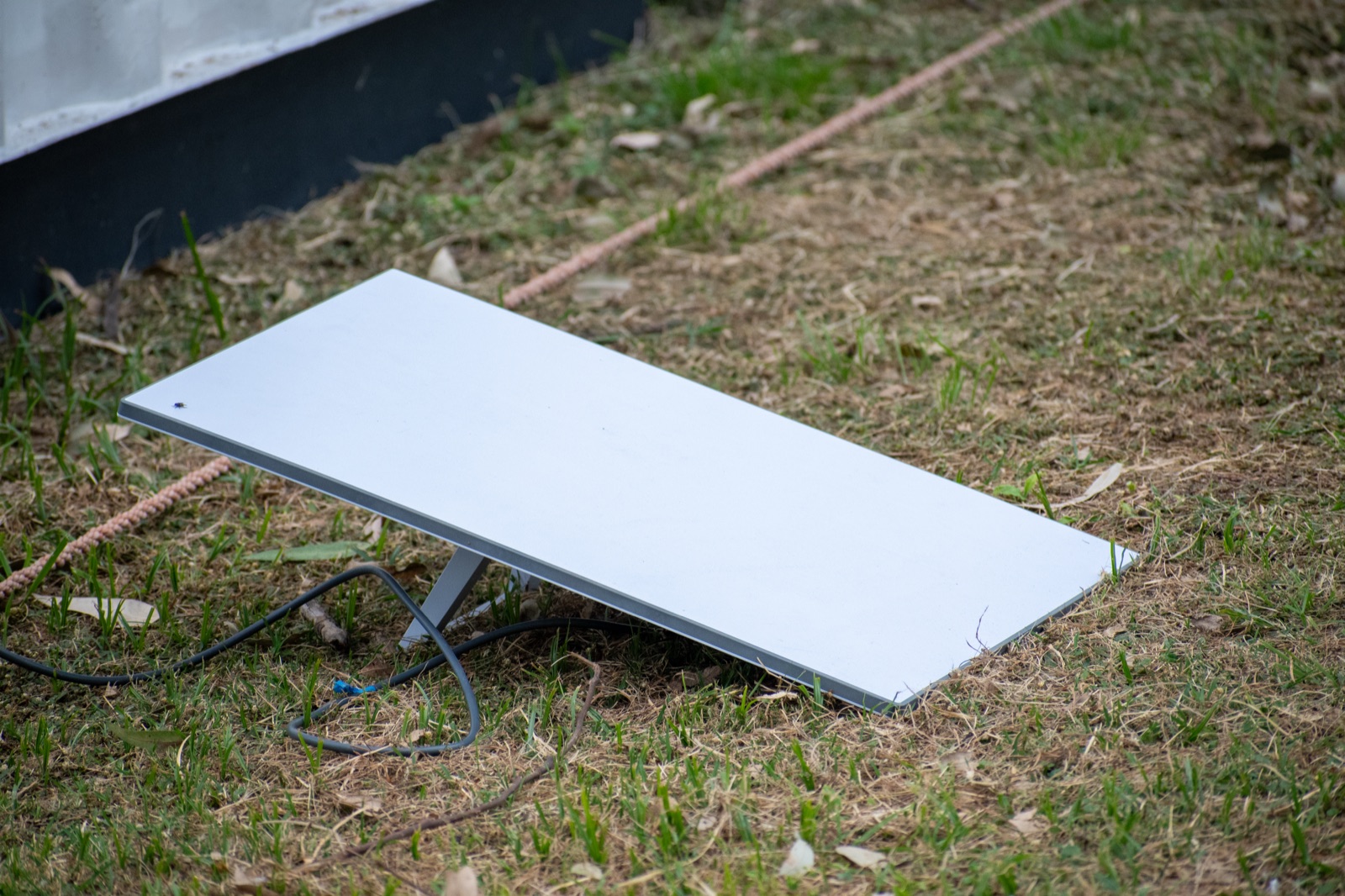
Every Starlink signal in Zimbabwe currently takes a detour. The dish talks to a satellite, the satellite hands the data to a ground station, and the ground station plugs it into the wider internet. Zimbabwe doesn't have one, so that hand-off happens in a neighbouring country first. According to Techzim, ICT Minister Tatenda Mavetera now says that is about to change: SpaceX has concluded an agreement with one of the local Starlink dealers to set up a ground station in the first quarter of 2027.
It is good news if it happens, but it is not the cure-all some headlines will make it sound like. Here is what we could confirm, what a ground station actually does, what happened in other African countries that got one, and what it could mean for you, whether you are a Starlink customer, an online seller or someone who streams music.
What we could and couldn't confirm
Techzim reported on 29 September that the minister made the statement on X, replying to Willard Shoko, an independent Starlink researcher who has been pushing for a local ground station. In her words, "there is no policy nor directive preventing Starlink from setting up a ground station in Zimbabwe," and government will monitor progress and play a facilitating role.
We searched for a second confirmation and did not find one. We found no announcement from SpaceX or Starlink, the dealer has not been named, and Techzim says the location has not been disclosed. So this is a minister's statement of an agreement, not a finished project. The Herald ran an opinion piece on 26 September by Jacqueline Ntaka, CEO of Mviyo Technologies, noting that a local gateway needs earth station clusters, specialised licensing and millions of dollars of investment, which helps explain why it hasn't happened yet. Treat Q1 2027 as a target until construction is confirmed.
What a ground station actually does
Think of the ground station as the on-ramp from space to the internet. When it is in another country, your data travels further, and you feel that as lag on video calls and in games. Techzim also says a local station would add capacity, because it can let older satellites without laser links serve local users, and would make it possible to cache popular content inside the country through a local point of presence.
Zimbabwe's current detour has been long. When Starlink opened a ground station in Mozambique in March 2025, Techloy reported that users in Zambia and Zimbabwe were seeing 200 to 300ms of latency because traffic was routed via Nigeria. Techzim's September report says only that traffic goes through neighbouring countries now, so we can't tell you which route your traffic takes today.
What happened in Kenya, Nigeria and Mozambique
Kenya: a big drop in lag, but speeds slipped as users piled in. Starlink opened a Nairobi point of presence in January 2025. Ookla's speed tests showed latency falling from 296ms to 39ms by mid-2025, and Ookla's lead research analyst Mark Dano said Kenya is the best illustration of why nearby ground stations matter. But the station didn't make capacity unlimited. TechTrendsKE reports that Kenya's median download speed fell from about 47 Mbps in March 2025 to 34.55 Mbps in March 2026 while users grew to roughly 25,000, because each satellite beam's bandwidth is shared between more connections. Kenya also paused sign-ups in several urban areas from late 2024 until mid-2025 before resuming.
Kenya again: price, not just performance, held growth back. In January 2026, Starlink introduced instalment payments in Kenya, per Space in Africa, turning a large upfront kit cost into monthly payments that match how M-Pesa users already pay. Kenyan users went from 19,146 in December 2024 to 19,470 in September 2025, which suggests that cost, not only performance, limits how fast a pricey product grows.
Nigeria: Starlink became a top-two ISP. Space in Africa's Q2 2026 figures put Starlink at 98,642 subscribers, just 12,742 behind market leader Spectranet. The report notes five straight reporting periods of Starlink narrowing the gap, while smaller ISPs also grew. Amazon's satellite venture has also received a Nigerian landing permit, which is the first credible competitor to Starlink there, according to TechCabal.
Mozambique: next door, same idea. A ground station in Matola, outside Maputo, was reported under construction in 2025 to lower lag for Southern African users, so Zimbabwe would not be the first in the region.
The pattern is consistent. A local station fixes lag and relieves one bottleneck, but the number of people sharing each satellite beam still decides your speed, and price decides how many people sign up.
What it could change for you
If you use Starlink in Harare or Bulawayo. This is where the caveat matters most. Techzim's February 2026 guide says the "sold out" label over both cities was removed, but the standard residential plan is still unavailable there and new customers get Priority plans, at about US$100 a month for 1TB of priority data, with kits from US$389 to US$1,500. Elsewhere in Zimbabwe residential plans run US$30 to US$50 a month. The waitlist deposit is US$50, and some people report waiting over 15 months. Techzim's own analysis of the ground station announcement warns that one station alone won't fix Harare's capacity, which also depends on Starlink's much higher-capacity V3 satellites.
V3 is moving. Light Reading reported that on 28 September a Starship flight released 26 V3 satellites, each with about ten times the downlink capacity of the previous generation, and SpaceX said they would start serving customers within a few weeks. Nothing we found says when that extra capacity reaches Zimbabwe, and we'd treat any promise of cheaper Harare plans as unconfirmed.
If you work or study online. Lower lag is the most likely practical change. Video calls, remote meetings, cloud tools, online exams and gaming all get smoother when the round trip shrinks, which is exactly what Kenya saw.
If you run or use local websites and apps. Techzim says a local point of presence could allow content to be cached in-country, which can make frequently used local sites load faster for Starlink users. That is a potential benefit, not a guaranteed one.
If you are on a fibre or mobile network. Starlink already carried about 25% of Zimbabwe's internet traffic in Q1 2026 from around 86,000 subscriptions, against 13.5 million mobile subscriptions, according to Techzim's analysis of POTRAZ figures. Techzim also notes Starlink appears to be scooping up the heaviest users, since Liquid's fixed traffic fell 10.54% in Q4 2025 while Starlink traffic grew 42.76%. The pressure has already shown up in prices: according to CleanTechnica, local fibre ISPs have cut prices from over US$200 a month to around US$90, a trend we looked at in our piece on Zimbabwe's Starlink uptake. A local station that makes Starlink faster and steadier raises that pressure.
Would more people online make e-commerce and music streaming work?
This is where we need to be careful, because Starlink's numbers are small next to the size of those markets.
Who is actually online. According to third-party figures cited by MISA Zimbabwe, 6.54 million Zimbabweans were using the internet at the end of 2025, or 38.4% of the population. POTRAZ's own penetration figure is 84.55%, but that measures connections, not people. MISA also notes many Zimbabweans spend more than 10% of their monthly income to stay online, against the UN's 2% affordability target. Eighty-six thousand Starlink subscriptions don't change those numbers. Most Zimbabweans will still be on mobile data for the foreseeable future.
E-commerce. The Herald describes click-and-collect as the dominant model here, where shoppers browse online and pick up in person, with EcoCash providing the digital payment layer. The barriers it lists are logistics, cybersecurity worries and unequal access to data and devices. Here is where a steadier connection plausibly helps: a shop or home business on Starlink can upload photos, answer customers on video, sync stock and take payments without the connection dropping. What it doesn't fix is delivery, trust or the buyer's data bill. Our reading is that Starlink makes it easier to run an online shop, but it won't by itself make many more Zimbabweans buy online.
Music streaming. Zimbabwean artists already release on Audiomack, Boomplay, Spotify and Apple Music, and the local platform Buddie Beatz reported about US$457,000 in revenue, with more than 3,500 artists sharing roughly US$60,000 in payouts, which works out to about US$17 each, according to ITWeb. That report dates from the pandemic period and shows how small streaming money can be when the audience is limited by data costs. More people on stable, uncapped connections could grow local listening over time, and Starlink's unlimited plans outside Harare and Bulawayo favour heavy listening and video. But artists earn from volume, and the volume sits with mobile users. This is also where creators win first: people who upload video or high-quality audio benefit from a reliable connection, as with the channels in our list of Zimbabwean YouTubers worth following, or an artist like Tocky Vibes, who released 120 songs at once.
What to watch
Whether SpaceX or the dealer confirms a site and a date before Q1 2027. Whether Harare and Bulawayo get standard residential plans back. Whether V3 capacity arrives in Southern Africa, and what that does to prices. And whether the Kenyan pattern repeats here, with lag dropping first and speeds then sliding as more people join. Amazon's satellite service, which TechTrendsKE says is pursuing gateway approval in Kenya, could eventually give Zimbabwean customers a second choice.
Sources
- Starlink Ground Station Coming to Zimbabwe in Early 2027, Says ICT Minister, Techzim
- Starlink demand outpaces infrastructure in Zimbabwe, The Herald
- Starlink Availability in Zimbabwe, FAQs Answered, Techzim
- Starlink vs Fibre in Zimbabwe: What's Happening?, Techzim
- Starlink Closes In on Fibre as Zimbabwe's VSAT Subscriptions Hit Record 86,488, Space in Africa
- Starlink internet delays in Kenya drop 87pc after infrastructure boost, Business Daily
- Why Starlink Speeds in Kenya Are Slowing, TechTrendsKE
- Starlink Introduces Instalment Payments in Kenya, Space in Africa
- Starlink Narrows the Gap to Under 13,000 as Nigeria's ISP Market Fragments Further in Q2 2026, Space in Africa
- Spectranet, Starlink and FibreOne control nearly 70% of Nigeria's internet market, TechCabal
- Starlink Rolls Out New Ground Station in Mozambique for Faster Internet, Techloy
- Starship reaches orbit, releases 26 high-capacity V3 Starlink satellites, Light Reading
- Internet affordability and access in Zimbabwe, MISA Zimbabwe
- Click and Collect: How e-commerce is revolutionising retail in Zimbabwe, The Herald
- Streaming services offer a lifeline to Zimbabwe's struggling musicians, ITWeb Africa
- Starlink is now the largest ISP in Zimbabwe by subscriber count, CleanTechnica
- Image: Starlink antenna at St. Albans, Burzaco, Argentina, by BugWarp, Wikimedia Commons, CC BY-SA 4.0
Researched and drafted with the help of AI tools, then fact-checked and edited by our team. How we work.