Learnmore Jonasi's $27 million Lion King lawsuit and his road to the New York Comedy Festival make it easy to forget how young Zimbabwean stand-up really is. When he was booed off a Book Café stage in 2012, the scene he walked into was barely a year old. Zimbabwe has always been a funny country, though. The laughs just used to come through the television, and before that the radio.
The ZTV years: Mukadota, Paraffin and Gringo
For a whole generation, comedy meant Safirio Madzikatire. According to Pindula, he was already a radio star when his show was renamed Mhuri YaVaMukadota in 1972, with his son Elijah in the cast. After independence it moved to television, and Pamusoroi's history of the show says The Mukadota Family ran on ZTV from 1982 until Madzikatire died in 1996. Susan Chenjerai played Mai Rwizi, Elizabeth Taderera was Katarina, and the family's chaos became the country's shared joke. A primary school is named after him, and in 2009 the Culture Fund of Zimbabwe gave him a life-size statue.
Safirio Madzikatire as Mukadota, with Katarina, in Mukadota KwaHunyani.
He was not alone. Phillip Mushangwe, better known as Paraffin, rose in the early 1990s alongside Rhoda Mtembi as Mai Sorobhi, before dying in 1997 after a short illness. Timmy naBhonzo, Timothy Tapfumaneyi and Lawrence Simbarashe, started out cracking jokes on the ZBC staff bus, graduated to radio and then TV, and Nehanda Radio reports the show stopped around 2001 over payment problems, a story that would repeat itself across Zimbabwean entertainment.
Then came Gringo. Lazarus Boora's hapless trickster, created by writer Enock Chihombori, arrived on ZBC TV in the late 1990s and carried the torch through the 2000s, with Gringo Ndiani? and Gringo the Troublemaker among the follow ups. When Boora died in November 2020 at 47, the National Arts Council's director Nicholas Moyo called him the "master of local television", according to Nehanda Radio. Freddy "Kapfupi" Manjalima, who started in street theatre on Harare's First Street, and David Mubayiwa's corrupt village headman Sabhuku Vharazipi kept that sitcom and DVD tradition alive into the 2010s.
Lazarus Boora as Gringo.
The 1990s: one man and a microphone
Stand-up, the one person with a mic kind, arrived late. Edgar Langeveldt, a law and political science student turned performer, told Global Press Journal that he did his own first stand-up show, and the Book Café's first, in 1997. An academic study of the scene by Amanda Källstig describes him as the "self-proclaimed" pioneer of Zimbabwean stand-up, and for a while he was close to being the only one.
His material leaned on political satire, and the timing was brutal. In the same Global Press Journal piece, comedy is described as declining from 2000 and effectively dead by 2005 under a zero tolerance for criticism of government. Wikipedia notes that from 2001 Langeveldt was working largely outside Zimbabwe because of the political situation, though he won a Prince Claus Award in the Netherlands in 2005 for humour and satire, and later ran the Zimbabwe Comedy Festival between 2010 and 2013, according to Pindula.
Edgar Langeveldt on stage in 1999, from the Simuka Comedy archive.
The rebirth: Carl Joshua Ncube opens the door
If one person blazed the trail for the new scene, it was Carl Joshua Ncube, who came to comedy already known as a designer, the animator who directed Nyaminyami, which premiered at the Zimbabwe International Film Festival in 2005, and, Pindula notes, the designer of the NAMA trophy. In an episode of SoProfound's A Decade In The Life looking back on 2005 to 2014, he says he started in 2010 at an acoustic night at the Book Café, telling one of the jokes he used to tell in the office, then building a new five minutes every week until he had a 25-minute set. He was clear that he was not the first. Q Dube, Doc Vikela, Simba the Comic King, Clive Chigubhu and Edgar Langeveldt were already working, he says, but the scene needed "a champion" to "show people how to break the barriers."
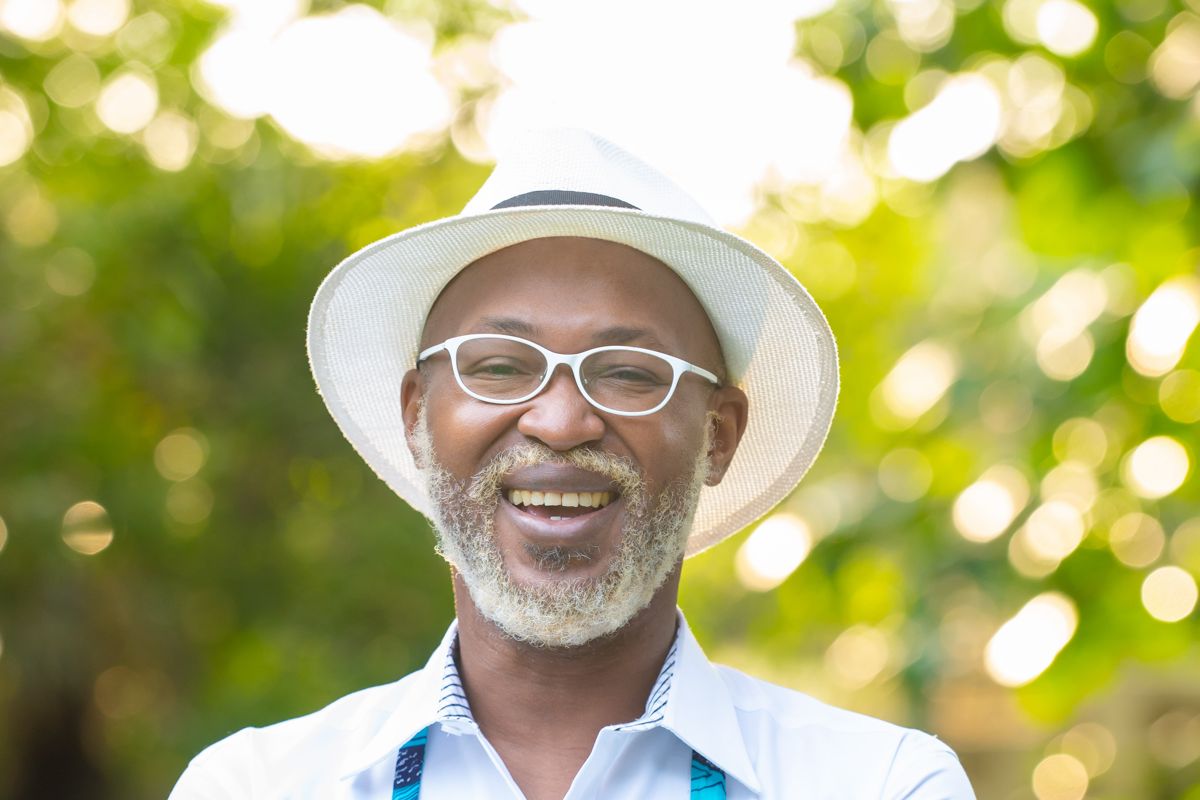
Carl Joshua Ncube in Harare. Photo: CaroMatimba via Wikimedia Commons, CC BY-SA 4.0
His Big Announcement, a full one-man show, sold out 7 Arts in 2011, and he used it to propose to his girlfriend and manager, Nelsy, on stage. The marketing was pure ad-man. With money for only two posters, he says, his team leaked a promo to Jack Sparrow, the country's most notorious pirate DVD distributor, and let the bootlegs do the rest. Clips sent to Joe Parker then got him booked at Parkers Comedy and Jive in Johannesburg, the first Zimbabwean to play there, and within the year he was on a 37-comedian continental bill alongside Nigeria's Basketmouth and South Africans Ndumiso Lindi and Kagiso Lediga, Pindula reports.
Carl Joshua Ncube's Big Announcement, the 2011 show that sold out 7 Arts.
What mattered most for everyone else is that he shared the map. He ran comedy clinics in Harare, and he says Parkers came to know the Zimbabwean comics by name, on the understanding that "if any of these guys calls you, give them a gig," until there was "a flurry of Zimbabwean comics in South Africa." He won the NAMA for Outstanding Comedian in 2013, played Kampala, Nairobi, Abuja, Australia and New York's Gotham Comedy Club, and in 2016, OkayAfrica reported, tried for a Guinness World Record with 31 shows at 31 venues in a week. From 2017 into 2018 he toured and vlogged his way around the world, working on an African comedy circuit that reached Southeast Asia, The Herald reported, before a 2019 TED talk. Along the way he became a celebrity chef with Carl Can Cook, a reminder that few Zimbabwean creatives have worked across as many forms.
Back home, others were building the rooms. In late 2011 a group calling itself Simuka, Shona for "stand up", began running nights at the Book Café. The Sunday Mail credits Doc Vikela, the Gokwe-born comic who started at a Book Café open mic that year who has said Ncube's rise inspired him, as a co-founder of the Simuka Comedy Club alongside Simba the Comic King. When the Book Café reopened on Samora Machel Avenue in 2012, Simuka Comedy Night went with it, and that is the room where a 19-year-old from Chimanimani got booed. Simuka has since grown into an academy running free weekly classes, a talent agency and its own festival, according to the Goethe-Institut in Harare. Without the people who ran those nights for little or no money, there would have been nowhere for the next generation to fail, learn and come back.
Bulawayo builds its own stages
The scene grew outward fast, carried by people who built stages as well as sets. Ntando Van Moyo founded the Umahlekisa Comedy Club in Bulawayo in 2013, VOA Zimbabwe reported, and it became the training ground where Jonasi built his Village Boy persona. Babongile Sikhonjwa, the Star FM DJ, MC and comedian known as the Ndebele Rock Star, spent two decades giving Bulawayo talent a stage, and Dumisani "MaForty" Ndlovu, founder of the KwaNtuthu Comedy Festival, told Nehanda Radio that Sikhonjwa backed the festival "all the way through" before his sudden death in September 2025 at 49. Clive Chigubhu, the Bulawayo comic who won NAMA's Outstanding Comedian award in 2015, came up in the same era before his death from lymphoma in 2022 at just 31. Q Dube took the award in 2017, and Hidden Sibanda in 2022.
Umahlekisa founder Ntando Van Moyo on stage in Bulawayo.
The phone becomes the main stage
For most Zimbabweans, though, the new comedy did not arrive in a theatre. It arrived on WhatsApp. With few clubs, tickets out of reach for many and local TV slow to change, the skit, a short scene shot on a phone and shared everywhere, became the country's default form of comedy. Skits are cheap to make, often filmed in a single take, and they reach people where they already are, writer Tawanda Mupatsi noted in a 2024 piece for Earground, which counted channels such as Naiza Boom with more than 500,000 YouTube subscribers, far beyond the social following of most local film and TV productions.
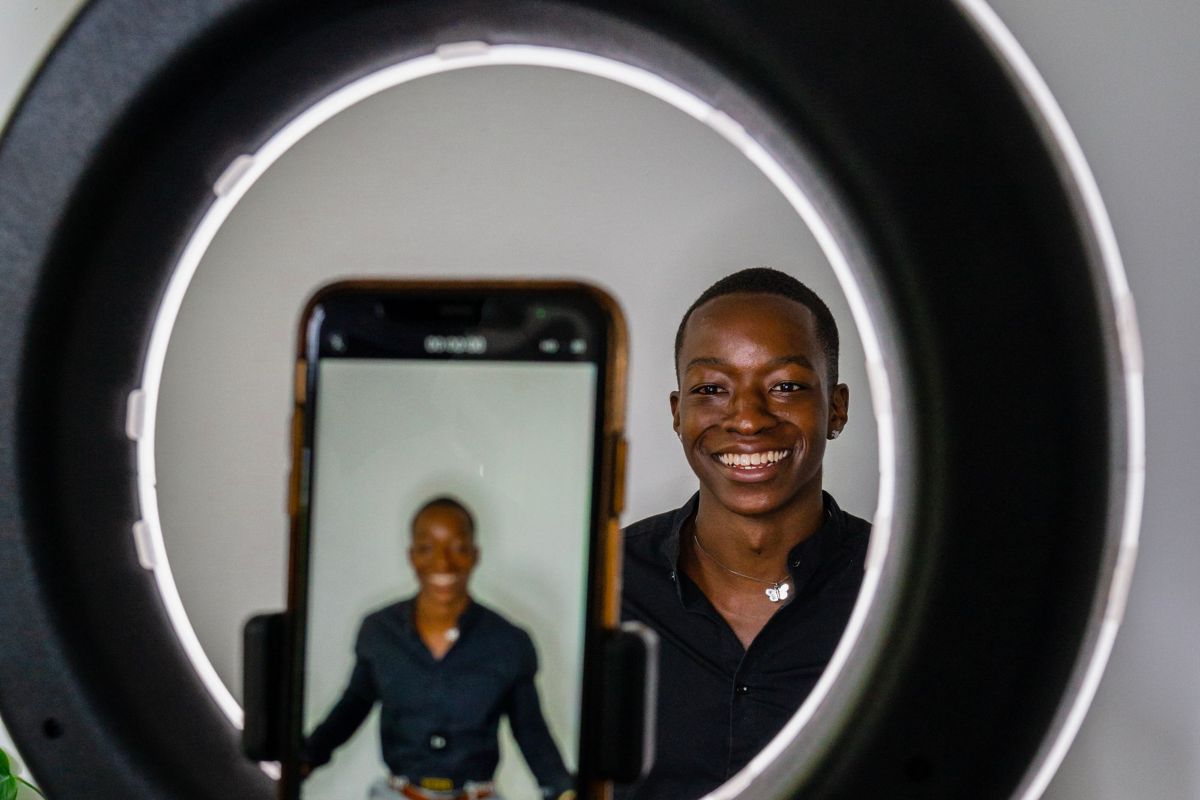
Skits are cheap to make and travel far. Photo: PNW Production via Pexels
The pioneers set the tone early. Bustop TV, which began as P.O. Box in 2014 with Luckie Aaron and Admire "Bhutisi" Kuzhangaira, turned skits into a daily habit and won NAMA's Outstanding Online Media award in 2018, and Earground credits Rolland Lunga, Boss Kedha, alongside them for setting the tone. Magamba's Zambezi News, a fake newscast led by Samm Farai Monro as Cde Fatso, had been satirising the powerful online since 2011. Baba Tencen built a following with Shona-only skits from South Africa.
Offdays, an early Bustop TV skit.
A new crop grew straight out of the feed. Prosper Ngomashi, the Comic Pastor, went viral in 2015, and around 2016, Pindula records, Nigel Maritinyu started a Facebook page and YouTube channel with friends, releasing weekly skits alongside Comic Pastor, Patricia Putsai and Gamuchirai Duve. As Nigel Tha Slick Pastor he has since made the jump from skits to stand-up, winning NAMA's Outstanding Stand-Up Comedian award in 2026. Mama Vee's character sketches won the skits award in 2024, and Leroy Zaware, the 21-year-old from Budiriro known as Comic Elder, went viral in late 2023 with "Takutongo Risker", a skit about feeding 12 relatives on Christmas Day with US$5 worth of salad and meat. He now plays a whole cast of recurring characters and picked up a Best in Comedy award at the National Youth Symposium in 2025.
Comic Elder's "Risky", from his own channel.
The awards tell the story of the shift. NAMA now gives skits their own category, won by Moojaya in 2025 and Tokoloshi in 2026, and in 2024, the year the stand-up category was dropped for lack of entries, the skits award still went ahead. Stand-up veterans see the two as different crafts. Carl Joshua Ncube, who teaches the mechanics, points out that a strong stand-up set aims for several laughs a minute, while a skit often hangs on one central joke. But the skit has done something stand-up alone could not. It turned millions of Zimbabweans into daily comedy consumers, and for comics like Slick Pastor it became the door into live rooms.
The women who pushed in
The online boom also opened the door for women. Samantha Kureya, better known as Gonyeti, joined the P.O. Box crew in 2015, and in 2017 became the first woman nominated for NAMA's Outstanding Comedian award, according to Wikipedia. Her satire came at a price. In August 2019 masked men abducted and beat her, and told her she was "too young to mock the government", the Mail & Guardian reported. She went back to work. Her Bustop TV co-star Sharon "Magi" Chideu was on stage at Reps Theatre joking about the abduction by October, and Chideu hosted this year's Shoko Festival comedy night.
Gonyeti in Bustop TV's New Toy For Gonyeti.
Tyra Chikocho, Madam Boss, became the first Zimbabwean celebrity to pass a million Facebook followers and won the E! People's Choice Award for African Social Star in 2021, Nehanda Radio reported, before landing a role on a South African soap. In Bulawayo, the Sunday News counted Lady Dee and MaForah among the city's comics, and Munya Guramatunhu, now reported to be based in Kenya, is one of the few women doing stand-up. It is still a small club. When researchers studied Harare's stand-up scene in 2018 and 2019 they found only six active women, and Guramatunhu told The Conversation that women comics "do not get afforded the same grace to just be viewed as humans." Online, though, women like Gonyeti and Madam Boss have built some of the biggest audiences in Zimbabwean comedy.
Madam Boss in MaVisitors, one of her most-watched skits.
King Kandoro and the big rooms
Carl Joshua Ncube had shown a Zimbabwean comic could sell out 7 Arts and work the world. King Kandoro showed how big the home crowd could get. Mukudzei Majoni started in August 2015 as a third year student at Rhodes University, he told Greedy South. He co-founded the podcast Sadza in the Morning, and in 2019, Greedy South reports, he became the first comedian to headline and sell out Reps Theatre. The Prodigal Son tour at 7 Arts followed, then the Family Meeting show at the 3,500 seat Celebration Centre, and his satirical news show Properganda grew into a special and a tour that included five sold-out shows in South Africa.
King Kandoro's Properganda special, recorded at the Celebration Centre.
He won NAMA's Outstanding Comedian award in 2023 and its Outstanding Stand-Up Comedian award in 2025, and headlined the Shoko Festival comedy night last year.
Lately he has been moving from the stage to owning one. In September 2025 he bought the Unplugged music festival from its founders, Chiedza Danha and Ellinah Chipumha, Greedy South reports, and he has said it is where he met his wife. Unplugged has run since 2013 with more than 60 events and 140 acts behind it, and Kandoro is keeping its focus on local talent through an initiative called The Next Superstar. The third edition under his watch, on 29 August at First Capital Bank Sports Club in Harare, sold out with an all-Zimbabwean bill, a result Zimsphere called proof that local events can carry big crowds without South African headliners.
Munashe Chirisa and the Housemaids
Kandoro's partner on the Black & Forth Podcast, Munashe Chirisa, is the other half of this story. Both are England-based Zimbabweans, and the show, which topped our list of Zimbabwean YouTube channels worth subscribing to, mixes current affairs and entertainment gossip with a steady stream of guests, enthuse Magazine notes, and the pair are upfront that they do not always know what they are talking about.
Chirisa's own calling card is The Real Housemaids of Zimbabwe, a Shona and English mockumentary that borrows the Real Housewives format and applies it to domestic workers. Pindula records that it began as a skit on the types of maids in Zimbabwe, and that the first season of four episodes aired on YouTube between 16 June and 9 July 2021, with Chirisa playing most of the cast himself, from Sisi Sandra to Mai Mhofu. A second season is now rolling out on his channel.
Episode 1 of The Real Housemaids of Zimbabwe, Meet the Maids.
It is skit comedy at its most ambitious, one writer-performer, a recognisable format and an audience that already speaks the language, and a useful companion to the stand-up rooms Kandoro fills at home.
Where the industry stands now
Put the names side by side and the picture is of a scene that is growing but still thin. Nigel Tha Slick Pastor has Australia and Manchester on his Unfinished Business tour this year, Nehanda Radio reported, and he headlined the Shoko Festival comedy night on 24 September with Chipenzi and Neville Farai Nyoni. Chipenzi also runs the New School Comedy Club. Jonasi, meanwhile, went from a Simuka open mic to the Top 5 of America's Got Talent. International dates, once Ncube's lonely frontier, are now a normal part of a Zimbabwean comic's calendar.
Nigel Tha Slick Pastor's 2024 stand-up special at Reps Theatre.
The warning sign came in 2024, when NAMA dropped its comedy category for that year, citing too few entries, according to Greedy South. The award was back by 2025, but the gap says a lot. Zimbabwe has more comedians than at any point in its history, and still few enough to name in one article. The stages that matter, Reps, 7 Arts, Harare Gardens during Shoko, and Umahlekisa in Bulawayo, can be counted on one hand, and the steadiest money is still abroad or online.
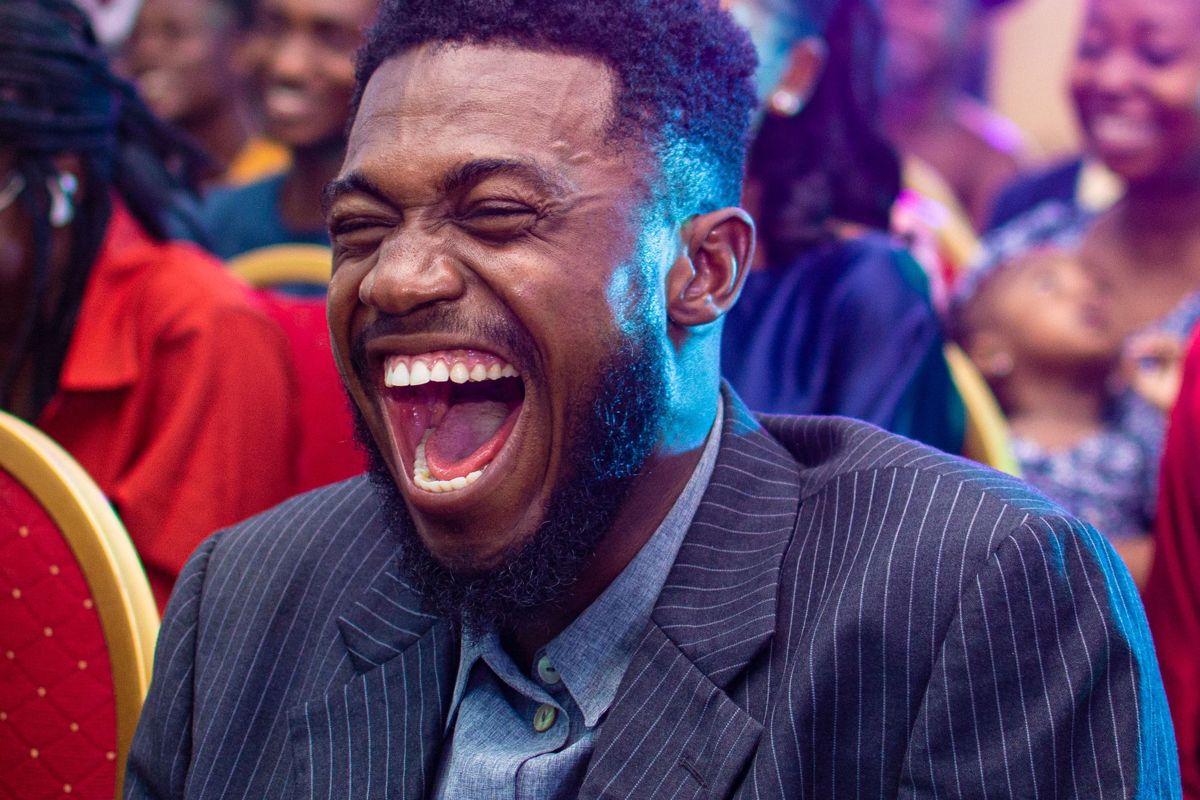
The rooms are few, but the crowds are there. Photo: Ayange Robert via Pexels
What comes next depends on whether that base gets deeper. Simuka's free classes, the new clubs and a generation that grew up watching Ncube cross borders and Kandoro sell out Reps are the pipeline. Mukadota made a country laugh from one TV channel. The next Mukadota is probably already posting skits from a phone in Chitungwiza, and the hard part, as it always has been, is getting paid for it.
Sources
- The Mukadota Family, Pamusoroi!
- Comedian Gringo lost battle to cancer, set to be buried in Rusape, Nehanda Radio
- Comedians Resurrect Stand-up in Zimbabwe, Global Press Journal
- Laughing in the Face of Danger: Performativity and Resistance in Zimbabwean Stand-up Comedy, Amanda Källstig, Global Society
- Doc Vikela: Laughing his way to the top, The Sunday Mail
- Carl Joshua Ncube, Pindula
- A Decade In The Life, Episode 3: Carl Joshua Ncube (2005-2014), SoProfound
- Carl Joshua Ncube: Tales of a Zimbabwean comedian, TED
- Meet the Zimbabwean comedian going for a Guinness World Record, OkayAfrica
- Travel round the world with Carl Joshua Ncube, The Herald
- Stand-up comedy on the rise in Zimbabwe's second city, Bulawayo, VOA Zimbabwe
- "You are too young to mock the government": Zimbabwean comedian relives her abduction, Mail & Guardian
- Women stand-up comedians in Zimbabwe talk about sex and the patriarchy, The Conversation
- A Conversation with King Kandoro, Greedy South
- King Kandoro revealed as Unplugged's new management, Greedy South
- Flowers for King Kandoro's Unplugged 3.0, Zimsphere
- Real Housemaids of Zimbabwe (RHOZ), Pindula
- The 5 Zimbabwean podcasts we rocked with in 2025, enthuse Magazine
- The 2024 NAMA Awards: full list, Greedy South
- Zimbabwe Laughs! How Online Skits are Stealing the Show, Earground
- Bulawayo entertainers reflect on Babongile Sikhonjwa's impact on their lives, Nehanda Radio
- Comic Elder, Pindula
- Nigel Tha Slick Pastor, Pindula
- Nigel Tha Slick Pastor to headline star-studded Shoko Comedy Night, 263Chat
Researched and drafted with the help of AI tools, then fact-checked and edited by our team. How we work.