Most African AI hubs open in capitals and university cities.[1] Zimbabwe's newest one opened at a vocational training centre in Gokwe North, a remote district in the Midlands where the government now has its first rural AI, digital and innovation hub, and 52 young people have already started lessons.[2][3]
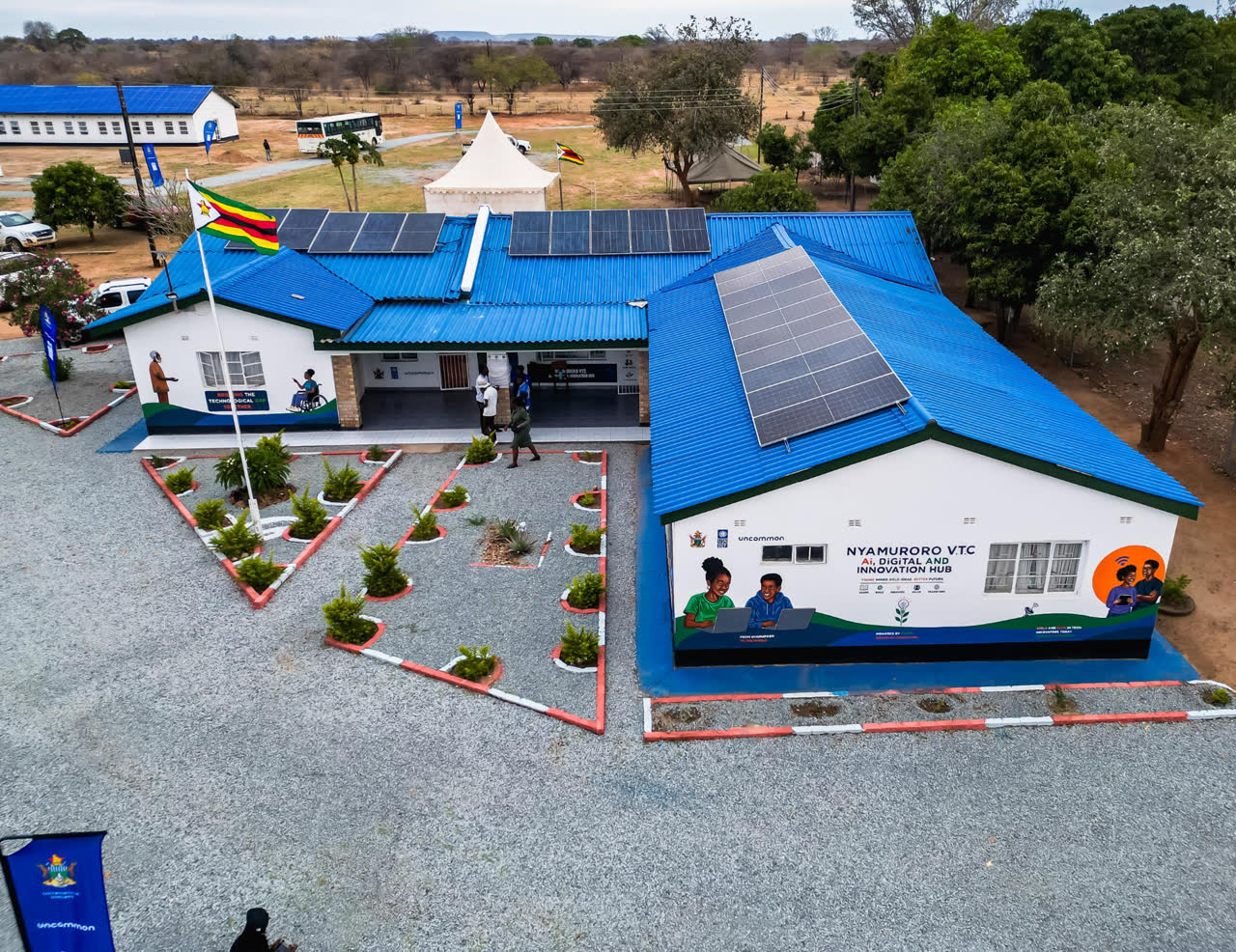
It is a good story, and a small one so far. The useful question is what happens after the ribbon.
What is actually in the building
The hub sits at Nyamuroro Vocational Training Centre and came out of a partnership between the Ministry of Youth Empowerment, Development and Vocational Training, UNDP Zimbabwe and Uncommon.org, with the ICT, education and skills audit ministries in support.[4] It opened around the end of September. UNDP staff were on site checking progress as far back as last November, so this has been a year in the making.[5]
The facility runs on solar power and connects through Starlink, which deals with the two things that usually sink rural computer rooms.[6] It also corrects a figure doing the rounds. Early reports described 20 laptops for 52 learners,[1] but those 20 were only the ICT ministry's contribution. UNDP paid for the renovation, interactive boards and another 32 laptops, making 52 machines in all, and Uncommon.org supplied the instructors.[3]
What the learners will study
Despite the name, this is mostly a software and digital skills programme. Uncommon's free 12-month bootcamp covers software development, design, digital marketing and entrepreneurship, followed by mentors and help finding internships and jobs.[6] AI is part of the pitch rather than the whole syllabus, and that is no bad thing. Someone who can build a website or run a campaign for a Gokwe business has something to sell from day one.
The bootcamp is the centre of a wider plan. Its students will teach free after-school coding to primary pupils nearby, and teachers will be trained to carry coding into their own classrooms.[6] The targets are 3,000 learners and 300 teachers.[4] Officials also want the hub to feed young people into national schemes such as the 1.5 Million Coders Programme and the CYBERUS cybersecurity programme, and to build tools for farmers, small businesses and schools.[7]
Why Gokwe matters
The numbers explain the urgency. About 49.2 percent of young Zimbabweans are not in education, employment or training, and government wants that at 15 percent by 2030.[3]
POTRAZ puts national internet penetration at 84.55 percent, but most rural residents are still not online.[8] That is the gap this hub is meant to work on. Nyamuroro High School was also where the Presidential Internet Scheme was introduced in April 2025, so the hub is the skills layer on top of a connection that already came to the community.[7]
A location like this also changes what training can mean. Young people who would have had to move to Harare for a course like this can now do it at home, and the ministry's argument is that taking technology to communities beats expecting them to migrate.[8]
The white elephant test
Reaction has been warm, with conditions attached. Dr Takavafira Zhou of the Progressive Teachers Union told Connecting Africa that a centre opened without better power for rural communities could become "a white elephant". Solar answers that for the hub itself, but not for the wider community around it.[8]
Cybersecurity expert Tatenda Nyere wants it judged on graduates who find jobs, start businesses or solve local problems rather than on computers installed.[8] UNDP's resident representative, Dr Ayodele Odusola, set the same bar at the launch, saying success "is not measured by the number of computers that have been installed".[3]
Several numbers that would allow that judgement have not been published. We could not find the total cost, who pays the Starlink bill and replaces the laptops once the project money ends, or a date for a second hub. The partnership describes a model that can be copied to other vocational centres, and it is openly calling for more partners on connectivity, devices, solar, mentors, internships and funding.[4] That is honest, and it also shows the next stage is not yet paid for.
What to watch
Training began in September, so the first class should finish in about a year.[4] By then Gokwe should be able to answer four things: how many of the 52 finished, how many are women, how many are earning from what they learned, and whether the after-school coding actually reached those 3,000 children. If the answers are good, this becomes a template for vocational centres across the country. If nobody publishes them, it was a launch.
Sources
Zimbabwe Opens First Rural AI Hub in Gokwe North, With 20 Laptops and 52 Students, iAfrica ↩︎ ↩︎
Gokwe North gets AI Digital Innovation Hub, The Herald ↩︎ ↩︎ ↩︎ ↩︎
UNDP partners government to launch first rural AI, Digital and Innovation Hub at Nyamuroro VTC, TechnoMag ↩︎ ↩︎ ↩︎ ↩︎
Driving Digital Inclusion in Rural Zimbabwe, Ruvimbo Violet Katiyo on LinkedIn ↩︎
Launch of the Nyamuroro VTC Innovation Hub, Uncommon.org on LinkedIn ↩︎ ↩︎ ↩︎
Gokwe North Gets Zimbabwe's First Rural AI Digital Innovation Hub, TechUnzipped ↩︎ ↩︎
Zimbabwe's first rural AI hub set to reduce digital divide, Connecting Africa ↩︎ ↩︎ ↩︎ ↩︎
Researched and drafted with the help of AI tools, then fact-checked and edited by our team. How we work.