
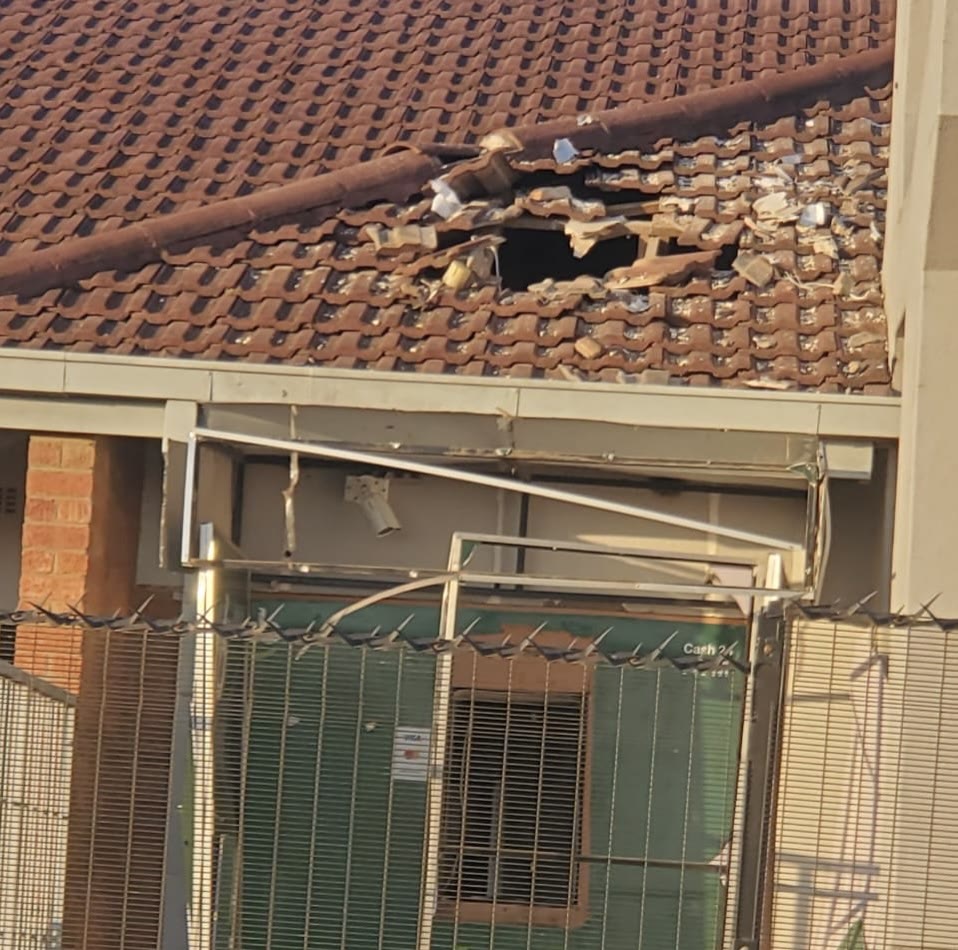
In the space of 14 days at the end of August and the start of September, robbers used explosives on bank ATMs in Gutu, Norton and Murehwa. All three raids happened in the early hours of a Tuesday, all three hit towns outside the main cities, and two months later we can find no report of an arrest in any of them.
Three raids in two weeks
Gutu, 25 August. Robbers broke into the ZB Bank branch at Mpandawana Growth Point through the roof and blew up the ATM inside. The branch manager rushed over when the alarm went off and was injured as he ran from the robbers. ZB closed the branch temporarily and has not said how much was taken.[1][2]
Norton, 1 September. An ATM at Govans Shopping Centre was blown up at about 2am. Police said the suspects had not been identified and that they were still verifying how much had gone.[3] Local reports named it as a CABS machine.[4]
Murehwa, 8 September. Five suspects assaulted and disarmed a guard at about 2am, then blew up the ATM and left with US$30,000 and ZiG15,000. Another guard at a nearby bank got away.[5] Reports named the bank as CBZ.[6]
A fourth incident is sometimes counted with these. ZB's Ngezi branch was targeted about three months before Gutu,[7] but the reports we read do not say that explosives were used, so we have left it out of the count.
Why people are calling them "SA-style"
Zimbabwean outlets quickly began describing the raids as South Africa style, because blowing up cash machines has been an organised crime problem there for years. The link is tempting, and the evidence for it is thin.
The strongest pointer came on the day of the Norton blast. South African police arrested three Zimbabwean nationals in Matholesville, Roodepoort, recovering blasting accessories worth about R160,000 in an operation aimed at a suspected supplier to ATM bombers, cash-in-transit robbers and illegal miners.[8] They were arrested for possessing explosives, and investigators are still looking for links to other crimes.[9] Nothing we have read connects them to Gutu, Norton or Murehwa, and nationality alone proves nothing.
At home, police warned in April that possessing or moving explosives without a licence is an offence under the Explosives Act, and said some explosives were believed to have been used against businesses keeping cash in safes.[10]
A wider robbery problem
The ATM raids sit on top of a bigger trend. Police recorded 1,282 armed robberies in 2025, slightly down from 1,340 in 2024, and Nyathi told a security industry workshop in June that guards are often the first targets.[11] In July, three raids on mobile money outlets and a cash collection centre in Bulawayo took more than US$64,000 in five days.[4]
His sharpest point was about information. Criminals often know about cash holdings, banking schedules, guard shifts and alarm systems, he said. "Such information can only be obtained from individuals with direct or indirect access to organizational operations."[11] Nothing published says insiders were involved in these three raids, but it is an obvious question for investigators.
What worked across the Limpopo
South Africa offers the most useful comparison, and some encouragement. ATM attacks using explosives fell from 254 in 2024 to 107 in 2025, a drop of 58 percent, and Gauteng's ATM attacks of all kinds fell from 201 to 61.[12]
The banks' crime centre, SABRIC, credits joint work with police rather than any single gadget. It points to Project Big Bang, which identified and led to the arrest of nearly 50 suspects, plus stronger site protection, roller shutter doors, protective ATM cages, shared intelligence, hotspot monitoring and better co-ordinated response.[12]
Two cautions come with that. Dye-staining did not stop people taking the cash, and robbers still reached the money in 81 percent of explosive attacks. The problem also moved rather than vanished: Gauteng improved while Mpumalanga got worse, and gangs have been shifting towards angle grinders.[12][13]
What it means for small towns
A city customer who finds a wrecked ATM walks to the next one. In a growth point there may not be a next one. Gutu's branch closed after the raid, which is the kind of cost that never appears in a robbery total.
Guards carry much of the risk. The Murehwa guard was beaten, and a bank manager in Gutu got hurt doing what anyone would do when an alarm goes off at their branch. How machines in small towns are protected overnight is a question for banks and security companies, and Nyathi has already urged them to train, equip and support the guards they deploy.[11]
None of the reports we read carries a public response from the banks or the Bankers Association of Zimbabwe on how they plan to protect rural machines, and police said after both Norton and Murehwa that more information would follow. We will update this story when it does. The questions worth asking are simple: has anyone been charged, how much was taken at Gutu and Norton, and are rural ATMs getting the protection that brought the numbers down next door?
Sources
Robbers enter through the roof in raid on ZB bank in Gutu, The Zimbabwe Mail ↩︎
Robbers Blast ZB Bank ATM After Breaking In Through Roof In Gutu, iHarare ↩︎
Robbers blow up ATM at shopping centre in Norton, Pindula News via The Zimbabwean ↩︎
Another ATM bombed: Robbers blow up CABS ATM and flee with cash, My Zimbabwe News ↩︎ ↩︎
Guard disarmed and beaten, CBZ ATM bombed, My Zimbabwe News ↩︎
Three Zimbabwean nationals arrested with blasting equipment linked to Gauteng ATM bombings, IOL ↩︎
SAPS arrests three suspects linked to ATM bombings, Soweto Urban ↩︎
Armed robbery cases drop from 1,340 to 1,282 last year, The Herald ↩︎ ↩︎ ↩︎
Gangs of 20 men use angle grinders to break into ATMs, Daily Investor ↩︎
Researched and drafted with the help of AI tools, then fact-checked and edited by our team. How we work.