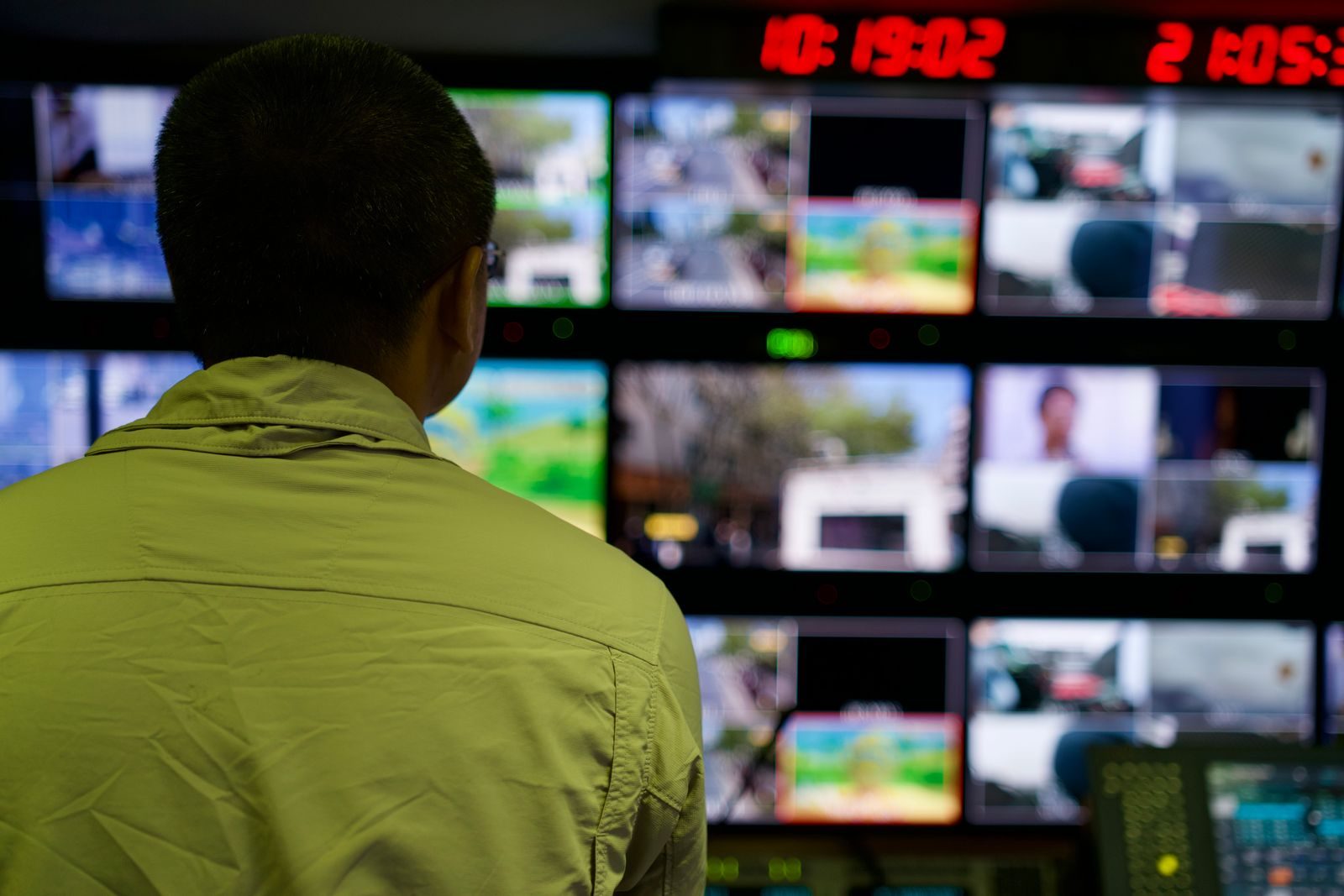
The Zimbabwe Republic Police opened the doors of its Smart Traffic Management System command centre to a group of Zimbabwean journalists on Wednesday, 28 October, giving the press a first look at the room where the country's new traffic cameras are watched and their footage turned into offences.[1][2]
The visit, at the command centre at CID Headquarters in Harare, was part of a police awareness programme. The aim is to help Zimbabweans understand how the system works, so that people follow the rules on their own and the police find it easier to enforce road regulations in city centres, where cars and pedestrians crowd the same space.[1][2]
"Here to stay", and no exemptions
National police spokesperson Commissioner Paul Nyathi told the visiting journalists that the system is now operational at 20 sites, and that it exists to encourage responsible driving rather than to catch people out. "The system is there and it is there to stay," he said, adding that it was not there to punish innocent Zimbabweans.[2]
He was just as clear that nobody gets a pass. Enforcement applies to every motorist, including the drivers of government vehicles. "So we won't spare anyone, whether it's a government vehicle or not," Nyathi said.[2] Police say the cameras are meant to tighten enforcement, ease congestion and improve public safety, and they are working with local authorities on Harare's traffic jams.[2]
Pedestrians were not left out either. Nyathi warned people against crossing roads at unmarked spots in city centres and asked them to use designated crossing points, saying those who ignore the rules could face legal action.[1]
He framed the visit itself as part of the job. Giving journalists first hand access, he argued, lets them explain the technology to the public and answer the worries people have about how it is being rolled out.[2]
How the system catches offences
The system combines intelligent surveillance cameras at strategic intersections, automatic number plate recognition and central databases, supported by enforcement vehicles and mobile control rooms with cameras that can also help spot stolen vehicles.[3]
It is built to pick up running red lights, driving against the flow of traffic, picking up or dropping off passengers at undesignated places, speeding, using a mobile phone while driving and not wearing a seatbelt.[3] By mid October the cameras had captured 4.8 million violations in the central business district,[3] and by the media tour police were putting the total at about five million.[4]
When an offence is detected, the registered owner of the vehicle gets a notification on their phone with a link to the details, including a video clip of the offence and the fine due. Drivers caught running a red light are more likely to be taken to court than simply fined.[3][5] Other fines run from US$5 to US$30. Owners have seven days to respond and a further seven to pay, and those who ignore both risk being blacklisted and placed on a police wanted list.[4]
Cameras flag, but people decide. A team of 25 police validators reviews footage before any notice goes out, and the online platform lets a motorist watch the clip and lodge a dispute.[6]
Getting here took a while. In August, Home Affairs Minister Kazembe Kazembe told the Senate that the cameras had been recording offences for months but no fines had been issued yet, because police, Treasury and TelOne were still settling how payments would be banked and shared. He said fines for offences already captured would be backdated, and that government plans to install more than 300 cameras in Harare before taking the programme to Bulawayo, Mutare and other cities.[7]
How Harare has taken it
Few people are arguing with the idea. Plenty are arguing with the order in which it has been done.
The support is real. Motorists who spoke to ZBC in June, when the system was being set up, welcomed it as overdue, mostly because of kombi drivers who ignore the rules.[8] The best case for it may have little to do with traffic at all: a fine that arrives by text involves no roadside conversation, which leaves fewer chances for a bribe.[9]
The loudest objection is about the lights. City records showed 21 of the 69 signal-controlled junctions in the central business district out of action in late September, knocked out by power cuts, vandalism or signals that were never replaced. Motorists and urban planners want red-light ticketing suspended at faulty junctions, and fine money ring-fenced for repairs.[10] In a ZimEye opinion piece, Mica Shumba and Masimba Mavaza welcomed the cameras but argued that Harare has installed the technology before fixing the roads, markings and robots it depends on.[11] City Parking is replacing signals with solar units, with a second phase meant to reach 46 junctions by the end of November,[4] so for now enforcement is running ahead of the repairs.[9] Nyathi says police are working with local authorities on the lights, and Assistant Commissioner Gajiwett Gomo, the police director of information technology, says faded stop lines and unclear turning signals are being dealt with too.[4][6]
Then there is the suspicion that this is about money. If all 4.8 million offences carried the full US$30 the bill would reach US$144 million. Many will not, but even a modest share is serious revenue,[12] and Home Affairs Minister Kazembe Kazembe has confirmed that the income will be shared with TelOne.[13]
Capacity is a fair question as well. On our sums, if each of about five million clips took one minute to check, those 25 validators would need more than 400 eight-hour days each. Herald columnist Emmanuel Kafe, who was on the tour, found his own car had been flagged 18 times. One flag had been validated, costing him US$30, and the other 17 were still waiting for review.[6] That is a useful warning in both directions: a flag is not yet an offence, but the backlog may not stay quiet.
Night driving has produced the most confusion. Motorists who have been attacked at red lights in smash-and-grab robberies say they no longer stop at some junctions after dark, which now puts them in front of a camera.[14] Reports from the tour suggested fines would be cancelled at four hotspots after 10pm.[14][4] Police denied that on 31 October, saying no such promise was made and that each case will be judged on its merits.[15] Nobody should run a red light counting on an exemption.
Privacy has had less airtime, but it was raised before the fines began. In May, lawyer Courteney Mukoyi of the Justice Court Foundation told CITE that a speed camera at a junction may be proportionate while nationwide facial recognition would not be, and said questions remained over how data is stored, who can reach it and what was agreed with the Chinese suppliers.[16] The October coverage we read does not answer them.
And the government vehicle promise is still only a promise. Police have not said how many of the flagged offences involve state cars, or which department pays when one is caught.[4] The first public fine against a ministry twin-cab will do more for trust than any media tour.
The rocky start
The tour is partly a response to how this began. When police first published a list of 290 vehicles allegedly caught running red lights in Harare in May 2025, motorists complained that the cameras had gone up without any education campaign or signs showing where they were. A transport analyst called it enforcement by entrapment, drivers asked whether they could see the footage used against them, and legal experts warned that tickets could be challenged if police could not show people had been given fair notice.[17]
Enforcement on the ground has also looked patchy. Even as the cameras were running, kombis and mushikashika were reported operating at the robots on Jason Moyo Avenue and Fourth Street, and on the Chitungwiza illegal rank at Julius Nyerere Way and Robert Mugabe Road, in full view of the cameras.[7] The message from the tour, that the system is fair, permanent and blind to whose car it is, is aimed squarely at that kind of scepticism.
What it means for motorists and pedestrians
For anyone who drives in a Zimbabwean city centre, the practical points are simple:
- Check your status only on official platforms. Police say violations and outstanding deposit fines can be checked at paymyfines.co.zw and paymyfines.gov.zw, or at designated stations including Harare Central Traffic, Warren Park, Avondale, Mbare and Chitungwiza Traffic, and the Milton Park, Marlborough and Malbereign police stations.[3][5]
- Watch the clip before you pay. Check the plate, the place and the time, then use the dispute option if it looks wrong. Do it within the seven days.[6]
- Ignore anyone offering to "sort out" a fine. Police say no agents have been contracted to collect fines, physically or electronically.[3][5]
- Update the ownership details if you sell a car. Notices go to the registered owner, so if a vehicle changes hands and the records stay the same, the old owner can be held liable for the new driver's offences.[3][5] That matters for families who keep cars registered in a relative's name, including relatives living abroad.
- Cross at the crossings. Pedestrians who jaywalk in city centres have been put on notice too.[1]
The next few months will settle whether this becomes a road safety system or a resented bill. The tests are simple: working lights at the junctions being policed, a dispute process that visibly clears people who were wrongly flagged, and a government car paying up. Until then, with fines set to be backdated, the safest assumption for Harare road users is that the cameras have been watching for a while.
Sources
Police warn pedestrians against jaywalking, The Chronicle via Herald Online ↩︎ ↩︎ ↩︎ ↩︎
No Special Treatment for Govt Drivers in Traffic Enforcement: ZRP, 263Chat ↩︎ ↩︎ ↩︎ ↩︎ ↩︎ ↩︎
ZRP rolls out digital traffic fine notifications: 4,8 million violators caught on camera, Sunday News via Herald Online ↩︎ ↩︎ ↩︎ ↩︎ ↩︎ ↩︎ ↩︎
No one spared: Police say Harare's AI traffic cameras will fine government drivers too, zimDaily ↩︎ ↩︎ ↩︎ ↩︎ ↩︎ ↩︎
Smart traffic cameras go live, motorists to get violations by phone, Pindula News via The Zimbabwean ↩︎ ↩︎ ↩︎ ↩︎
Smart, sharp eyes on Harare's roads, Emmanuel Kafe, The Herald ↩︎ ↩︎ ↩︎ ↩︎
Zimbabwe: Traffic Fines to Be Backdated, Minister, The Herald via AllAfrica ↩︎ ↩︎
Government rolls out smart traffic system to modernise Harare roads, ZBC News ↩︎
The Traffic Cameras Can See Everything Except What Is Important, The Insight 263 ↩︎ ↩︎
Harare's AI cameras log 4 million traffic violations as infrastructure crumbles, TechnoMag ↩︎
The Digital Eye Is Welcome, But Did We Put The Cart Before The Horse?, ZimEye ↩︎
No roadblock required: Police begin texting fines for 4.8 million offences, zimDaily ↩︎
Harare motorists warned traffic cameras are operational and fines will be backdated, Pindula News ↩︎
No fines for night offences at these 4 intersections, My Zimbabwe News ↩︎ ↩︎
Police refute claims of cancelling traffic fines at Harare "crime hotspots", The Herald ↩︎
Zim's AI surveillance cameras spark constitutional concerns, CITE ↩︎
Researched and drafted with the help of AI tools, then fact-checked and edited by our team. How we work.