
Africa's richest man has been circling Zimbabwe for over a decade, and this month he has given ordinary Zimbabweans a chance to own a slice of his empire. Aliko Dangote's US$1.6 billion refinery IPO, the largest share sale Africa has ever seen, is open until 13 October, and Zimbabwe has just been approved as one of the markets that can take part. It lands on top of a US$1 billion investment agreement he signed in Harare last November, so it is worth separating what has been promised, what is still only a plan, and what you can actually put money into right now.
What was signed in Harare
On 12 November 2025, Dangote met President Emmerson Mnangagwa and signed an agreement to invest at least US$1 billion in Zimbabwe, according to Reuters. He named cement, power generation and a pipeline for petroleum products as the core pieces, with fertiliser manufacturing also part of the wider package. The pipeline is the headline item: roughly 2,000 kilometres running from a planned fuel storage hub at Namibia's Walvis Bay, through Botswana, to Bulawayo.
Dangote was careful about the numbers at the time, saying the broader investment was in the hundreds of millions of dollars and could exceed a billion mainly because of the pipeline. He has said the pipeline would complement his giant Nigerian refinery, and told reporters that Zimbabwe had changed since his earlier visits, saying "the government is solid, there is a lot of transparency."
Why it never happened the first time
This is a return, not a debut. The Africa Report notes that Dangote's 2015 plan centred on a coal-fired power station at the Sengwa coalfields, and that the project stalled over red tape, alleged demands for facilitation payments and a power tariff regime that did not let investors charge in foreign currency. No other investor has moved ahead at Sengwa since, and the coalfields remain idle, according to the same report. The government also declined at the time to guarantee that Sengwa coal could be exported to Dangote's cement plant in Zambia.
Where the plan stands now
Ten months on, the Zimbabwe projects are still described as proposed. Zimbabwe Situation reports that Dangote visited Botswana last month to meet President Duma Boko about a proposed US$3.5 billion regional fuel pipeline, a potential US$336 million cement plant in Botswana and a possible secondary listing of the refinery on the local exchange. The Zimbabwe package is being facilitated locally by Harare firm Bard Santner, which now also handles one of the Zimbabwean routes into the IPO.
What the IPO actually is
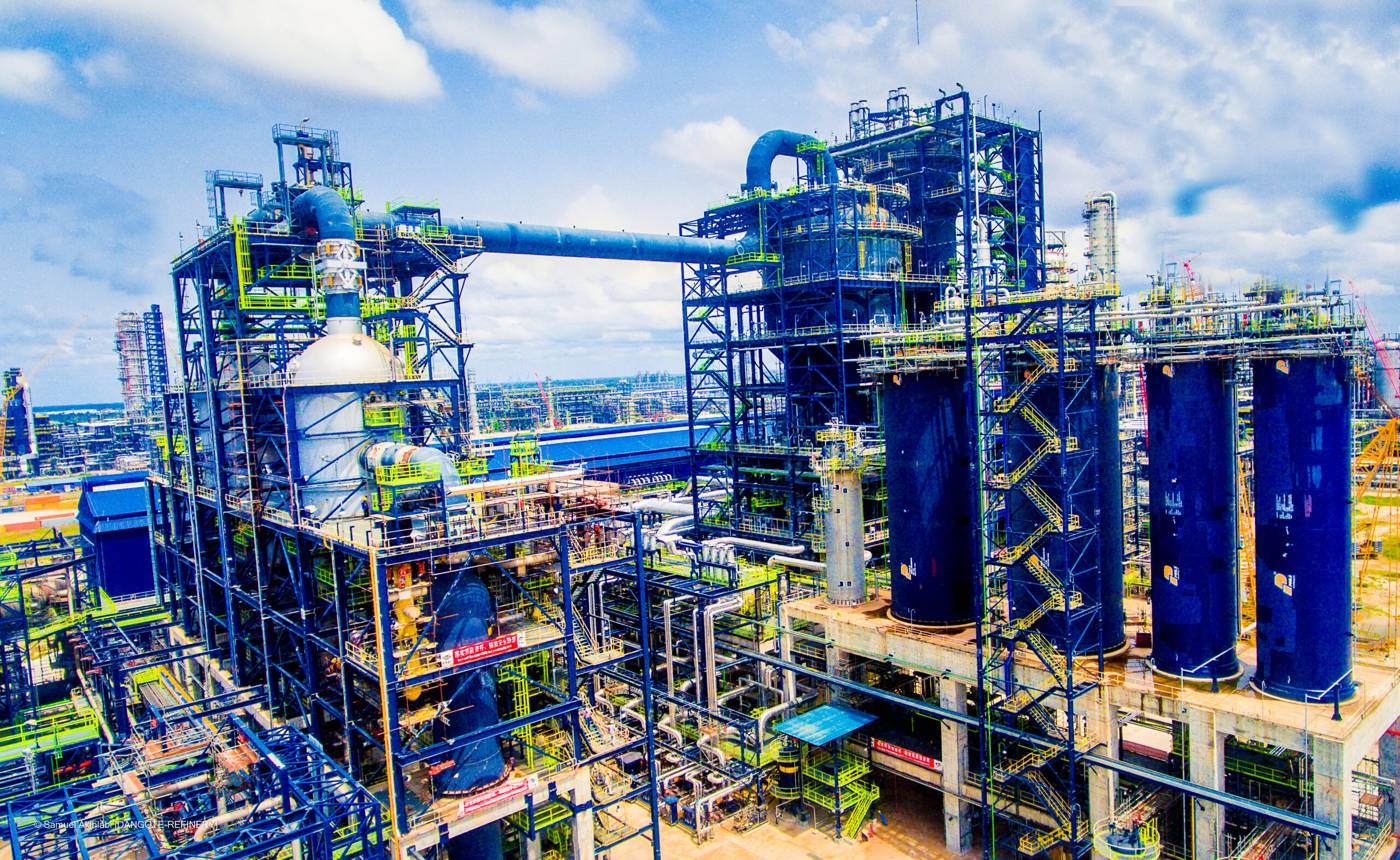
An important distinction first: the IPO is for shares in the Dangote Petroleum Refinery in Lekki, Lagos, not in the Zimbabwean cement, power or pipeline projects. It is a bet on the refinery.
The refinery started operating in 2024 after costing roughly US$20 billion to build and now processes about 700,000 barrels of crude a day, according to CNBC Africa. Dangote wants to double that to 1.4 million barrels a day by 2029, which Semafor notes would make it the largest refinery in the world, and the business reported US$13.9 billion in revenue in the first half of 2026. Analysts at Renaissance Capital Africa told CNBC Africa it has turned Nigeria from a net importer of refined fuel into a net exporter.
The public offer opened on 14 September: 4.1 billion shares at 525 naira each (about US$0.40), roughly 3% of the company, aiming to raise US$1.6 billion. In Nigeria the smallest application is 10 shares, about US$4, which is why it is being marketed as a "people's IPO." Trading on the Nigerian Exchange is expected to start in November, France 24 reports, and Dangote has said a second listing, "most likely" in the US, could follow within three or four years, per Semafor.
How Zimbabweans can get a piece
There were two routes at first, and a third has since opened:
- FINSEC. Businessday and Insurance24 report that the Securities and Exchange Commission of Zimbabwe has approved FINSEC to offer the shares locally through a regional depositary receipt programme, part of a SADC exchanges plan anchored in Botswana. The minimum is US$100, access is through C-TRADE and EcoCash, and the local window runs from 29 September to 9 October, four days before the main offer closes. Corpserve is the registrar, InvestIQ Oak Wealth the lead sponsoring broker, and Nedbank handles collections. Insurance24 notes that participation is still subject to Zimbabwe's exchange control requirements. This is the route most readers will realistically use.
- Bard Santner Investors. BSI handles documentation and compliance for a minimum of US$20,000 for 50,000 shares, according to Zimbabwe Situation, and funds and applications must reach BSI by 2 October to make the close. TechCabal reports that the money moves through Ecobank Zimbabwe to Ecobank Nigeria, and that because the purchase is treated as an offshore investment, it needs exchange control approval.
- ZB Custodial Services. Added 6 October: ZB Financial Holdings announced on 5 October that investors can open a custodial account with ZB, which holds the shares on their behalf, with applications closing on 9 October. Its poster gives no minimum, so ask before applying. Contact hmutanda@zb.co.zw, or call 08080 555 (Econet) or 08010 555 (NetOne). More in our route-by-route update.
Depositary receipts are not quite the same as holding the shares directly, and anything priced in naira carries currency risk on top of the usual ups and downs. We are not financial advisers, so read the prospectus and speak to a licensed adviser before committing money.
What the sceptics say
The Zimbabwe deal has its doubters. The Africa Report frames it as a test of Harare's claims of reform and transparency, given how the last attempt ended, and notes the government's reluctance back then to give firm guarantees. It also observes that jobs and cheaper inputs only follow if the projects are actually delivered, which is exactly what has not yet been shown. Zimbabwe Situation, for its part, still describes the projects as proposed and potential rather than under construction.
The IPO draws its own criticism. France 24 reports that Dangote's officials deny the US$49 billion valuation is inflated, but Joachim McEbong, a senior West Africa analyst at Control Risks, argues it is hard to call the offer "people-driven" while Dangote keeps around 87 percent of the refinery. The valuation is more than double what the plant cost to build, and CNBC Africa points out that retail buyers are paying more per share than the institutions that bought in during a July private placement at a US$40 billion valuation. TechCabal adds that Zimbabwean investors going the offshore route face foreign exchange controls, custody and cross-border settlement hurdles, which is why that process is largely manual.
What to watch
Whether the Zimbabwe cement, power and fertiliser projects get firm sites, timelines and financing, rather than staying at agreement stage. Whether the pipeline route gets formal sign-off from Botswana and Namibia. And whether the FINSEC programme actually draws small Zimbabwean investors in, which would make it a template for future cross-border listings, or whether this stays a story mostly for those who can find US$20,000.
Sources
- Nigeria's Dangote plans $1 billion investments in Zimbabwe, Reuters via MarketScreener
- Dangote's search for fresh African markets continues with $1bn bet on Zimbabwe, The Africa Report
- Zim firm handles Dangote IPO, Zimbabwe Situation
- How Zimbabweans are getting into Africa's biggest IPO, TechCabal
- Dangote IPO expands across Africa as Zimbabwe investors gain access, Businessday NG
- Dangote IPO widens investment horizon for Zimbabwe insurers, pensions, Insurance24
- Nigeria's Dangote refinery launches biggest African IPO for retail investors, France 24
- Billionaire Dangote launches oil refinery 'people's IPO', Africa's biggest, CNBC Africa
- Dangote mulls US listing for refinery, Semafor
- Poster: ZB Financial Holdings, "Invest in the Dangote IPO", ZB Facebook page, 5 October 2026
- Image: Dangote Petroleum Refinery, Lekki, via Dangote Industries
Researched and drafted with the help of AI tools, then fact-checked and edited by our team. How we work.