Zimbabwe has landed on Kelis's list of favourite African countries, the Milkshake singer's own shorthand for the places worth a diaspora investor's attention. She ranked it alongside Zambia for Victoria Falls in a recent interview, and it's not actually the first time the country made an impression on her: Zimbabwe was also the very first African country Kelis ever set foot in, at 17, years before she'd go on to buy farmland in Kenya. The timing lines up with Zimbabwe's biggest tourism showcase, the Sanganai/Hlanganani World Tourism Expo, running in Masvingo from 9 to 12 September 2026, which just got its own scheduled flights for the occasion.
Kelis's top African countries, Zimbabwe included
Speaking to Earn Your Leisure, the finance-focused podcast, in an episode filmed on her own farm near Lake Naivasha, Kelis ranked Kenya first, saying it "has everything," from safety and modern infrastructure to finance and agriculture in one place. Uganda made her list for its nightlife, and she grouped Zambia and Zimbabwe together for a shared natural wonder, Victoria Falls. Ghana stood out for its food and its people's warmth, and she named Zanzibar as simply beautiful. She was more conflicted about South Africa: she's called Cape Town one of the prettiest places on Earth, but has said she's hesitant to invest there because it feels "very white," in her words, in a way that doesn't read as Africa to her and cuts against her goal of building Black-owned wealth on the continent.
Her Zimbabwean beginning
This is the detail most coverage of Kelis's Africa story skips past. She has said her first ever trip to the continent, taken without her family at 17, was a three-month stay in Zimbabwe. She recalled being nicknamed "the angry American girl" there and being surprised that people didn't automatically read her as Black the way she was used to in the US, a gap she now puts down to differing histories rather than any hostility: she arrived carrying the weight of American race relations, and found people who hadn't been taught that same history and didn't understand what she was reacting to. Zimbabwe wasn't the country she chose to put her farming money in years later, but it's stayed on her map long enough to make her list of favourites today.
The Milkshake singer's unlikely second act
Kelis Rogers, Grammy-nominated and best known for 2003's "Milkshake," has sold six million records worldwide and spent several years training part-time as a chef at Le Cordon Bleu. These days she splits her time between music and something far removed from either: farming and property investment in East Africa, a story that's part personal reinvention, part wealth-building pitch to other members of the diaspora.
150 acres in the shadow of a volcano
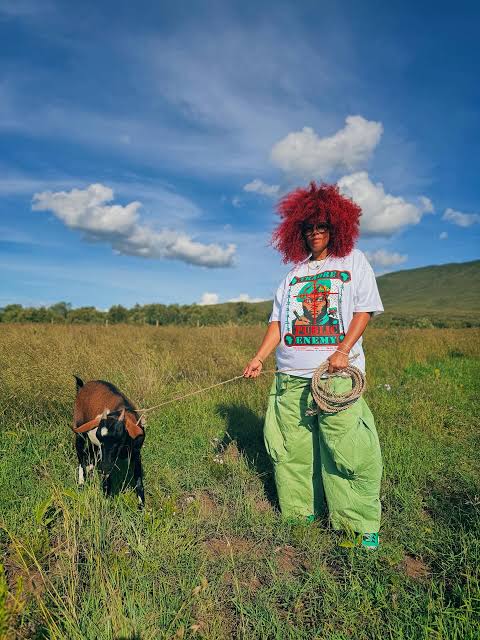
Kelis owns 150 acres outside Naivasha, bought for under $200,000, with plans to expand to 300. The land sits near Lake Naivasha and Mount Longonot, and shares a boundary with wildlife country, giraffes, zebras, impala and the occasional elephant wander through. She's farming onions commercially and has broken ground on what she describes as an all-sustainable luxury retreat: bungalows, fine dining, and a wellness space, built with the idea of coexisting with the animals rather than fencing them out entirely, though she's since had to fence off crops she can't afford to lose to grazing.
Why she's telling other Black Americans to do the same
Kelis frames the move as financial as much as personal: investing in the US, she argues, doesn't build wealth for her the way land ownership somewhere with real room to grow does. She's built a co-operative model around it, called "We Farm," where an investor puts in a one-time $1,300 payment for a 300-square-metre plot, and she farms it on their behalf. After the first year, running costs like water and salaries come off future profits rather than requiring further payment from the investor.
What this means for Zimbabwe, right now
Zimbabwe is, this week, actively trying to do what Kenya has already managed with Kelis: turn diaspora and celebrity curiosity into sustained tourism and investment interest. The Sanganai/Hlanganani Expo's move to Masvingo continues a rotation strategy the government only started in 2025, when the expo left its usual Harare and Bulawayo circuit for Mutare, Manicaland, for the first time. Masvingo's turn puts Great Zimbabwe and Gonarezhou National Park in front of the same kind of international buyers and investors the expo has been courting since. Kelis making Zimbabwe one of her named favourites, on top of being the place her own African story started, is a live example of what that kind of attention can turn into once it takes hold. Read alongside Fraser Flight's round-the-world sailing attempt, which is also flying the Zimbabwean flag internationally at the moment, it's part of a pattern worth watching: the country's global visibility building through individual stories rather than institutional ones.
Sources
- Why Kelis Left America to Buy a 300 Acre Farm in Kenya & Show Others How to Build Wealth in Africa, Earn Your Leisure / iHeart
- The Kenyanisation of American Singer Kelis, KenyanVibe
- American singer Kelis on her decision to move to Kenya and buying 300 acres in Naivasha, Citizen Digital
- Rwanda: Grammy Nominee Kelis Enjoys Rwandan Adventure, AllAfrica
- Masvingo gears up for 2026 Sanganai/Hlanganani World Tourism Expo, TellZim News
- Kelis, Wikipedia
Researched and drafted with the help of AI tools, then fact-checked and edited by our team. How we work.