There's a decent chance you've said the word "Zimbabwe" more times this week than you've thought about where it actually comes from. It's not an English word, and it's not a colonial invention either. It comes from dzimba dza mabwe, Shona for "houses of stone," a name borrowed directly from a walled stone city outside Masvingo that most Zimbabweans have never actually walked through.
That's starting to change, and the numbers back it up.
The numbers are moving
According to the Zimbabwe Tourism Authority's 2024 Tourism Trends and Statistics Report, Great Zimbabwe recorded 65,813 total visitor entries that year, up 24 percent from 53,207 in 2023. Domestic visits did the heavier lifting, growing 26 percent to just under 61,000 entries, meaning locals now outnumber foreign visitors to the site by more than 12 to 1.
Zoom out and the same report shows domestic tourism carrying the whole sector. Zimbabweans made 13.7 million domestic trips in 2024, up 4 percent on the year before, generating an estimated 446 million US dollars in domestic tourism receipts. Locals now make up roughly 78 percent of hotel guests nationally, against 22 percent international. Zimbabweans are already the backbone of the industry, they're just not yet showing up at heritage sites like Great Zimbabwe in the same numbers they're showing up at hotels and resorts.
That gap is the opportunity. Great Zimbabwe isn't a site that needs discovering by the world, UNESCO already inscribed it as a World Heritage Site in 1986, "unique testimony to the Bantu civilization of the Shona between the 11th and 15th centuries." It's a site that needs discovering by us.
What's actually there
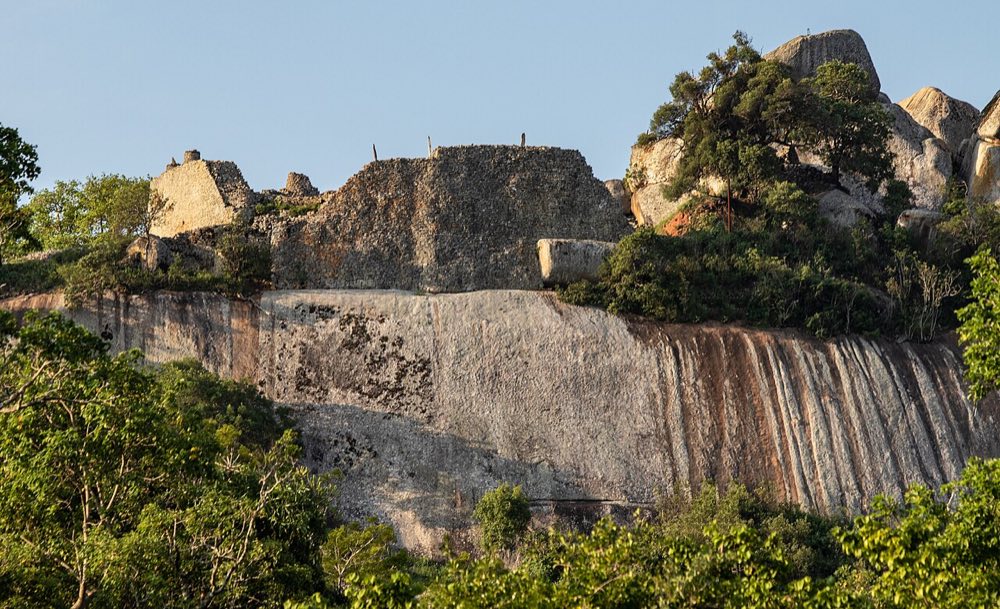
Great Zimbabwe was the capital of a powerful trading kingdom that controlled routes stretching from the interior to the Indian Ocean coast, with artifacts found on site tracing trade links as far as China and Persia. The complex spreads across roughly 800 hectares and includes the Hill Complex, believed to be the royal residence and spiritual centre, and the Great Enclosure, a curved perimeter wall built in the 14th century from precisely cut granite blocks stacked without any mortar at all, decorated with a chevron pattern and anchored by a conical tower whose exact purpose historians still debate.
Standing inside those walls is the closest most Zimbabweans will get to touching the medieval kingdom their own country is named after.
Getting there and what to budget for
Great Zimbabwe sits about 250 kilometres, roughly a four hour drive, from Harare via the A4 to Masvingo, then 25 kilometres south east of Masvingo town to the monument itself. It's a similarly comfortable drive from Bulawayo. Entrance fees run around 5 US dollars for residents and 15 for non-residents, with a lower children's rate, administered by the National Museums and Monuments of Zimbabwe, though it's worth confirming the current rate directly with NMMZ before you travel since fees can shift. The site is generally open from 8am to 5pm daily.
What's nearby
A curio and craft shop sits right at the monument entrance, and the on-site restaurant serves light meals, including sadza, for visitors who don't want to head back into town hungry. Fuller amenities, restaurants, ATMs and shops, are a short drive away in Masvingo town itself.
For anyone wanting to make a weekend of it, the Great Zimbabwe Hotel overlooks the ruins from the edge of Lake Mutirikwi, and the adjacent Lake Mutirikwi Recreational Park offers boating and game viewing, giving the trip a second full day of things to do beyond the ruins themselves.
Why it's worth the drive
Domestic tourism is already keeping Zimbabwe's hospitality sector afloat, the ZTA's own numbers show that. What's missing is that spending and curiosity reaching heritage sites instead of stopping at hotels and resorts. Great Zimbabwe is four hours from Harare, with a craft shop, a place to eat and a lake resort next door, and it's the place the country's name actually comes from.
Sources
- 2024 Tourism Trends and Statistics Report, Zimbabwe Tourism Authority
- Great Zimbabwe National Monument, UNESCO World Heritage Centre
- Monument and Site Entrance Fee, National Museums and Monuments of Zimbabwe
- The Ancient Monument That Gave Zimbabwe Its Name, Ecofin Agency
- Great Zimbabwe Monument Travel Guide, Great Zimbabwe Guide
- Lake Mutirikwi Recreational Park, Zimbabwe Field Guide
Photo: Andrew Moore, Wikimedia Commons (CC BY-SA 2.0).
Researched and drafted with the help of AI tools, then fact-checked and edited by our team. How we work.