
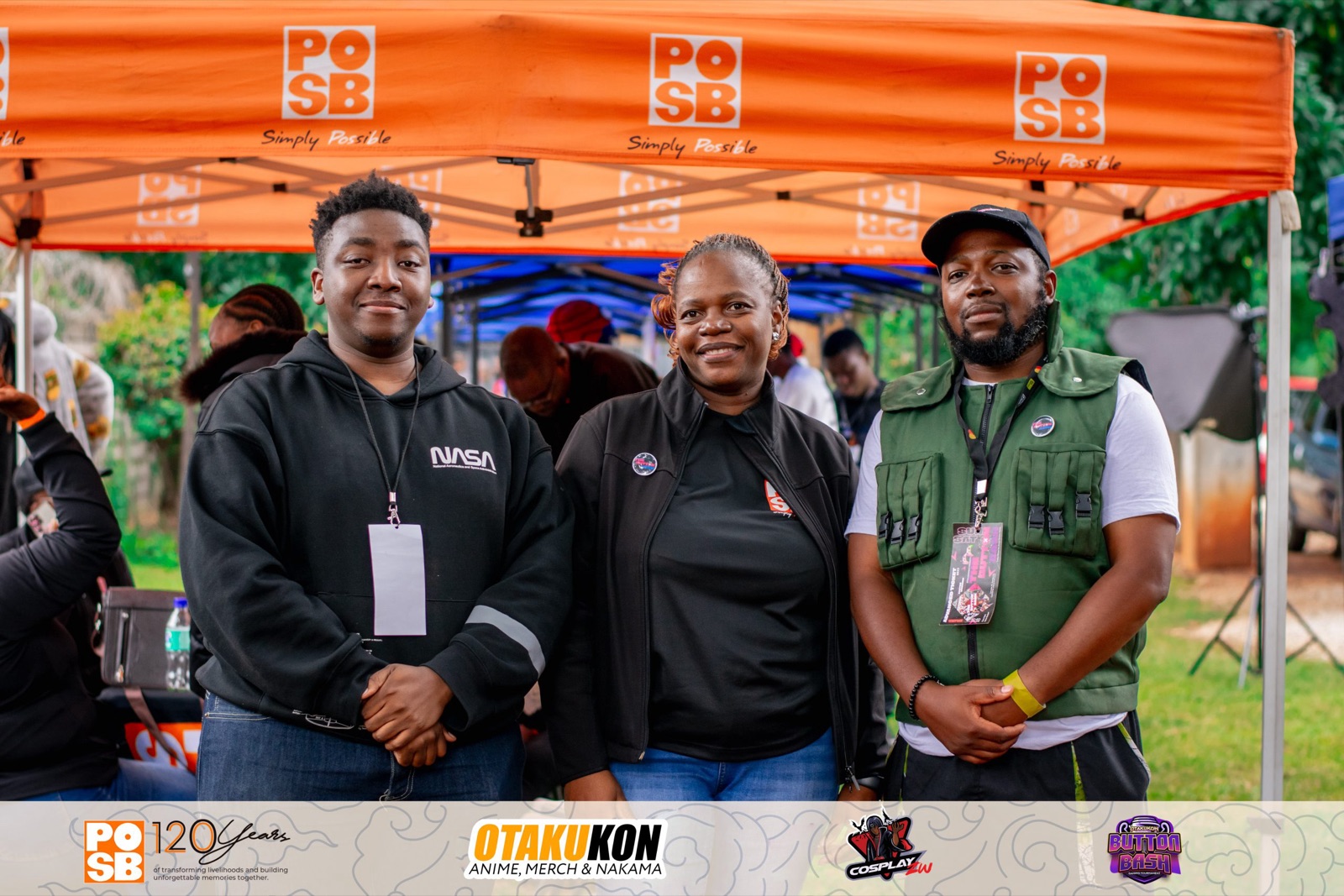
Three and a half years ago, competitive gaming had no official standing in Zimbabwe. Today there is a licensed national association, a football federation entering teams in FIFA's esports competitions, and a convention in Harare where the best fighting game players compete for cash on a stage.
It is real progress. It is also still very small. This is a look at where things stand, who is building it, and what is holding it back.
Who runs it: two routes to a national jersey
The Zimbabwe Electronics Games Association, ZEGA, was licensed by the Sports and Recreation Commission on 20 March 2023, according to its founding president Sydney Savanhu, who spoke to The Standard that year. Four months later it was admitted to the International Esports Federation, which earned it an invitation to the world championships in Iasi, Romania. Bradley Gomo, chosen after local trials, went to compete in eFootball, the first time the country had been represented at that championship.
ZEGA's website now describes it as an associate member of the International Esports Federation, a member of the Global Esports Federation and an affiliate member of ACES, the African esports confederation, and lists PUBG Mobile, Mobile Legends, Street Fighter, Tekken and eFootball as its titles.
Then, in February this year, a second door opened. The Zimbabwe Football Association announced that the country would take part in the FIFAe World Cup in three categories, console, mobile and Rocket League, and promised national trials. "Esports is now a recognised extension of the global game," said ZIFA's competitions and projects manager Kudzai Chitima, "and our participation ensures that Zimbabwean gamers are not left behind."
Match listings show that it happened. A Team Zimbabwe appears in the Rocket League fixtures of the FIFAe Nations League 2026 Africa, against Kenya on 28 April and against DR Congo and South Africa on 2 June, according to listings on Sheep Esports. Liquipedia's page for the second week of African play places Zimbabwe in the 13th to 14th bracket.
A Zimbabwe squad of four players was also listed for the Esports Nations Cup's PUBG Mobile qualifier for Southern and East Africa on 11 and 12 July, a 14-team event with a single place in the main tournament on offer. We could not find published final standings for it.
So a player can now reach a national team through ZEGA or through ZIFA, depending on the game. Neither body has said publicly how the two will work together, and that is a question worth asking before it becomes a dispute.
Where the actual competition happens
Most of the scene is not about national teams. It lives in gaming shops, where a 2023 report on ZEGA's registration noted that a match could cost as little as US$1, and at events run by Otaku Konnect, the group behind the Otakukon anime festival.
Its gaming convention, Button Bash, is the closest thing the country has to a flagship tournament. The 2025 edition ran over two days at Moto Republik in Harare with sponsorship from POSB. An account written by Otakukon founder Archie Moyo for Innovation Village says the winners of the Tekken 8, Mortal Kombat 1 and Blur brackets each received US$500, the largest prize handed to individual players at a local event.
Button Bash came back for a second year on 5 April 2026 with Street Fighter 6, Mortal Kombat 1 and Blur. In between, a Street Fighter 6 invitational at the 2025 anime festival drew 16 players. Otakukon's report on it mentions a player known as Sonic, who has represented the country at Red Bull Kumite in Cape Town, and GalaxyKing K, the Tekken champion from the first Button Bash.
Fighting games lead these events for a practical reason. Two people play on one console in the same room, so nobody needs a fast connection.
Away from organised events, individuals are putting up their own money. In a 2025 interview with writer Omri Marebera, a Harare streamer who goes by Mr Reese said he was funding a US$300 Call of Duty: Mobile tournament himself, open to any African squad, with no brand deals behind him.
How that compares
For scale, the Carry1st Africa Cup, the continent's main Call of Duty: Mobile competition, had a US$30,000 prize pool this year. The African Gaming Championship in Cape Town in July offered at least R150,000 across seven games, and its organiser says more than 300 schools are registered on its school league platform. The Free Fire World Series Africa paid US$10,000.
Next to those, US$500 is modest. But the gap in prize money matters less than the gap in structure. South Africa has school leagues feeding a national final. Otakukon did launch a points-based league for fighting games in 2023, but we could not find an equivalent pathway here that takes a talented teenager from school to a national final.
What is holding it back
Data and connections. A study published in 2025 in the International Journal of Research and Innovation in Social Science surveyed students and educators about starting college esports. Interest was high, with 70 percent saying they would take part. But 80 percent named high data costs as a challenge and 75 percent named limited internet infrastructure. Online games also punish slow connections, which is why the Starlink ground station promised for 2027 is of real interest to gamers, as we covered here.
Sponsors. POSB's backing of Button Bash is the exception. Mr Reese's wish list included "local sponsors willing to pay cash, not just free airtime bundles".
A pathway. The same interview asked for clear steps from school leagues to amateur circuits to professional teams. The 2025 study reached a similar conclusion and added a shortage of coaches, event organisers and people who know how to broadcast a tournament.
Recognition at home. The study also found that many parents, teachers and officials still see gaming as a pastime and not as a sport or a career, and 60 percent of its respondents cited a lack of government support.
One note on language. When The Herald reported in August on a national "Computer Science E-sports" competition for primary schools, it was describing coding and computational thinking contests, which are valuable but are not the same thing as competitive gaming.
Where it goes next
The pieces that were missing three years ago are now in place: a legal status, international memberships, and at least one event that pays. What still looks thin is the middle, regular leagues with fixtures, rankings and enough prize money that practising is worth it.
The cheapest way to build that is on mobile. Across Africa, phones are where most players are and where the continental tournaments now run, and a mobile league needs no venue. It does need data that players can afford. With NetOne selling unlimited home internet at US$60 a month and Econet launching discounted bundles for under-25s this month, the price of practising is finally moving in the right direction.
In the next piece in this series we look at the wider African picture, and at how far the best teams on the continent still are from the world stage.
Sources
- Zimbabwe set for inaugural World Esports Championship appearance, The Standard
- Zim e-sports association ready to roll, NewsDay
- ZEGA, Zimbabwe Electronics Games Association
- Zimbabwe Enters the FIFAe World Cup Arena, ZIFA
- FIFAe Nations League 2026 featuring Rocket League: Africa Week 2, Liquipedia
- Team Zimbabwe vs Team Kenya, FIFAe Nations League 2026 Africa Week 1, Sheep Esports
- PUBG Mobile at Esports Nations Cup 2026: Southern and East Africa Qualifier, Liquipedia
- POSB and Otakukon Host Zimbabwe's Biggest Esports Event, Innovation Village
- Professional eSports League for Zimbabwean Gamers with OTAKUKON eSports, Otakukon
- Otakukon Winter Invitational Heats Up OKAF 2025 with Street Fighter 6 Showdown, Otakukon
- Gaming in Zimbabwe: How Mr Reese Is Building a Chill Shooter Community in Africa, Omri Marebera on Medium
- Launching eSport Intercollegiate Competitions in Zimbabwe: Opportunities and Challenges, IJRISS
- Carry1st Africa Cup 2026 launches as official CDM World Championship Qualifier with $30K prize pool, ITEdgeNews
- Free Fire World Series Africa 2026 Fall is underway with a World Finals slot at stake, GamingonPhone
- The African Gaming Championship returns to GrandWest, ACGL
- Buhera's Young Digital Champions Shine at E-sports tourney, The Herald
- NetOne OneFi Wireless: US$60 Unlimited Geo-Locked Internet Explained, Zimpricecheck
- Econet Launches New Vibe Pack Data Bundles For Subscribers Aged 25 and Below, TechnoMag
Researched and drafted with the help of AI tools, then fact-checked and edited by our team. How we work.