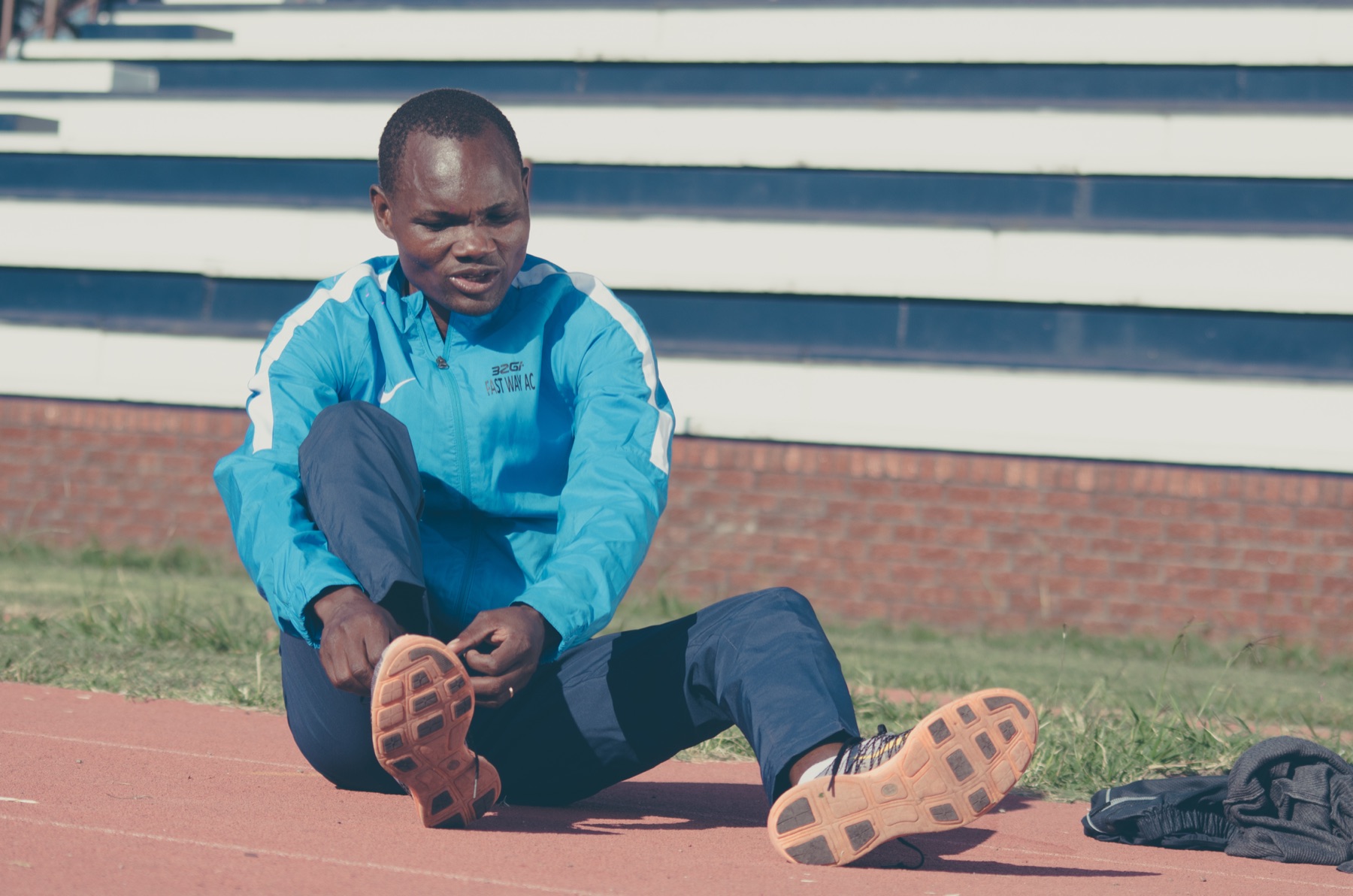

In 2014 a young physicist from Chitungwiza wrote on Facebook that he would take his country to space. According to The Herald, the post was met with ridicule. Eight years later Timothy Kudzanayi Kuhamba was in Japan, part of the small team of students who had just finished building ZimSat-1, the first satellite Zimbabwe ever put into orbit.
It is a good week to tell the story. World Space Week runs from 4 to 10 October every year, and Kuhamba has been its national coordinator here since that same year, 2014.
He started with a classroom, not a rocket
Kuhamba was born and raised in Chitungwiza and studied applied physics at the National University of Science and Technology in Bulawayo. The Herald's profile says his interest in teaching space science began when he started paying for space education sessions in his hometown and noticed how quickly children took to the subject, even though most of what they knew came from cartoons.
UNISEC-Global, the university space engineering network he represents locally, records that he funded the country's World Space Week celebrations out of his own pocket from 2014 to 2017. Only in 2018 did government step in, sponsoring a World Space Week quiz that aired on national television. The following year the Space Generation Advisory Council gave him its Africa Space Leader Award.
How a satellite gets built by students
The route to orbit ran through Kitakyushu. The Kyushu Institute of Technology, known as Kyutech, runs a programme called BIRDS, which newZWire describes as a way of training scientists from countries with no space industry by having them build a real satellite, start to finish. The fifth round, BIRDS-5, took on Zimbabwe and Uganda.
The project manager for the whole BIRDS-5 round was a Zimbabwean, Victor Mukungunugwa, an aerospace engineer trained in Ukraine and at Kyutech who worked on the satellite's structure, its environmental testing and its safety review. Kyutech's own account of the handover ceremony lists him as a second-year master's student at the time. With him were Ramson Munyaradzi Nyamukondiwa, a PhD student in electrical and space engineering, and Kuhamba, who was studying for a master's in space engineering.
Most accounts, including The Herald and UNISEC-Global, credit those three with building ZimSat-1. newZWire's launch-week profile of the team listed a fourth Zimbabwean on the project, Kudakwashe Jeje.
Kyutech unveiled the finished satellites on 10 May 2022 and handed a model of ZimSat-1 to Professor Amon Murwira, then the minister responsible for higher education and science.
A cube you could hold in one hand
ZimSat-1 was a 1U CubeSat. JAXA, the Japanese space agency, describes that as a cube 10cm long on each side. It carried a multispectral camera, and JAXA's mission summary lists land use and cover, water quality and soil fertility among the things it was meant to study.
It did not get its own rocket. On 7 November 2022 it rode to the International Space Station inside a Northrop Grumman cargo ship launched from NASA's Wallops Flight Facility in Virginia. On 2 December it was released from the station's Japanese Kibo module along with Uganda's PearlAfricaSat-1 and two Japanese satellites. NASA's photograph of the moment notes that the station was 264 miles above Namibia.
The part that usually gets left out
The launch was not universally cheered. AFP reported at the time that it set off a debate on social media, with some people praising the achievement and others mocking it, and that government had not said what the satellite cost. The Herald acknowledged critics who felt the money belonged in health and infrastructure.
The satellite also did not last long. Satellites released from the space station sit in a low orbit, and JAXA says they typically stay up for about a year. Techzim reported in January 2024 that the Nanosats Database had recorded ZimSat-1 re-entering the atmosphere on 16 May 2023, a little over five months after its release. The same database notes that announcements about ZimSat-1 sending images were still being published in June 2023, after it says the satellite had come down. We could not find a public statement from the space agency, ZINGSA, settling that discrepancy.
What the country actually got for it
The honest answer is people more than pictures. BIRDS states its own goal as taking a country's "first step towards creating an indigenous space program", and on that measure it worked. ZimSat-2, a second Earth observation satellite, launched from Russia's Vostochny Cosmodrome on 5 November 2024, designed and built by ZINGSA engineers with Southwest State University. Africa Briefing Room reported in January that a third satellite, aimed at broadband, is planned under the 2026 to 2030 national development strategy.
That matters outside the space agency. A satellite programme is only as useful as the people who can read its data, and the uses listed for these satellites, crop monitoring, drought tracking, mapping and disaster response, are everyday problems here. The engineers who learned to build a 10cm cube in Japan are the reason the second one could be built with local hands on it.
Kuhamba has kept teaching. He founded an organisation called Stellar Aspirations in 2020 to take space education to schools that would never otherwise get it, published a book of the same name in May 2025, and told The Herald he was writing a children's book called "Stellar Kids Space Adventures". The World Space Week Association lists him as a principal scientist with ZINGSA, while The Herald's 2025 profile had him based in Kigali, Rwanda.
If you know a child who thinks space is something that only happens in cartoons, this week is a good time to tell them otherwise.
Sources
- The engineer who launched Zimbabwe into orbit, The Herald
- One small step: Meet the scientists behind Zimbabwe's debut satellite launch, newZWire
- Timothy Kuhamba, Point of Contact for Zimbabwe, UNISEC-Global
- Kyutech holds BIRDS-5 Satellite Handover Ceremony, Kyushu Institute of Technology
- 4 CubeSats will be deployed from "Kibo", JAXA
- Small Satellites Deployment J-SSOD#23 from "Kibo", JAXA on YouTube
- A set of four CubeSats are released above Namibia, NASA
- Zimbabwe launches first nano-satellite, AFP via Phys.org
- Is Zimbabwe's 1st ever-orbiting satellite ZimSat-1 no more?, Techzim
- ZimSat-1 Spacecraft, Nanosats Database
- Zimbabwe Operates Two Satellites, Plans Third for Broadband Expansion, Africa Briefing Room
- Zimbabwe coordinator page, World Space Week Association
Researched and drafted with the help of AI tools, then fact-checked and edited by our team. How we work.