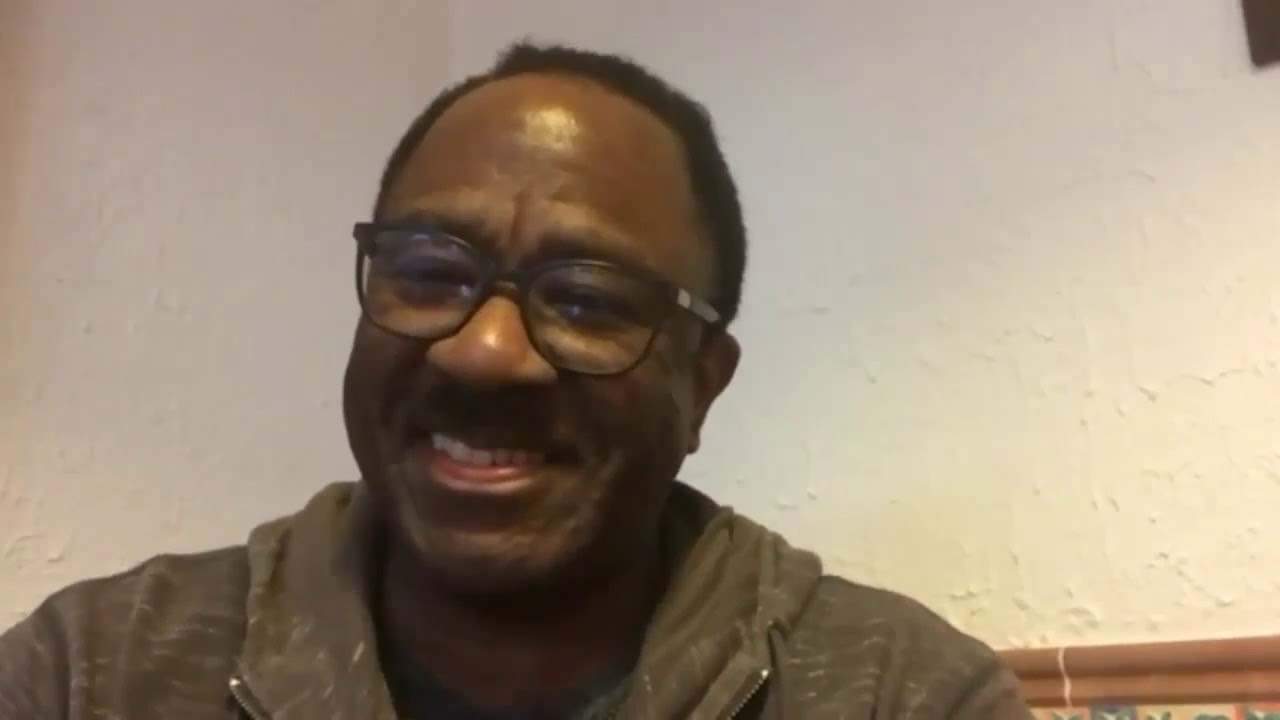
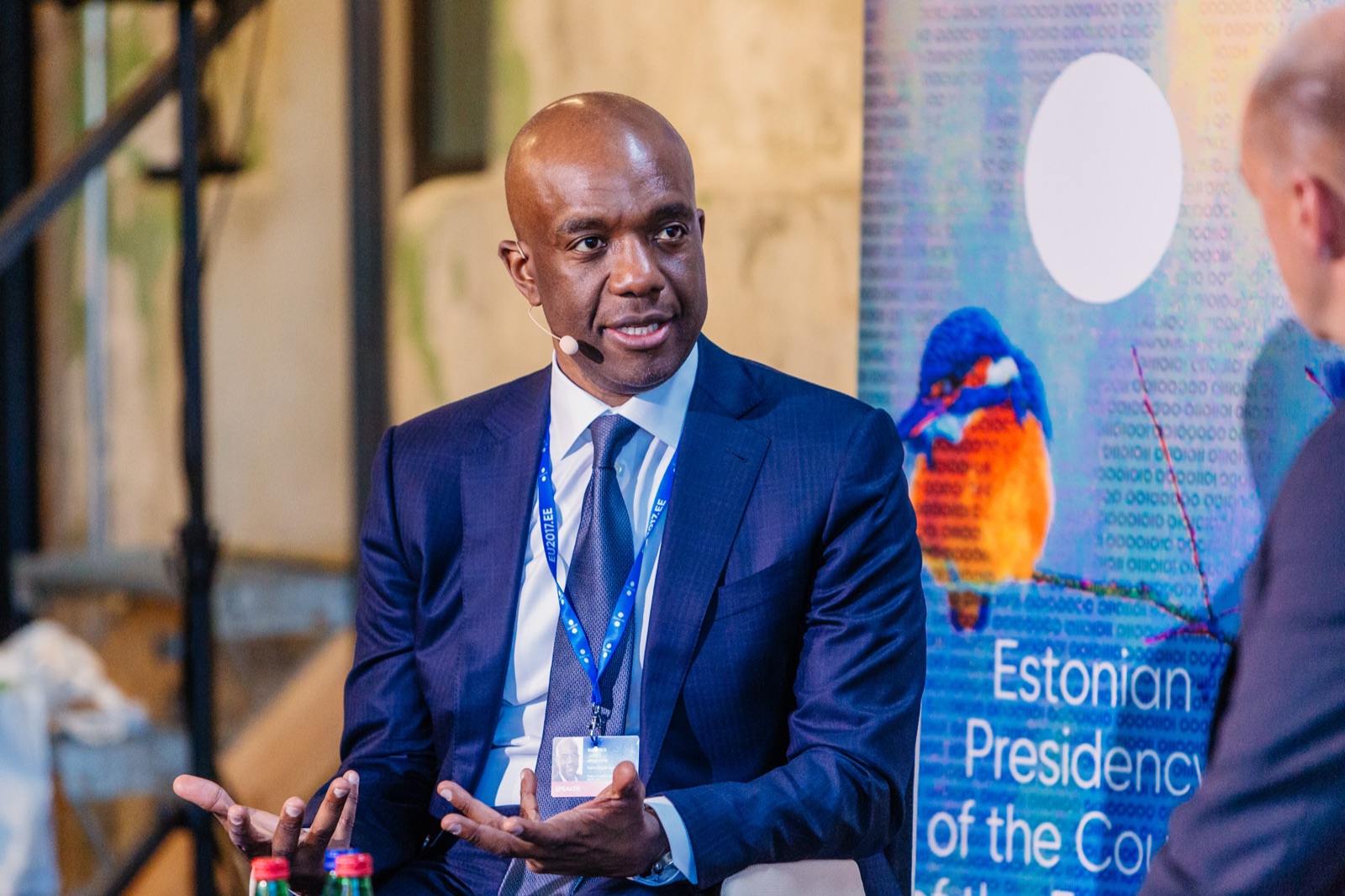
When Google wants to explain what artificial intelligence is for, the person it usually sends is James Manyika. He oversees Google Research and Google Labs, sits on the company's senior leadership team, and co-chaired the United Nations Secretary-General's advisory body on AI.
His very first piece of published work was an AI paper too. He wrote it in Harare.
A neural networks paper from 1992
"The first thing I ever published in my whole life was actually a paper on AI in 1992, as an undergraduate," Manyika told the Possible podcast in 2024. "It was actually on modeling and training neural networks. This is in Zimbabwe, which also surprises people sometimes, given the timeframe."
The timeframe is the remarkable part. Neural networks are the idea behind today's chatbots and image generators, but in the early 1990s most computer scientists had written them off. In a 2023 profile, the Washington Post reported that Manyika was studying engineering at the University of Zimbabwe when he met a graduate student from Toronto who was working on artificial intelligence, and through that student learned about the research of Geoffrey Hinton, who would later be called the godfather of AI. Manyika was hooked.
When he took the idea to Oxford, his advisers warned him not to mention neural networks "because no one will take you seriously".
From Mbare to Prince Edward to Oxford
Manyika was born in 1965 and grew up in what was then Salisbury. In an interview on the Leading podcast in 2025, he described a childhood in Mbare, in a segregated city, during the war years. What gave him his vision as a young man, he said, was his father, who went to the United States on a Fulbright fellowship and visited Cape Canaveral. The young Manyika decided he wanted to be an astronaut.
After independence in 1980 he was one of the first Black pupils to attend Prince Edward School. "We actually took a police escort," he told the Washington Post.
He went on to study electrical engineering at the University of Zimbabwe, won a Rhodes Scholarship, and at Oxford earned a master's in mathematics and computer science and then a doctorate in AI and robotics. He became a research fellow at Balliol College and co-wrote a technical book on how robots combine information from many sensors, published in 1994.
He never made it to space, but he got close to the people who do. He spent time as a visiting scientist at NASA's Jet Propulsion Laboratory, where by his own account he worked in a group building machine learning systems for the Mars Pathfinder programme.
The long detour
Then came what he calls "a long detour". Manyika joined McKinsey, the consulting firm, in the United States in 1997 and stayed for about 25 years, 13 of them as chairman of the McKinsey Global Institute, its research arm. He advised technology companies, wrote widely on automation and the future of work, and was appointed by President Barack Obama as vice chair of the White House's Global Development Council.
He kept one foot in AI throughout. He has said he was involved early on with DeepMind, the London lab founded by Demis Hassabis that Google later bought.
In 2022 Google created a new post for him, senior vice president of technology and society, reporting directly to chief executive Sundar Pichai. A year later the job was widened to take in Google Research and Google Labs. Scientific American interviewed him in June this year about how AI is changing the way science itself gets done.
Optimist with a warning label
Manyika is not a simple cheerleader. The Washington Post profile was built around the fact that he argues AI will bring enormous benefits while having also signed a public statement, alongside hundreds of researchers, saying that the risk from AI should be treated as seriously as pandemics and nuclear war. It is also worth keeping in mind that a senior Google executive is not a neutral voice on whether Google's products are good for the world.
Where he is most persuasive is on who gets left out. Speaking to the French magazine Le Point around a visit to Accra last year, he said that without reliable electricity, internet access and training, "the digital divide risks becoming an AI divide". A point that other influential africans have noted in the tech industry, without the basic infrastructure, innovation is stunted.
Why his story lands differently here
He told the same magazine why Africa is personal for him. "Because I grew up in Zimbabwe," he said. "That's where I began working in computing and where I realised AI's immense potential to address local challenges."
It is easy to read a career like his as a story about leaving. The more useful reading is about what was possible before he left. A student at the University of Zimbabwe in the early 1990s, with none of today's computing power, was able to do original work in a field that the world's leading universities were ignoring. The ingredients were a chance meeting with someone who knew the field, and a stubborn interest.
That is worth remembering now that Econet says it has hired more than 100 engineers for its AI unit. His advice to students in Ghana applies equally in Harare, Bulawayo or Gweru: "Be ambitious. Africa has talent, energy, and creativity in abundance. Study AI, launch projects, become entrepreneurs."
He also had a caution for anyone who thinks learning to code is the whole job. Coding is essential, he said, but mathematics, statistics and an understanding of systems and data are the foundation. "My worry is that too many think coding alone is enough. It isn't."
Sources
- James Manyika on AI and Global Inclusion, Possible
- James Manyika: Google's AI ambassador walks a fine line between hype and doom, Washington Post via NewZimbabwe.com
- "African researchers are among the most talented in the world" says Google Senior Vice-President James Manyika, Le Point
- Is AI the answer to human suffering? (James Manyika), Leading podcast notes via PodPulse
- Sunday Luminary: James Manyika is on the frontier of AI revolution and technology, My Afrika Magazine
- James Manyika, Stanford Institute for Human-Centered AI
- James Manyika, Blavatnik School of Government, University of Oxford
- On Discovery with James Manyika, Where Shall We Meet podcast
- Google's James Manyika on the excitement pushing AI and science to new heights, Scientific American
- James Manyika, Wikipedia
Researched and drafted with the help of AI tools, then fact-checked and edited by our team. How we work.