
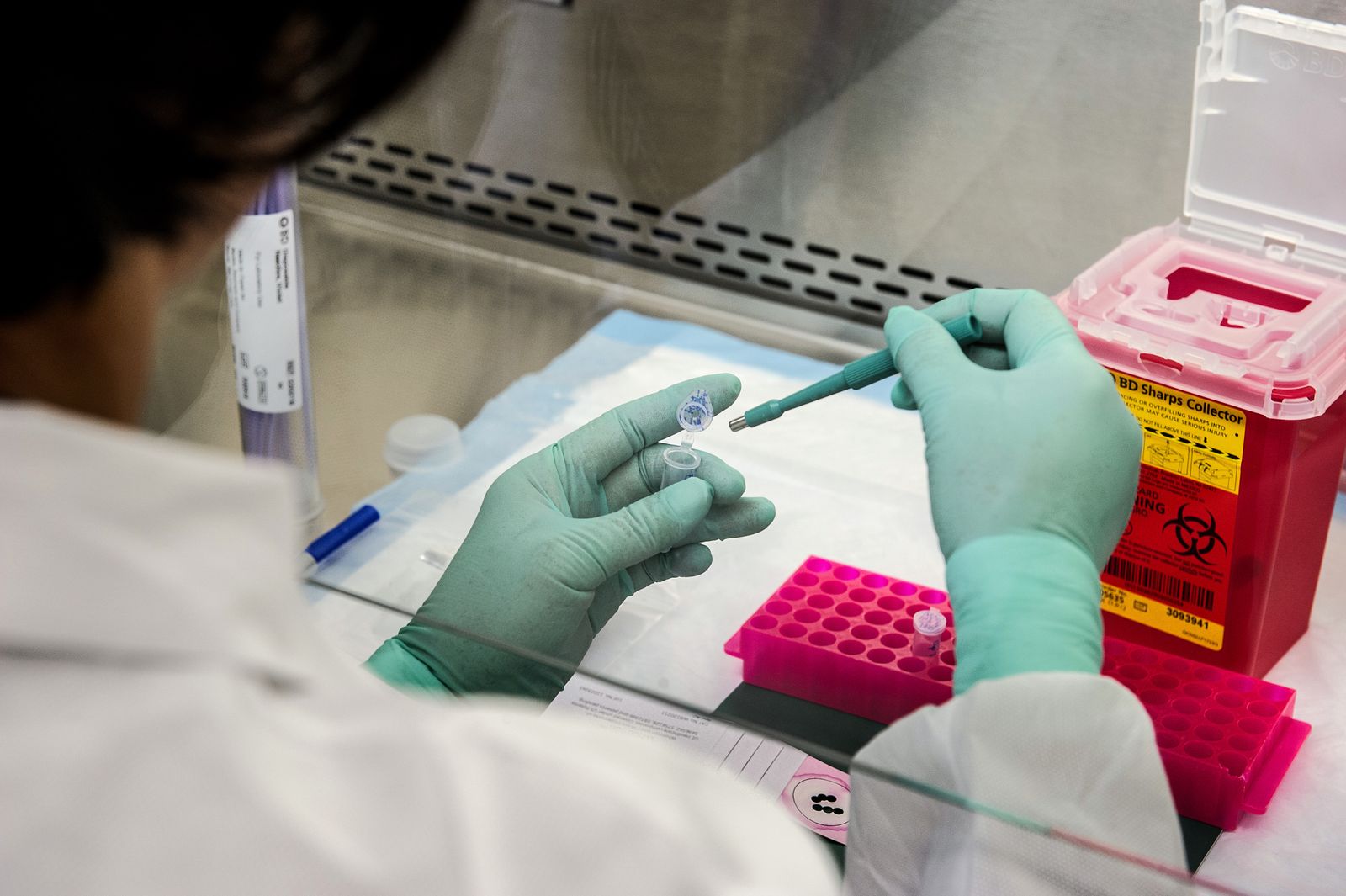
A young laboratory technician at one of Russia's oldest disease-control institutes has died, and for the past few days the internet has filled the gaps in the official story with the word "plague". Some of that is justified concern. A lot of it is guesswork. This piece separates the two, then steps back to answer the bigger questions readers have been asking: how many of these labs exist, where they are, and how often things actually go wrong.
What happened in Irkutsk
The person who died is Darya Shipilova, 28, a laboratory technician at the Irkutsk Anti-Plague Research Institute of Siberia and the Far East, according to Al Jazeera and RFE/RL. The institute, founded in 1934, is part of the network that monitors plague, cholera, anthrax and other dangerous infections across Siberia and Russia's Far East.
Here is the timeline as it has been reported so far:
- 25 September: Independent Irkutsk outlet Lyudi Baikala reported that Shipilova accidentally broke a test tube containing live bacteria while working. RFE/RL notes that Russian authorities have not confirmed this account.
- Tuesday 29 September: She was admitted to hospital in Shelekhov, a town just outside Irkutsk, with severe pneumonia, The Moscow Times reports. Her condition worsened quickly and she was placed on a ventilator.
- Thursday 1 October: She died.
- From Friday 2 October: More than 60 institute staff were kept inside the building while tests were run, with RFE/RL's sources describing people sleeping on floors and chairs. Around 200 people who may have had contact with her were placed under medical observation.
Euronews reports that several Irkutsk hospitals, including a children's hospital and a maternity hospital, were put under quarantine, the district hospital in Shelekhov was closed, and the Irkutsk Aluminium Plant in Shelekhov told workers to wear masks.
Was it plague? The honest answer: it has not been confirmed
This is where the story gets messy, and where most of the fear online is coming from.
What Russian officials say. Rospotrebnadzor, the national health watchdog that runs the institute, says Shipilova died of "pneumonia of unknown aetiology", meaning the cause has not been identified. It says extra tests on her samples found no microorganisms connected to her work, that no accident involving dangerous pathogens was recorded at the institute, and that the situation in Irkutsk and Shelekhov is stable. Daily testing of her contacts found two Covid-19 cases and two rhinovirus (common cold) cases, and nothing else, Euronews reports. Irkutsk governor Igor Kobzev said the situation "remains under our control".
Why people still say plague. Alexei Tsydenov, head of the neighbouring Buryatia republic, publicly said she had died "possibly from the plague", AP reports via WRAL, and early Telegram reports said the same. Those early statements, the broken test tube account and the size of the quarantine are what set off the alarm.
Other voices. Gennady Onishchenko, a former head of Rospotrebnadzor, told Russian media the infection was "most likely not the plague", according to AP. The Kremlin, through spokesman Dmitry Peskov, told journalists to rely on Rospotrebnadzor rather than "various rumours". Abroad, the US State Department said it was monitoring the case with the CDC and urged Moscow to "share accurate information quickly and openly", ABC News reports. Secretary of State Marco Rubio told RFE/RL he did not think it was "cause for alarm", but was "cause for focus", and President Donald Trump said the US was "always willing to help".
So the fair summary is this: a lab worker at a plague institute died of a severe lung infection, her colleagues and contacts are being watched closely, and so far none of them has tested positive for anything dangerous. Whether the official line holds will depend on what further testing shows, and on whether Russia shares its findings openly.
A quick word on plague itself
Plague is caused by the bacterium Yersinia pestis, which lives in rodents and their fleas. It is not a medieval relic: the WHO and Africa CDC note that Madagascar and the Democratic Republic of Congo report human cases almost every year, with Madagascar alone typically seeing a few hundred.
The form that worries health officials is pneumonic plague, which infects the lungs and is the only form that can pass from person to person. Untreated, it is almost always fatal, and quickly. But it responds to common, cheap antibiotics, and early treatment is highly effective, a point the US State Department made in its own statement. That is why the response to a suspected case is fast contact tracing and preventive antibiotics, not panic.
How many of these labs are there?
Labs that handle dangerous pathogens are graded by biosafety level (BSL), from 1 to 4. BSL-4 is the top tier, built for agents like Ebola, with sealed suits, airlocks and filtered air. Plague bacteria are normally handled at BSL-3.
The best public count comes from the Global BioLabs project at King's College London. Its 2023 report found:
- 69 BSL-4 labs operating, under construction or planned, across 27 countries, up from 59 labs in 23 countries in 2021. Of those, 51 were operating.
- Europe has the most with 26, then Asia with 20 (11 of them planned, in countries including China, India, Kazakhstan and Singapore) and North America with 15. Australia has four.
- Africa has three: operating labs in Gabon and South Africa, and one under construction in Côte d'Ivoire. South America has one planned, in Brazil.
- The United States has the single largest concentration, with 28 BSL-4 and "BSL-3+" labs in operation. Counting both tiers, there are well over 100 of these top-containment facilities worldwide.
- About three quarters of BSL-4 labs are in cities, and only one of the 27 countries with BSL-4 labs had comprehensive national laws overseeing "dual-use" research that could be misused.
Russia is expanding too. In 2021 Rospotrebnadzor chief Anna Popova told TASS the country planned 15 new maximum-biosafety labs by 2024 under a programme called the "Sanitary Shield". BSL-3 labs, the level that would normally handle plague, are far more common and not centrally counted anywhere, which is itself one of the concerns researchers raise.
How often do lab accidents happen?
More often than most people realise, and far less often with deadly results than the headlines suggest.
- Infections are rare, deaths rarer. A 2023 review in The Lancet Microbe found 309 lab-acquired infections worldwide between 2000 and 2021, across 94 published reports and 51 different pathogens. Eight people died, and two of those deaths were from the plague bacterium. The review also recorded 16 cases of pathogens escaping a lab setting, and found that about 70% of incidents came down to procedural errors, people not following safety steps. The authors stress that many incidents are never reported, so the real number is higher.
- Near misses are routine, and mostly harmless. In the US, where reporting is mandatory for the most dangerous agents, the Federal Select Agent Program received 215 reports of possible releases in 2023. Only one led to a worker falling ill. None caused a death, none spread between workers and none reached the surrounding community.
- Quarantine is the standard response, not a sign of an outbreak. When an exposure is suspected, contacts are monitored for the length of the incubation period. Russia has done this before: in 2004 Antonina Presnyakova, a researcher at the Vector virology centre near Novosibirsk, died after pricking herself with an Ebola-contaminated needle, and the people involved in her care were kept under observation for 21 days, CIDRAP reported. No one else fell ill.
The bigger risk, experts at Global BioLabs argue, is not any single lab but the speed at which new ones are being built compared with the rules meant to govern them.
What it means for us
For readers in Zimbabwe and across the region, there is no sign of any risk from this case. It is one death, thousands of kilometres away, and the people closest to it have so far tested negative.
The useful lessons are wider ones. Africa hosts only a handful of top-tier labs, and the continent still deals with real plague cases in Madagascar and the DRC, so the lab capacity it does have matters for diagnosis and research. And the Irkutsk case shows how fast a story can outrun the facts when information comes out in pieces, through deleted posts and anonymous Telegram channels. Clear, early reporting from health authorities is what stops a medical incident from turning into a panic.
We will update this story if the cause of death is confirmed.
Sources
- Russian lab worker dies of suspected plague in Siberia; US monitoring case, Al Jazeera
- Researcher at Russian plague laboratory dies of 'unknown' infection, AP via WRAL
- Nearly 200 People Under Observation After Irkutsk Lab Worker Dies From Plague, The Moscow Times
- Russia denies lab worker died of plague as quarantine in Siberia stays in place, Euronews
- Siberian Anti-Plague Institute Staff Isolated After Worker's Death, RFE/RL
- Trump says US would help Russia amid reported fatal case of pneumonic plague, ABC News
- Global BioLabs Report 2023, King's College London
- Laboratory-acquired infections and pathogen escapes worldwide between 2000 and 2021, The Lancet Microbe
- 2023 Annual Report of the Federal Select Agent Program, CDC/USDA
- Russia to set up 15 highest biosafety level labs by 2024, TASS
- Russian scientist dies of Ebola after lab accident, CIDRAP
- Plague, Africa CDC
- Institute history, Irkutsk Anti-Plague Research Institute
Researched and drafted with the help of AI tools, then fact-checked and edited by our team. How we work.