
Zimbabwe now has a rulebook for how artificial intelligence should be built and used here, at least in outline. Cabinet approved the Zimbabwe National Artificial Intelligence Charter on 17 November, and the Ministry of Information announced it after that day's Cabinet meeting.[1]
The charter is the governing framework for the National AI Strategy 2026 to 2030, which President Mnangagwa launched at the New Parliament House on 13 March.[1][2] The Ministry says it turns the strategy's pillars into "binding ethical principles and commitments", meant to keep AI human-centred, transparent, inclusive, and in line with national values and the Constitution.[1]
That is most of what is officially on the record. Reports of the full briefing statement, carried by more than one outlet, add that the charter draws on Ubuntu/Unhu values and sets up structures for oversight, coordination and handling complaints about AI. The Ministry's own post doesn't spell those parts out, and the charter's text has not been published. So the clearest guide to where it points is the strategy it serves.
What the strategy already promises
The strategy's pillars cover skills, computing infrastructure, adoption across sectors, governance and ethics, research and international cooperation.[3] Its ethics section is built on Ubuntu and commits to fairness, transparency, accountability and human oversight, with mandatory bias testing for high-stakes uses of AI.[3]
It also plans a set of new bodies: a National AI Council to oversee AI, an implementation office in the ICT ministry, a National Data Agency, an AI Ethics Board and a parliamentary committee on AI. In its first phase, the plan is to draft a National AI Act and revise the Cyber and Data Protection Act for AI.[3]
For creators
Musicians, designers, writers and filmmakers have the most open questions. The strategy lists copyright and patent law as areas to modernise for AI, and names deepfakes and AI-driven misinformation as a threat to public trust.[3] It also talks about protecting indigenous knowledge, promoting local languages and cultural heritage, and building language technology for local languages.[3]
What it doesn't yet say is whether your songs, photos or writing can be used to train an AI model without your permission, or who owns a beat an AI helped make. Those answers would come from the copyright reforms and an AI Act, not from the charter on its own.
For developers and startups
The most concrete offers are for builders. The strategy plans a regulatory sandbox, called the Innovation Crucible, run with regulators including POTRAZ, where a first group of five to seven startups would test AI products with temporary flexibility on the rules.[3] It also plans a National AI Innovation Fund that would match private investment in certified AI startups, and a voluntary "Trustworthy AI, Made in Zimbabwe" certification.[3]
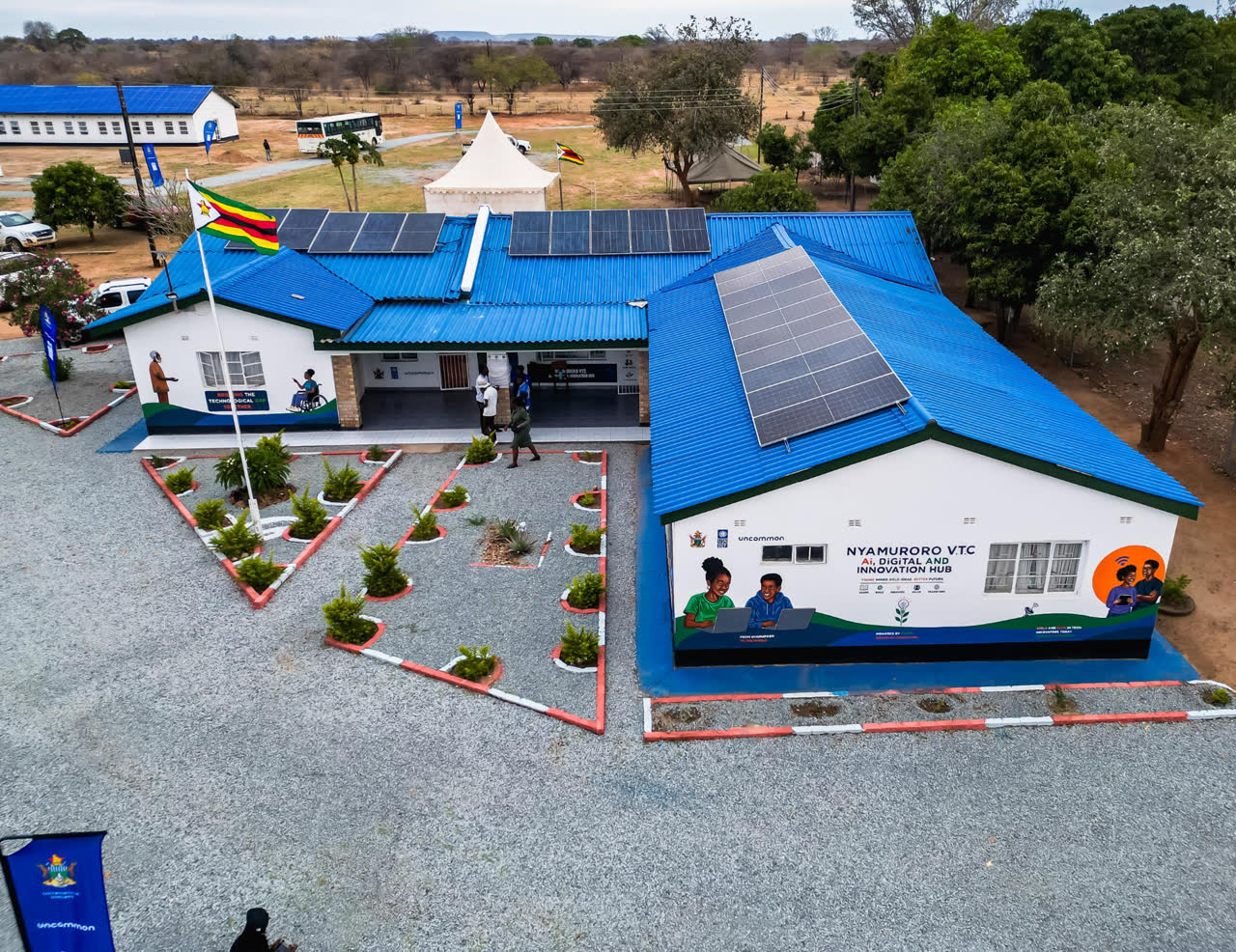
Computing power is the other gap. The strategy promises secure national computing and data infrastructure.[3] For now, the nearest large GPU capacity for a Zimbabwean developer is in South Africa, as we covered in our piece on Cassava's 12,000 GPUs. Skills are starting to grow closer to home, at places like the new AI hub in Gokwe North.
For everyday users
Most people already meet AI through their phone network and apps, sometimes without knowing it, as with Econet's AI tools flagging phones stuck on the wrong network setting. The strategy treats the Cyber and Data Protection Act of 2021 as the starting point for AI rules on personal data.[3]
If the charter does include complaints handling, it would give ordinary users somewhere to go when an AI system treats them unfairly. The strategy already imagines an AI Ombudsman, and counts the complaints it handles as one measure of success.[3] Who that would be, and how you would reach them, is not yet public.
What we still don't know
- The text. Until the charter is published, nobody outside government can check what it actually commits to.
- How "binding" works. A charter is not an Act of Parliament. The strategy's National AI Act is still to be drafted, so it is unclear who would enforce the charter and what happens if a company ignores it.
- Complaints. Which body takes a complaint, and what it can do about it.
- Creative work. How training data, copyright and deepfakes will be handled in practice.
The direction is clear enough: AI that is built here, reflects local values and has rules around it. The detail that will matter to creators, developers and users is still to come, and we will update this piece when the charter is published.
Sources
Zimbabwe National Artificial Intelligence Charter, Ministry of Information, Publicity and Broadcasting Services on X ↩︎ ↩︎ ↩︎
Zimbabwe Unveils 2026–2030 AI Strategy to Advance Inclusive Digital Transformation, United Nations in Zimbabwe ↩︎
Zimbabwe National Artificial Intelligence Strategy 2026 to 2030, Ministry of ICT, Postal and Courier Services ↩︎ ↩︎ ↩︎ ↩︎ ↩︎ ↩︎ ↩︎ ↩︎ ↩︎ ↩︎
Researched and drafted with the help of AI tools, then fact-checked and edited by our team. How we work.