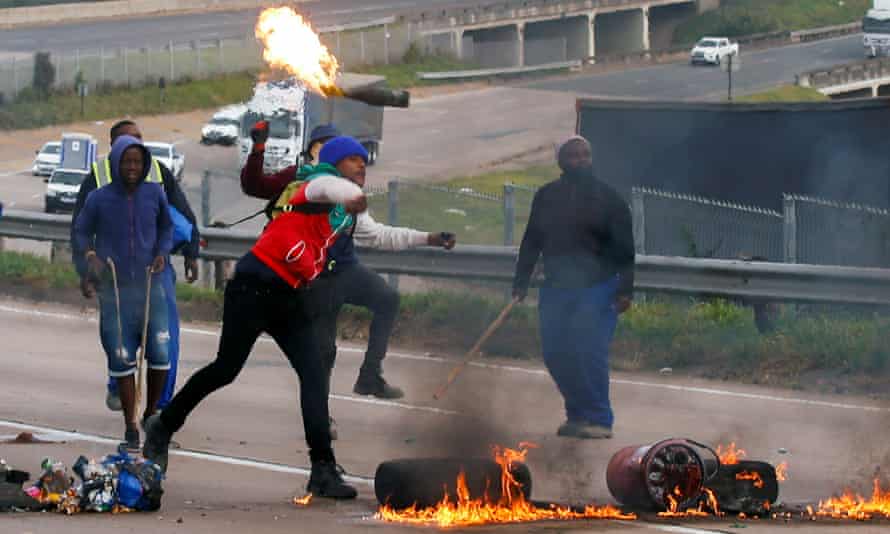
The unrest that swept South Africa in July 2021 had an immediate trigger: former President Jacob Zuma's imprisonment. On 29 June 2021, South Africa's Constitutional Court sentenced Zuma to 15 months in jail for contempt of court, after he refused to testify before a commission investigating corruption during his presidency. When he was taken into custody on 7 July, sporadic protests by his supporters in KwaZulu-Natal quickly grew into widespread looting and destruction of property that spread to Gauteng province and beyond.
Two things were happening at once
Analysts and South African officials have debated how much of the unrest was spontaneous versus organised. Government ministers at the time described elements of it as an attempted "insurrection", coordinated sabotage of infrastructure by people aligned with Zuma, intended to destabilise the country and pressure his release. But most of the damage came from opportunistic, large-scale looting that had little to do with Zuma at all, and everything to do with the conditions people were already living in.
South Africa entered 2021 with unemployment at a record 32.6%, battered by the economic damage of the country's COVID-19 lockdowns on top of decades of entrenched inequality. When the initial unrest created an opening, that desperation is widely credited with turning it into the widespread looting that followed, this was largely opportunistic unrest driven by poverty, not the kind of xenophobic violence targeting foreign nationals that South Africa has separately and repeatedly experienced in other years.
By the time the unrest was brought under control, South Africa's government put the death toll at 354, with an estimated R50 billion in economic damage, most heavily felt in KwaZulu-Natal's supply chains and small businesses.
The underlying problem hasn't gone away
Five years on, the conditions that turned a political flashpoint into mass unrest haven't improved. South Africa's unemployment rate climbed to 33.6% in the second quarter of 2026, higher than it was in 2021, and the country still has the world's highest Gini coefficient, a measure of inequality, at roughly 63. Whatever the political trigger, the underlying story from 2021 is still the story now.
Sources
Researched and drafted with the help of AI tools, then fact-checked and edited by our team. How we work.