Meta used its annual Connect event this week to make its clearest case yet that the next big computer will sit on your face. There were lightweight VR glasses, a pair of Ray-Bans with no camera at all, a third generation of its best-selling smart glasses and a keychain gadget built entirely around its new AI agent, Muse. For anyone reading from Southern Africa, though, the more interesting story is what's actually going to reach us, and what isn't.
The headline hardware
The star of the show was Meta VR Glasses. According to Engadget, they weigh around 100 grams, which Meta says makes them five times lighter than the Quest 3 headset, and they pack a 5K display with full-colour passthrough. The trick is that most of the hardware has been moved off your head: a tethered puck, running Qualcomm's Snapdragon Reality Elite chip, holds the processing, storage and battery. Meta is pitching them as a private cinema, a gaming device that runs the Quest library, and a virtual desktop for a Windows PC or Mac. They go on sale next spring at $1,299, which puts them squarely in premium territory.
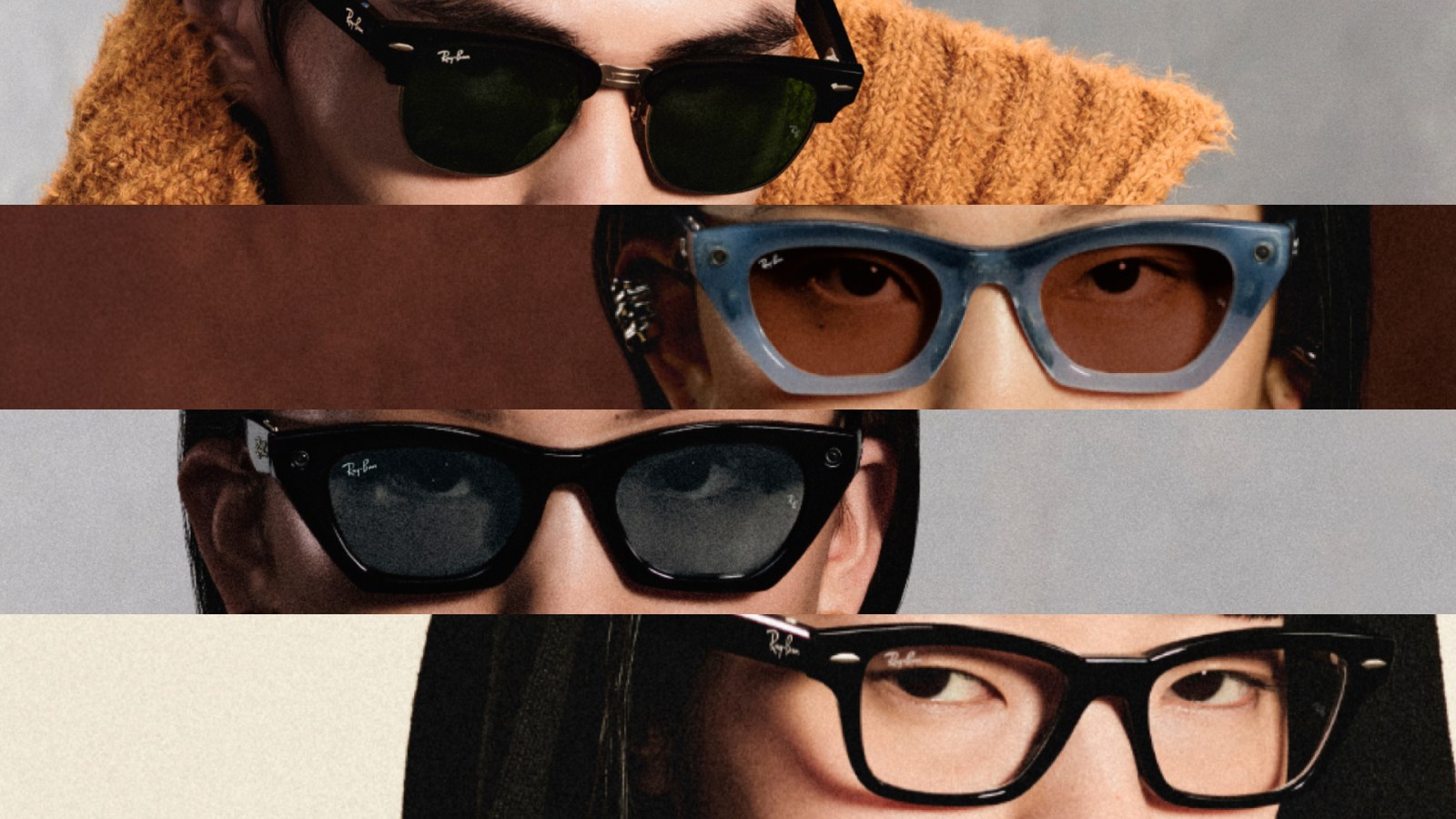
On the everyday side, Meta's own announcement introduced Ray-Ban Meta Audio, its first smart glasses without a camera. They weigh 43 grams, run up to 12 hours on a charge with a further 48 hours from the case, and start at $349, shipping on 13 October. The camera-equipped Ray-Ban Meta line also moved to its third generation, starting at $449, with an extra hour of battery life, a six-microphone array Meta says cuts out over 90 percent of background noise, and new Aviator and cat-eye frame options alongside the Wayfarer.
Muse was the real main event
The hardware was the visible part, but Meta spent much of the keynote on Muse, the personal AI agent it released earlier this month. Unlike a chatbot, Muse is built to carry out tasks: Engadget describes it browsing the web, booking travel, making calls, sending emails and even making purchases for you. Meta says Muse is coming to its AI glasses in the coming months, where you'll wake it by saying its name and it will be able to act on whatever you're looking at.
Zuckerberg closed the keynote with Muse Charm, a palm-sized keychain device with a small screen showing your agent's avatar, unlocked with a fingerprint. Meta has shared few details, but says it should ship in December. The message across the whole event was consistent: the glasses, the Charm and the VR headset are all, in the end, ways to reach Muse.
The privacy question Meta didn't fully answer
The camera-free Audio glasses are hard to read as anything other than a response to a bruising year for Meta's wearables. Tom's Guide points out that 2026 brought repeated reports of smart glasses being used to secretly film and harass people, many of them women, with the footage then circulating on social media. There was even a market for services that disabled the small recording light meant to warn people they were being filmed. The outlet's verdict was that the one thing missing from the keynote was an apology.
Meta's position is that it is giving buyers choice rather than retreating from cameras, since the Gen 3 Ray-Bans keep theirs. That's a fair reading of the lineup, but it does mean the underlying concern hasn't gone anywhere. It has simply been given a camera-free alternative.
What actually reaches Southern Africa
Here's where it gets relevant for readers in the region. In the fine print of its announcement, Meta says Ray-Ban Meta, Oakley Meta and Ray-Ban Meta Optics will launch officially in South Africa later this year, alongside markets including Indonesia, New Zealand and the Philippines.
That's a meaningful step. Until now, South African buyers have relied on local stockists. Evetech reports that the standard second-generation Wayfarer has been selling there for around R10,745, while the Ray-Ban Meta Display model, the one with a screen in the lens, has only been available as a grey import with no official support. An official launch should mean proper warranties, local pricing and a clearer route for buyers across the wider region, many of whom already shop through South African retailers.
The catch is Muse. The agent Meta built its whole show around launched in the US, and according to Yahoo Finance, chief AI officer Alexandr Wang said it has since rolled out in Canada, with more countries planned. No dates were given, and no African market was named. Several of the other Connect announcements carry the same limitation: the hearing enhancement feature is launching in the US first, and features like transit directions on the Display glasses are US and Canada only for now.
So the likely picture for early buyers in Southern Africa is glasses that handle music, calls, photos and video well, with the agent that makes them a Connect headline still out of reach.
What it means
For most readers here, the most useful thing to come out of Connect 2026 isn't the $1,299 VR headset, it's the confirmation that Meta's glasses are being brought into the region officially. That makes them a safer purchase than a grey import, and it signals that Meta sees Southern Africa as a market worth supporting.
But it's worth being clear-eyed about what you're buying. Meta's own framing is that its glasses are becoming a front end for an AI agent that runs errands, spends money and acts on what you see. Until Muse arrives here, and until there's more clarity on how Meta handles the data those agents collect, local buyers are getting the frame of that vision rather than the whole thing. If Meta's pitch is right and AI agents become the reason people buy glasses, the gap between when the hardware lands and when the AI follows will matter more with every launch.
Sources
- Introducing Ray-Ban Meta Audio and More AI Glasses Styles, Meta
- Everything announced at Meta Connect 2026, Engadget
- What was missing from Meta Connect 2026? An apology, Tom's Guide
- Ray-Ban Meta in South Africa: Price and Availability, Evetech
- Meta Platforms Unveils Muse AI Agent, Expands Smart Glasses and VR Push, Yahoo Finance
Researched and drafted with the help of AI tools, then fact-checked and edited by our team. How we work.