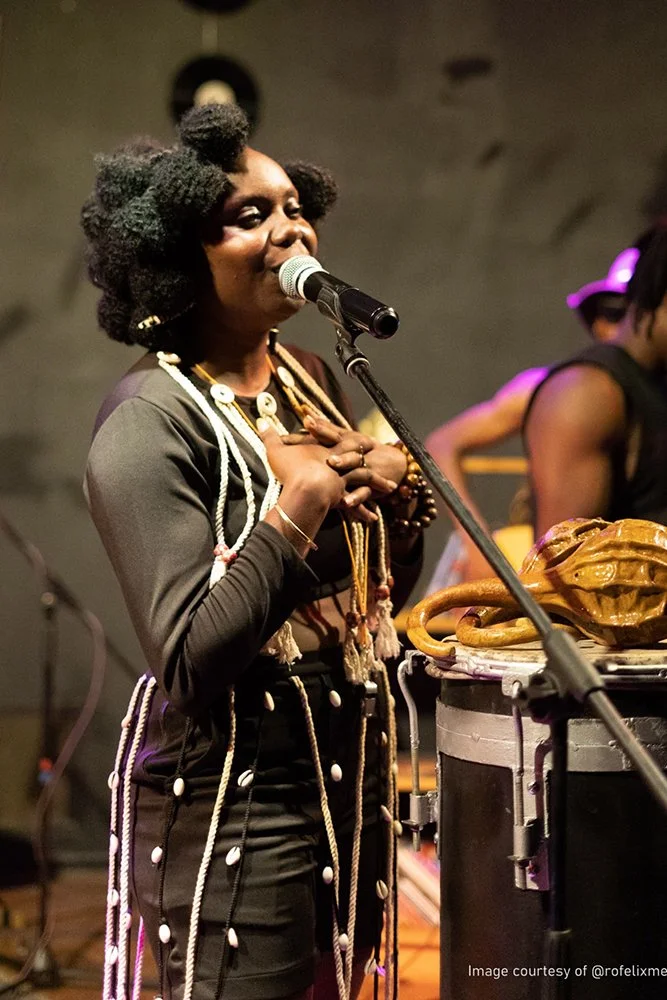
Did you know a Zimbabwean mbira player has just been selected for one of Africa's biggest music industry showcases? Mary Anibal, a Harare-based singer, songwriter, and mbira player, is part of the first announced lineup for ACCES 2026, the ninth edition of the Music In Africa Conference for Collaborations, Exchange and Showcases, running from 28 to 31 October in Johannesburg.
Who is Mary Anibal
Anibal's career began in 2016 as a session mbira player, working behind the scenes for other artists before her 2017 performance at the Harare International Festival of the Arts (HIFA) alongside Madagascar's Soa Roy and Forest Jam marked a turning point, according to her Music In Africa profile. She won the Zimbabwe Music Award for Best Traditional (Chinyakare/Chimurenga) in 2023, and released her debut album, Maria Wenyu, in September 2024 to critical acclaim, followed by the single "Bhonzo" in April 2025.
Her sound centres the mbira, one of Zimbabwe's most iconic traditional instruments, within contemporary Afro-fusion arrangements, and her music doubles as a platform for women's rights advocacy, according to her official website, part of the same wave of Zimbabwean artists pulling traditional instruments like marimba onto dance floors rather than leaving them in the past. She's previously performed at Sauti za Busara in Zanzibar, the Habari Africa Festival in Toronto, and the MASA Festival in Côte d'Ivoire, along with shows across Germany, France, and Switzerland.
What ACCES 2026 means for her
Music In Africa's announcement places Anibal in the showcase's first batch of confirmed artists alongside South Africa's Sun-El Musician and Pilani Bubu, Ghana's FimFim, and other acts from across the continent. She'll share the ACCES stage with fellow Zimbabweans Sylent Nqo and The Noisemakers, giving Zimbabwean music a notable presence at the event.
For Anibal, the milestone isn't just visibility, it's a first. "I am absolutely excited and honoured to be representing Zimbabwe on a global stage at ACCES 2026 in Johannesburg," she told Youth Village Zimbabwe, explaining that while she's represented Zimbabwe internationally before, this will be her first time performing in South Africa with her full band. The conference itself runs on 29 and 30 October at The Forum in Bryanston, with an expanded showcase festival and industry nights across Johannesburg venues from 28 to 31 October.
Why it matters beyond one show
Anibal's selection is part of a broader pattern worth noting, Zimbabwean traditional instrumentation finding real traction on regional and international stages rather than staying confined to cultural festivals at home. As she put it to Youth Village Zimbabwe, the milestone reinforces her belief that "dedication and perseverance can create opportunities for artistes who continue developing their craft."
Sources
Researched and drafted with the help of AI tools, then fact-checked and edited by our team. How we work.