In the space of about 48 hours, three of the biggest names in tech each launched something big. Meta released Muse Wonder, its first attempt at a frontier AI model, on 12 October. A day later Google opened up Gemini 4 Argon to paying users and developers, and Apple announced HomeView, its first smart display. The question for readers in Zimbabwe and the region is simple: what can you actually use, and what will it cost?
Gemini 4 Argon: available here, but behind a paywall
Google's own announcement says Argon is "globally available" from 13 October, but the route in depends on who you are. Everyday users get it in the Gemini app and in AI Mode in Search only if they pay for Google AI Pro or Google AI Ultra. Developers reach it through the paid tier of the Gemini API. Google Antigravity, the company's agentic coding tool, gets Argon only for Ultra subscribers.
The good news for local readers is that the paywall is the only real gate. Zimbabwe appears on Google's Gemini mobile app availability list, and it is also on Google's list of countries where Google AI Pro is supported, as are South Africa, Zambia, Botswana and Mozambique. In principle, a Zimbabwean with a Google account and a payment method Google accepts can subscribe and use Argon this week. Google does not publish a Zimbabwe price for AI Pro in the pages we checked, so look at the plan screen in the Google One or Gemini app before you assume a figure.
For developers the numbers are clearer. Google is charging an introductory $2 per million input tokens and $10 per million output tokens, with cached input 95 percent cheaper. That offer ends on 30 November 2026, and from then the price doubles to $4 and $20. TechPulse notes that Argon is not on the free API tier at all, and that output pricing includes the model's "thinking" tokens, so long reasoning jobs can cost more than the visible answer suggests.
Muse Wonder: a developer model, and the app still isn't here
Meta's release is two models. Muse Wonder is available through the Meta Model API and Muse Code, Meta's coding agent, at $4 per million input tokens and $20 per million output, according to Meta's developer blog. The more powerful Muse Wonder Full is limited to paying Muse Code subscribers and, as TechCrunch reports, is not served through the API.
What most ordinary users will want is Muse, the personal agent that books, buys and sends things on your behalf. Meta's research blog says Muse Wonder "will soon power experiences in Muse", starting with subscribers, but gives no date. More importantly for us, the Muse app itself has so far launched only in the US and Canada. Reuters reported the US-only start in September, and Meta's Muse subscriptions help page says Muse and its subscriptions "aren't available in all locations yet", without naming any others. No African country has been announced. We covered the same gap after Meta Connect, in Meta's AI Glasses Are Coming Closer to Home. The Agent Behind Them Isn't., and nothing in this launch changes it.
Developer access is murkier. Notebookcheck points out that Meta's announcement does not list the countries where the Model API is offered, so whether a Zimbabwe-based developer can sign up and pay is something you will have to test rather than assume.
What you do already have is Meta AI, the free assistant inside WhatsApp, Facebook and Instagram. WhatsApp listed Zimbabwe among the countries getting Meta AI in English back in April 2024. It is not Muse, and Meta has not said whether Muse Wonder will reach the free assistant, but it is the part of Meta's AI that is genuinely here.
Apple HomeView: South Africa gets it, so we import
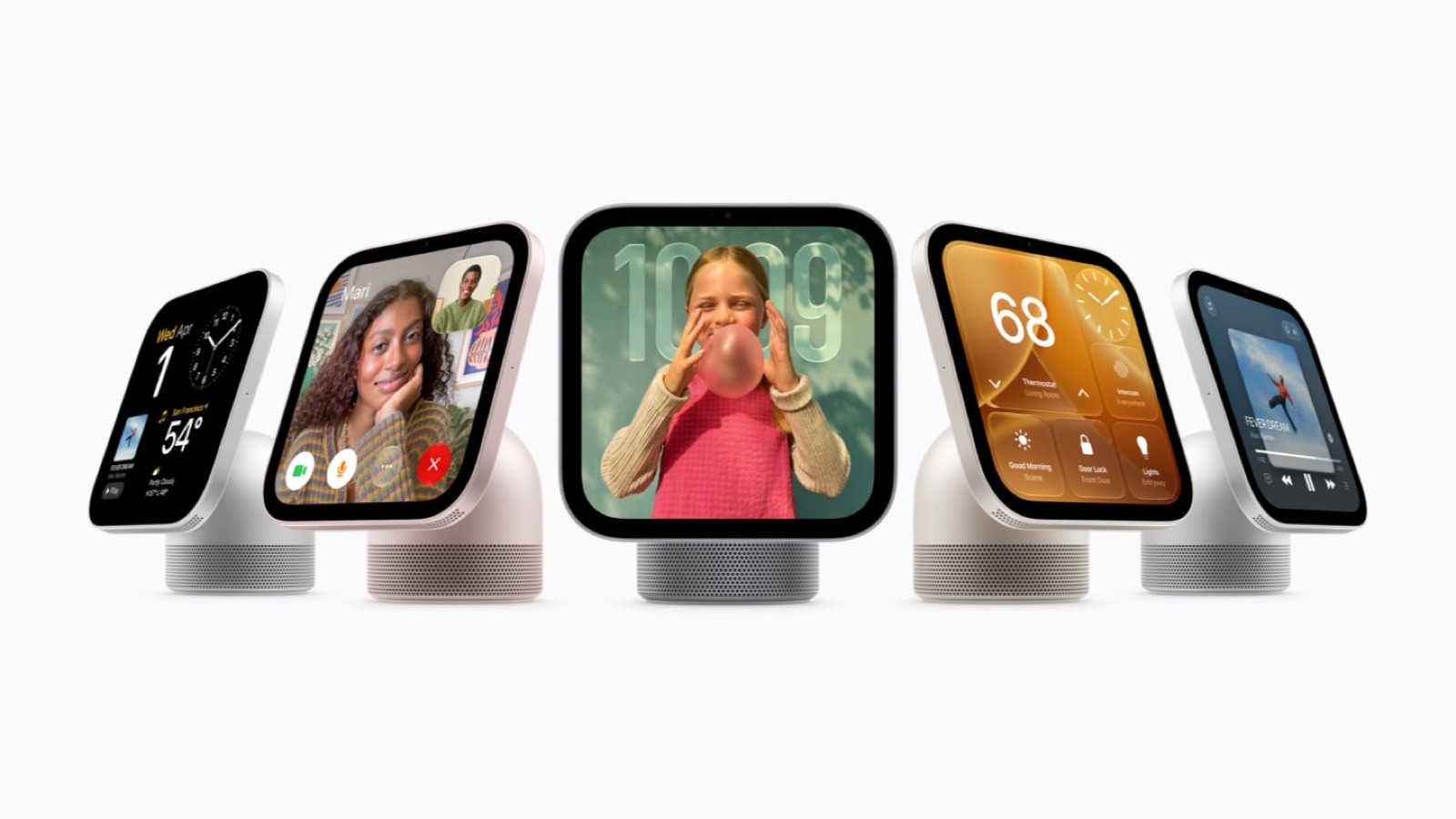
HomeView is a 7-inch square touchscreen on a domed speaker base, with a wall-mounted version at the same price. It recognises up to six people by face and doubles as a smart home hub. It costs $299 in the US, and pre-orders opened on 13 October with shipping from 13 November.
The Verge counts eight launch countries: the US, UK, Canada, Australia, New Zealand, Singapore, South Africa and India. Apple's press release says South African customers will be able to pre-order through Apple Authorised Resellers rather than an Apple online store, with availability from 13 November. Apple did not publish a rand price. Zimbabwe is not on the list, so for most local buyers HomeView will mean a South African reseller, a trip south or a grey import, with the usual questions about warranty and duty.
There is a bigger catch than shipping. HomeView's headline feature is Siri AI, and Apple says Siri AI on HomeView is available in English in the eight launch countries, South Africa included. Apple does not say how a HomeView set up with a Zimbabwean Apple account or region will behave, and we could not find that confirmed anywhere, so treat it as unknown. Apple has already shown it will hold the device back where Siri AI is not offered: HomeView is not on sale in the European Union for exactly that reason.
The personal features also lean heavily on your phone. According to Tom's Guide, personal context needs an Apple Intelligence iPhone (15 Pro or newer) on the same Wi-Fi and recently unlocked. The Verge's verdict was that the whole system "seems precariously tied to said phone".
What this means for readers here
The pattern across all three launches is the same one we have seen all year. The newest AI is increasingly sold as a subscription or a per-token bill in US dollars, and the most ambitious features, agents that act for you and assistants that know your personal context, are the slowest to leave North America.
Of the three, Google's is the most usable from Zimbabwe right now. If you already pay for Google AI Pro, Argon should show up in your Gemini app model picker. If you don't, the free Gemini app is officially available here and is a sensible way to see whether Google's tools suit you before paying. On the Meta side, Meta AI in WhatsApp is free and already on most phones in the country. Muse, and the Wonder models behind it, are for now something to read about.
HomeView is the easiest to skip. At $299 before import costs, needing a recent iPhone, and built for a smart home most local households don't have, it is a product for South Africa's Apple fans first. If Apple names more African markets, or confirms how Siri AI behaves outside the launch countries, that changes. Until then, the most practical move is to try the free tools already on your phone and keep an eye on 30 November, when Argon's developer price doubles.
Sources
- Gemini 4 Argon: Built to solve your hardest problems, Google
- Muse Wonder: A Frontier Model For Personal & Professional AI Agents, Meta AI Research
- Meet Apple HomeView, a new way to enjoy entertainment, stay connected, and manage the home, Apple Newsroom
- Apple launches HomeView, its first smart display for the home, The Verge
- Meta releases its first frontier model, Muse Wonder, TechCrunch
Researched and drafted with the help of AI tools, then fact-checked and edited by our team. How we work.