Joshua Chiuta was born in Zimbabwe and has lived in New Zealand for three years. This month he stood up at a regional kapa haka competition in Whangārei and gave a formal Māori speech in two languages, Shona and te reo Māori, acknowledging the Zimbabwean ancestry he carries with him. He placed second in the whaikōrero category.[1]
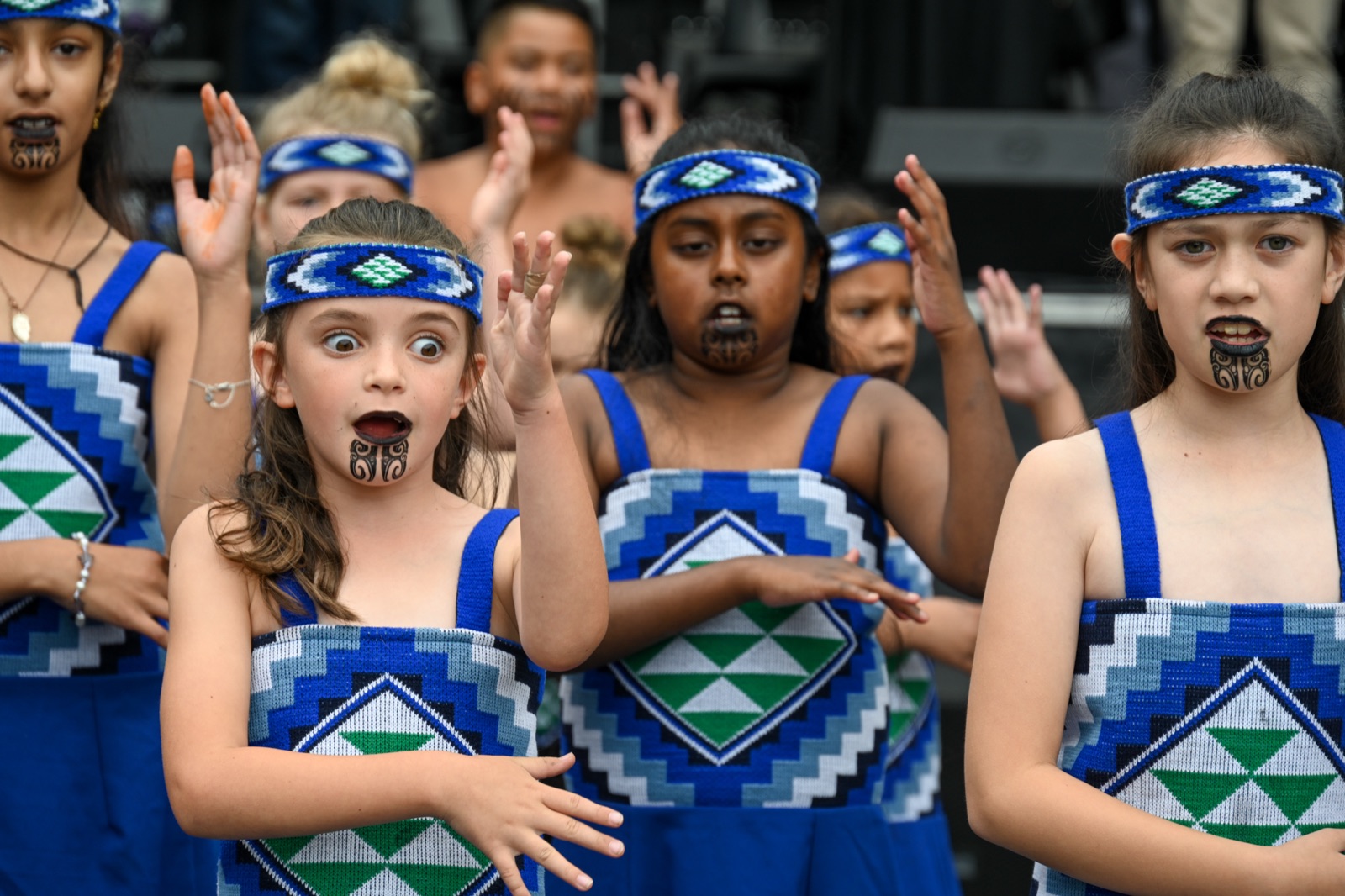
Joshua performed with Te Kapa o Hurupaki, the kapa haka group from Hurupaki School, at Marangai Mai E Te Iwi, the Te Tai Tokerau (Northland) regional competition of Te Mana Kuratahi. The group placed second in the Primary Aggregate category.[1] The organisers haven't published the regional results online yet, so those placings come from Te Ao Māori News coverage carried by RNZ, the New Zealand public broadcaster.
Read more on RNZ →Joshua Chiuta has gone viral for his whaikōrero at the regional haka competition in Whangārei, delivered in both his native Shona and te reo Māori.
What whaikōrero is
Whaikōrero is Māori oratory, the art of formal speech-making. It is traditionally given by men at a pōhiri, the ceremony that welcomes visitors onto a marae, and at other gatherings. A good speaker is judged on his language: imagery, metaphor, proverbs (whakataukī), tribal sayings (pepeha) and references to whakapapa, or genealogy, and tribal history.[2]
It also has a shape. A whaikōrero usually opens with a tauparapara, a kind of chant, then acknowledges the ancestral house, Papatūānuku (the earth mother), those who have died and those who are living, before it reaches the reason for the gathering. A traditional waiata, or song, is usually sung near the end.[2]
That structure is what makes Joshua's speech stand out. Whakapapa sits at the heart of the form, and he used it to honour his own, in Shona, inside a Māori tradition.
Haka is more than one dance
Outside New Zealand, most people know haka from the All Blacks. The word actually covers a family of vigorous dances with actions and rhythmically shouted words, not a single war dance.[3] Kapa haka means a Māori performing group,[4] and what those groups perform runs much wider than haka alone.
Te Mana Kuratahi has run the national primary schools competition since 2000, first every year and now every two years, with 17 regional competitions feeding into it. Its stated mission is to nurture tamariki, or children, in traditional Māori performing arts.[5] Its national awards cover the whakaeke (entrance), mōteatea (traditional chant), waiata-ā-ringa (action song), poi, haka and whakawātea (exit), as well as costume and new compositions.[6]
A school that made room
Hurupaki School runs whole-school kapa haka every week, alongside a competitive rōpū, or group, that represents the school at regional level. It has had a bilingual Māori and English class since 2020, and its own cultural page says it wants every language in its community to be celebrated, not only New Zealand's official three.[7]
Joshua's tutor, Horihi Manihera, says the school started building te ao Māori, the Māori world, into school life three years ago, and that Joshua has since become one of the group's leaders.[1] His grandmother watched the livestream from home, and she sees a shared value between the two cultures:
"I've realised we have some similarities as our Shona culture, or African. In the sense of familyhood, we value each other."[1]
Why it matters here
Zimbabweans abroad are often written about in terms of work and money sent home. Joshua's story is a different kind of diaspora story: a family settling into a new country by learning its indigenous culture, and a school willing to let a Shona voice into one of that culture's most formal spaces.
Joshua said he was happy and proud to be allowed to share his culture with the world.[1] For a Zimbabwean student a long way from home, being trusted with whaikōrero, and placing second with it, is no small thing.
Sources
Researched and drafted with the help of AI tools, then fact-checked and edited by our team. How we work.