For three days this month, the people who run the world's modern and contemporary art museums were not in Venice, New York or Hong Kong. They were in Harare, and in the afternoons they were on buses to studios in Mbare, Chitungwiza and Ruwa.
The 58th CIMAM Annual Conference ran from 20 to 22 November, hosted by the National Gallery of Zimbabwe (NGZ).[1] CIMAM, the International Committee for Museums and Collections of Modern Art, has met in cities around the world since its first conference in 1962, and this was the first time it came to the African continent. Organisers planned for around 300 museum directors, curators and researchers.[2]
Three days, three venues
The theme was "Museums Beyond Limits: Imagining Repair Across Cultures, Ecologies and Knowledges", built around the idea of repair as ongoing work rooted in care and accountability.[3] Each day had its own question. Day one, "Good Museum Practice", opened at the Harare International Convention Centre with a keynote by Gabi Ngcobo of Kunstinstituut Melly in Rotterdam.[4] Day two, "Tools of Transformation", moved to Harare International School, and day three, "Radical Hospitality", to The Exchange at the Country Club, where Zimbabwean scholar Mandi Rukuni spoke on rethinking access and belonging.[5][6]
The conference also tried something new: a chronist for each day. The role borrows from the Latin American crónica, a kind of literary journalism, and asks one person to read the day back to the room, from the keynotes to the corridor talk.[2] One of the three was Esther Chipashu, curator of ethnography at National Museums and Monuments of Zimbabwe.[5] NGZ executive director Raphael Chikukwa and curator Fadzai Muchemwa sat on the 11-member committee that shaped the programme.[3]
The studio route
What sets this conference apart for local artists is the afternoons. The official programme sent delegates out each day to the places where Zimbabwean art is made:[4][5][6]
- Friday: Animal Farm Artist Residency, Chitungwiza Art Centre, Mbare Art Space, the National Museum of Human Sciences, Wallen Mapondera Studio and 22 Rockwood.
- Saturday: First Floor Gallery, Village Unhu, Zvavahera Gomo Studio and the National Gallery itself.
- Sunday: CECA Couture, Chapungu Sculpture Park, Dominic Studio, Tarisa Visual Art Studios, Nherera HUB, with a performance by Nora Chipaumire, and the NGZ School of Visual Art and Design.
The conference booklet, written for delegates, doesn't sugarcoat things. It calls Chitungwiza Art Centre possibly the largest sculpture hub in southern Africa, with more than 400 artists, but notes that its leaders have flagged falling demand, with some sculptors going months between sales as tourist numbers have dropped.[2] It traces a lineage too. Animal Farm's founder, Admire Kamudzengerere, was mentored at Dzimbanhete before starting his own residency, and the NGZ school counts Portia Zvavahera, Virginia Chihota and Troy Makaza among its alumni.[2]
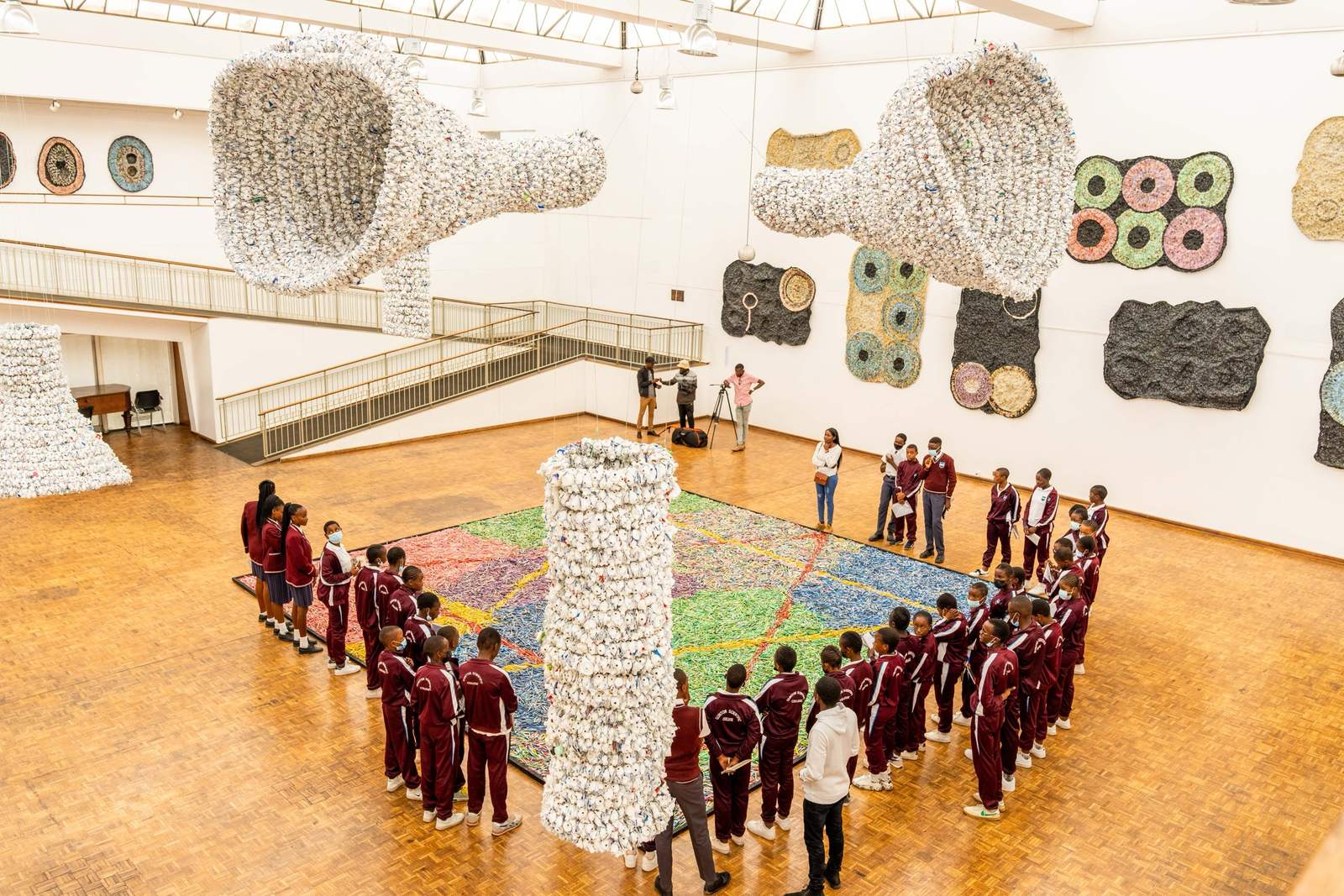
On Saturday evening NGZ was set to present "A View to a Horizon: From Henry Munyaradzi to Andrea Piazza", which puts restored Italian old masters from its permanent collection beside modernist African works. It was programmed to launch alongside "Connecting Elements", a group show including Berry Bickle, Mthabisi Pili and Clive Mukucha.[2][5]
Why it matters here
CIMAM president Amanda de la Garza framed the week as a chance "to recognize the Zimbabwean contemporary art scene and the African continent as essential contributors to global museum discourse."[2] In practice, that recognition comes down to who saw what. A curator who has stood in a Chitungwiza studio is more likely to borrow a work, programme a residency or write a catalogue essay than one who has only seen it online.
It also landed at a busy moment. The Cheuka Harare Art Fair closed on the conference's opening day, and First Floor Gallery hosted delegates a month after showing four painters at 1-54 London. It reopened on 23 November with Troy Makaza's "Milk or Petrol".
The limits are worth naming. Of the 42 travel grants CIMAM handed out across 26 countries, one went to a Zimbabwean, Tinashe Hwindingwi of Abantu Archives in Harare.[7] A three-day visit doesn't fix weak sales at home. The real test is what happens next year: whether invitations, loans and residencies start coming back to the studios on that bus route.
For those who stayed on, the conference ended with a fully booked post-conference tour on 23 and 24 November to Serima Mission, the Italian Chapel near Masvingo and Great Zimbabwe.[8]
Sources
Researched and drafted with the help of AI tools, then fact-checked and edited by our team. How we work.