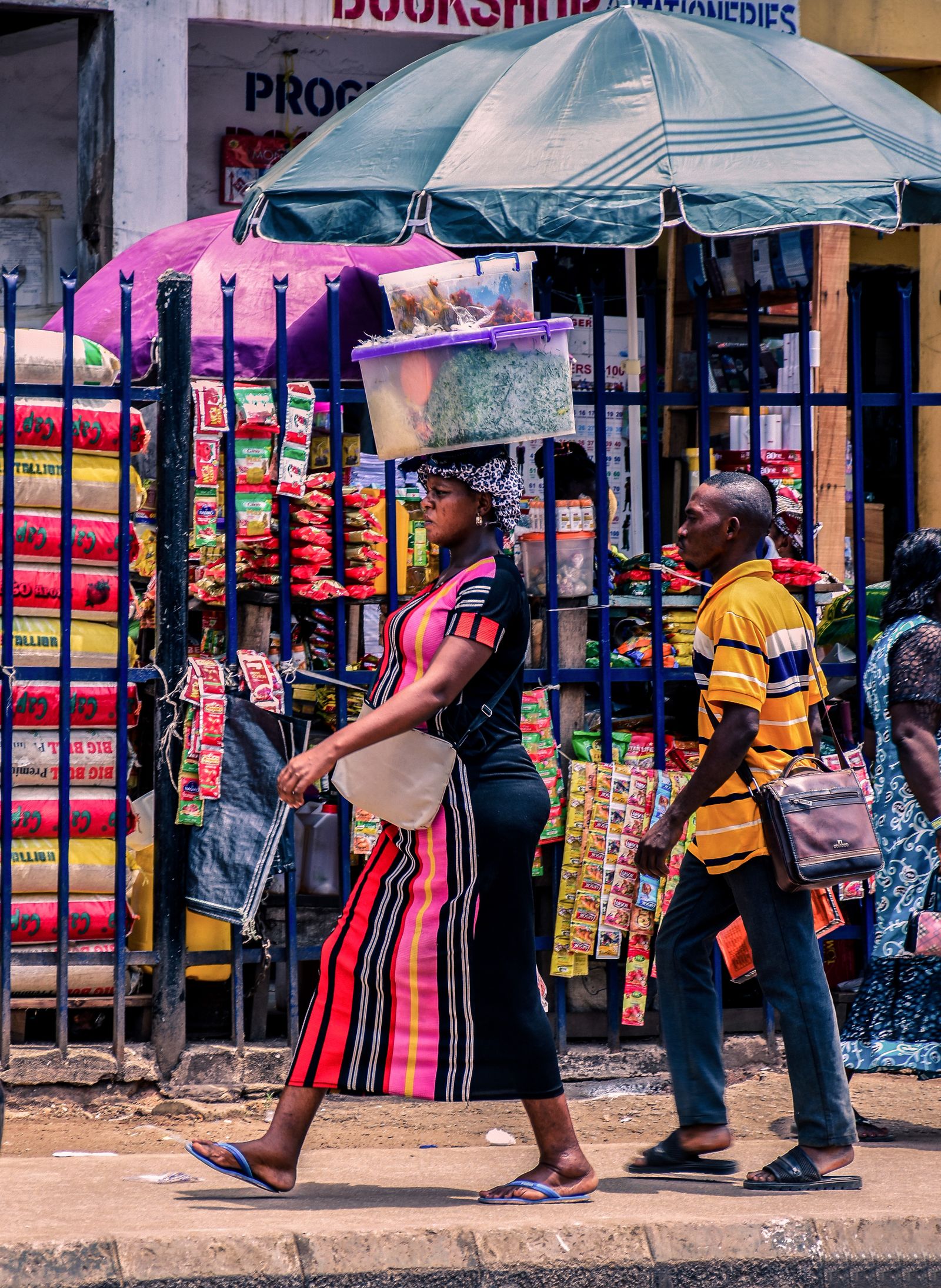
For the past two weeks, 300 municipal police officers have been moving through Harare's CBD, starting at the old Enterprise Road intersection and spreading outward, clearing pavements of vendors selling everything from tomatoes to phone accessories. It is called Operation Chenesa Harare, "chenesa" being Shona for "clean," and Cabinet has thrown its full weight behind it. It is also, by most honest counts, at least the fourth or fifth version of this exact exercise since Operation Murambatsvina flattened Harare's informal economy in 2005.
So rather than just report the headline, it is worth asking what part of this is genuinely worth doing, what part is being done badly, and what Harare could actually learn from cities that have faced the same problem and not made a mess of it.
The good
There is a real case underneath Chenesa, even if the execution keeps undermining it. Harare's CBD pavements have, by most residents' own admission, become close to impassable in places, and the sanitation problems that come with unregulated trading are not imaginary. Cabinet's plan is also, on paper, more structured than past clean-ups: it is anchored on four pillars, Legislate, Provide, Formalise, Enforce, rather than enforcement alone, and it includes a promise to link formalised vendors to financial institutions for working capital. A "Clear, Clean, Keep" command structure chaired by the city was also set up to oversee the effort. If Provide and Formalise are taken as seriously as Enforce, this is a coherent framework, not just another sweep.
The bad
The trouble is that Enforce is the pillar arriving first, again. Vendors interviewed by local outlets say the same thing every time this happens: nobody has given them anywhere else to go. Council vehicles have been confiscating wares and chasing down elderly women selling tomatoes and young boys selling sweets, according to reporting from NewZimbabwe.com, while the "designated trading sites" vendors are meant to relocate to remain, in many cases, unspecified or unbuilt. The policy has already wobbled once: after the initial ultimatum to leave the CBD entirely, the newly appointed Permanent Secretary for Local Government partially reversed course within a week, limiting vending to a 6am to 6pm window instead. That kind of reversal under pressure suggests the plan was not stress tested against the reality that, with formal unemployment where it is, a large share of Harare's population has no fallback if vending disappears.
The ugly
The uncomfortable part is how familiar this all is. Operation Murambatsvina in 2005 was the original version of this exercise, and it was catastrophic: a United Nations fact-finding mission led by Anna Tibaijuka found that the demolitions directly cost around 700,000 people their homes or livelihoods nationwide. Academic case studies of Harare's Glen View area found that most of Murambatsvina's "victims" simply rebuilt and returned within a few years, because there was never anywhere else for them to go. Twenty years on, government is once again fast-tracking a Municipal Police and Courts Bill to strengthen enforcement powers, ahead of the "Provide" side of the plan showing much on the ground. If Formalise and Provide arrive years after Enforce, the pattern almost certainly repeats, just with a friendlier acronym attached.
Who this actually affects, and whether it holds this time
Zimbabwe's informal sector is not a fringe group. ZimStat and the International Labour Organisation put informal employment at somewhere between 70 and 85 percent of all jobs in the country, and the National Vendors Union has previously estimated as many as 5.7 million people work as vendors nationally. Harare's own official vending infrastructure covers a small fraction of that: by one count, the CBD has just five official vending sites, able to hold fewer than 200 vendors, against the roughly 500,000 council itself says are now registered. That gap is really who this whole story is about.
It reaches well beyond people who think of themselves as full-time vendors. Reporting by Al Jazeera found teachers and civil servants moonlighting on the pavements once their day jobs end, saying their salaries no longer stretch to cover rent, unwilling to give up the extra income however Chenesa resolves. On the other side, formal retailers who do pay rates say the competition is real and getting worse, with one Harare supermarket manager describing vendors who used to sell only fruit and vegetables turning into what he called "mini-stores" carrying the same goods his shop does, undercutting him because informal traders can deal in cash US dollars while registered stores are bound to weaker official exchange rates. Ordinary shoppers are often the ones keeping that arrangement alive in the first place, since the same goods are reliably cheaper on the pavement than on the shelf a few metres away.
As for whether this attempt holds where the last five didn't, nobody quoted anywhere in this story, official or critic, is actually claiming to know yet. What the record shows is that the previous attempts, in 2024, 2019, 2016, 2006 and 2005, all eventually lost momentum once the enforcement phase ended and nothing durable had replaced it. VISET's own statement and the Zimbabwe Independent's editorial both flagged the same worry within days of each other, from very different vantage points: whether Provide and Formalise turn out to be real, funded commitments this time, or the same underused vending bays and quietly dropped promises the past five operations also left behind. That is still an open question rather than a settled one, and it is unlikely to be answerable for months yet.
Figures in this piece, registered vendor numbers, informal employment share, official vending capacity, are the most recent available at time of writing and will be updated here as newer data comes in.
What the newspapers are saying
Coverage of Chenesa splits almost exactly along ownership lines, which is worth knowing before reading any single outlet as the full picture.
The state-owned press, the Herald, the Chronicle and the Sunday Mail, along with the state broadcaster ZBC, has largely reported the operation on the government's own terms: cleanliness, civic discipline, restoring the "Sunshine City" brand. ZBC's own piece led with the council's line that over 500,000 registered vendors make this "a problem for us as city council" and government together. An older Herald letters page, from a previous round of this same fight, put the underlying argument about as plainly as it gets: restoring order is "a necessary evil" because clean cities attract tourism and investment.
The privately owned papers, NewsDay, The Standard and the Zimbabwe Independent, all published by Alpha Media Holdings, alongside the Daily News, have taken a more sceptical, implementation-focused line. The Zimbabwe Independent's own editorial on the clean-up effort called restoring Harare's shine a genuinely tough task, and pointed to the gap between government's stated intentions and what's actually on the ground: vending bays sitting idle as "white elephants," a kombi holding bay that has never been used, and municipal police going months without pay, which the paper argued creates exactly the conditions for corruption in enforcement. NewsDay's reporting has given residents' associations space to make a related point: the Combined Harare Residents Association has previously welcomed government clean-up interventions while warning they come with no sustainability plan behind them, and the Harare Residents Trust has tied the whole cycle back to government's reluctance to fully implement devolution, which it argues leaves local service delivery permanently under-resourced.
Government and council have coordinated similar vendor clean-up campaigns in 2024, 2019, 2016 and 2006, on top of Murambatsvina in 2005, and reporting syndicated through allAfrica noted that all of them were eventually judged unsuccessful.
What other African cities have actually tried
Harare is far from alone in wrestling with this, and a few nearby examples are instructive.
Kigali has taken the most direct route: build the markets first, then move vendors in. The City of Kigali has constructed a series of modern markets, including the Nyabugogo Modern Market, complete with sanitation and solar lighting, and relocated well over a thousand traders into them, in some cases covering their rent for the first year and linking them to microloans through Rwanda's Vision Umurenge Programme. It has not been friction-free; some vendors have resisted the move, and researchers studying the relocations note that rent and new competition have made the adjustment genuinely hard for some. But the sequencing, infrastructure before eviction, is the opposite of what Harare has just done.
Durban's Warwick Junction took a different route entirely: instead of relocating traders out of the city, planners redesigned the public space around them. Working with the traders' own organisations and the non-profit Asiye eTafuleni, the city turned a congested, apartheid-era transit hub into a market that now sees close to half a million people pass through daily, with informal trade there estimated to turn over roughly R1 billion a year. When city officials floated replacing part of the market with a shopping mall ahead of the 2010 World Cup, sustained organising by the traders themselves kept it from happening. It is held up internationally, including as a finalist for the WRI Ross Prize for Cities, as a model for integrating informal trade into a city rather than erasing it.
Uganda's ongoing "Trade Order" sits closer to where Harare is right now: a renewed enforcement drive aimed at moving vendors into designated markets, running alongside reports of forced evictions and confiscated goods that officials themselves have had to publicly condemn. It is a useful reminder that having the right stated intentions does not automatically produce fair enforcement on the ground.
Does this even exist in the first world?
Yes, and often just as badly handled, it is simply dressed in permits and paperwork instead of a Shona name.
New York City has been quietly running its own version of this fight for over forty years. General vendor licenses for merchandise have been capped at 853 since 1979, and mobile food vending permits stayed frozen near 3,000 for decades. With an estimated 20,000 or more people trying to vend in the city, that shortage pushed thousands into an informal economy of their own, including a black market where permits meant to cost around $200 were reportedly changing hands for as much as $17,000 a year. It took until a reform package passed in late 2025, and a new city Office of Street Vendor Services launched this year, for New York to start seriously unwinding a cap most officials privately admitted had never worked.
London runs a tighter licensing regime, requiring a street trading licence under local Acts of Parliament, with fines running into the hundreds of pounds for anyone caught trading without one, and the City of London has spent years running seizure operations against unlicensed ice cream vans and peanut carts near its bridges.
Barcelona's manteros, mostly undocumented West African migrants who sell counterfeit goods spread out on blankets, have been chased by the Guardia Urbana for over a decade in operations with names like Operación Colón. Barred from formal work by their immigration status, some ended up organising into a legally registered cooperative, Top Manta, while the city has separately negotiated a limited, and by most accounts underfunded, integration programme.
The specifics differ, immigration status in Barcelona, permit economics in New York, colonial-era urban planning in Durban, but the underlying shape is close to universal: cities everywhere generate more people trying to sell things on the street than their formal systems are built to absorb, and the honest question is never whether informal trade should exist, but how a city chooses to deal with the gap.
The voices shaping the conversation
Strip away the press releases and Chenesa is really a fight between a handful of recognisable positions, all stated on the record within days of each other.
Local Government minister Daniel Garwe has framed it as a civic discipline problem, not a livelihoods one. He has described Harare's "Sunshine City" identity as under threat from "littered streets, open defaecation in service lanes, blocked pavements, makeshift trading spaces and a general erosion of civic discipline," and set the tone for the whole operation with one line: "Order must be maintained, not periodically restored." He has also pointed out that Harare already has vending bays in Mbare, Mabvuku, Borrowdale and near the Coca-Cola roundabout that sit underused, calling them "white elephants," and put some of that blame on council and vendors' associations for not making them work.
Harare mayor Jacob Mafume has been the operation's bluntest voice. Early on he described the CBD's informal traders in dismissive terms, saying vendors "just see a place and put a cardboard box," and undercutting formal retailers who pay rates by selling the same goods. As resistance grew, he drew a harder line still, on local radio, telling vendors and displaced street dwellers that Harare "is not a refugee camp, it is a place of business." It is worth noting Mafume said almost the opposite a few years earlier, when he argued vendors "cannot go anywhere" because "they came into the streets because they have nowhere to go," and blamed government for having no policy for them beyond turning them loose on the streets. The shift in his own position is, in a way, the whole cycle in miniature.
Harare City Council, through spokesperson Stanley Gama, has framed it mostly as a numbers problem: over 500,000 vendors are now registered with the city, with more registering by the day, which he called a problem for both council and government to solve "together." That figure alone helps explain why "just move them" keeps failing as a plan.
VISET, the vendors' own representative body, has taken the most consistent middle position across every round of this, this one included. Its statement on Chenesa said it "recognised the government's responsibility to maintain clean and orderly urban environments," while warning that "the removal of vendors from trading spaces without viable alternatives risks disrupting livelihoods and pushing already vulnerable workers further into precariousness." Its director has put the same point more plainly elsewhere, describing formalisation done badly as an approach that will "leave our people wallow in poverty," and calling on council to build more infrastructure rather than just clear pavements, pointing out that "other countries have managed to do it so well."
Vendors themselves, largely unnamed in most of the coverage but consistently on record, describe the underlying calculation in blunt terms: informal trading is their only means of survival in an economy where formal jobs are scarce, and the ultimatums keep arriving, in their words, "insensitive and out of touch" with that reality.
Ordinary social media users, away from the official statements, have been drawing much the same lines as the big institutional voices, just in their own words. On X, one widely engaged commentator, Talia Mashava, has been making the case that cleaning up Harare and waging war on vending are two different things, arguing the real question is where and how trading happens rather than whether people are allowed to earn a living at all, and that vendors and the city's need for order are not actually opposed to each other. She has also tied the campaign to public health directly, pointing to a suspected cholera case in Chiredzi as a reason sanitation cannot be treated as cosmetic, and arguing clean streets and proper waste disposal are part of preventing an outbreak rather than an aesthetic nicety.
Reaction underneath a Facebook post announcing the CBD's new legal vending hours split in a familiar way. One commenter framed the whole approach as symptomatic of how African cities generally treat the informal sector, as a burden rather than a genuine part of the economy. Another took the opposite, more forgiving view, that hard calls sometimes have to be made. A third reaction cut past the policy detail entirely into a broader, more cynical read, framing the whole exercise as something the country has been through many times before without ever quite fixing, the kind of weary scepticism that tends to attach itself to every one of these operations regardless of what's actually in the plan.
What is striking, reading all of this together, is how little the script has changed across two decades of these operations. Government officials reach for the same "Sunshine City" language Garwe used, mayors alternate between sympathy and exasperation depending on which side of an election they are standing, vendor organisations keep asking for the same thing, infrastructure before enforcement, and the public conversation splits along the same three lines it always has: genuine public-health concern, weary distrust, and a smaller number of voices willing to say the crackdown is simply overdue. Whatever Chenesa becomes next, the people who will decide whether it actually holds are not in this list of quotes. They are the ones still standing on the pavement at 6pm, deciding whether to pack up or wait it out.
Sources
- Cabinet Backs Harare's Clean Up, allAfrica
- Harare deploys 300 municipal police for Chenesa campaign, Zimbabwe Situation
- Government launches 60-day vendor formalisation drive, Zimbabwe Situation
- Government Gives in As Vendors Resist Order to Clear Out of CBD, allAfrica
- Council announces umpteenth operation to deal with vendors in CBD, NewZimbabwe.com
- Why the Zimbabwe Street Vendor Crackdown Faces Revolt, African Elements
- Kigali's former street vendors find new lives in modern markets, MKU Magazine
- Urban Transformations: In Durban, Informal Workers Design Marketplaces Instead of Getting Displaced by Them, WRI/TheCityFix
- Inside Uganda's Effort to Move Street Vendors Into Formal Markets, Rising Nation Magazine
- Lifting Street Vendor Permit Cap Could Raise $17M, Streetsblog New York City
- Street Vendor Victory: Reshaping the Way NYC Authorizes Vending, Immigration Research Initiative
- Surviving is not a crime, Equal Times
- 'Order Must Be Maintained', allAfrica
- Harare CBD vendors living on borrowed time, ZBC News
- VISET warns against vendor evictions without alternative trading spaces, CITE
- We should sympathise with vendors, mayor, NewsDay
- Cabinet backs Harare's clean up, as government declares intensive 60-day programme, NewZimbabwe.com
- Government launches 60-day vendor formalisation drive, PressReader/The Herald
- Clean city attracts tourists, PressReader/The Herald
- A tough task to restore glow to Harare, Zimbabwe Independent
- Chemicals shortage crippling Harare water supplies, NewsDay
- 'Cat and mouse game': Zimbabwe gov't workers moonlight as street vendors, Al Jazeera
- Pop-up shops after dark a big hit in Harare, PressReader/Sunday Times
Researched and drafted with the help of AI tools, then fact-checked and edited by our team. How we work.