By one measure, Africa is the most exciting place in the world for video games. By another, its competitive scene barely registers. Both are true, and the distance between them is the story of African esports in 2026.
This is the second of two pieces. The first looked at where esports stands in Zimbabwe. This one steps back to the continent.
The audience is enormous
In August, games publisher Carry1st and research firm Newzoo published their yearly forecast. Africa's games market is expected to earn US$1.98 billion in 2026, up 11.9 percent from last year, which is nearly twice as fast as the global market is growing. The number of players is forecast to reach 406.25 million, an increase of 36.6 million in a single year. About one in nine of the world's video game players would then be African.
Almost all of that is happening on phones. Mobile is forecast to bring in 81.8 percent of the continent's games revenue. As Games Industry Africa put it, players are coming to games through devices they already own, which lets the continent skip the console and PC stage that other markets went through.
The esports economy is tiny
Competitive gaming is another matter. In a July overview, Esports Africa News put the value of the continent's whole esports sector at around US$40 million, with projections of more than US$60 million this year. It described a market with "no structures for proper commercialisation" of content and events, and noted that much of the grassroots activity is hundreds of small leagues organised through WhatsApp groups. Those estimates are the outlet's own compilation and are hard to verify, but nobody in the industry is claiming a bigger number.
The same overview ranked South Africa first for esports revenue, at an estimated US$7 million to US$10 million, with Egypt drawing the largest audience, up to 6 million viewers, and Nigeria emerging behind them.
2026 was the year of the direct route
What did change this year is the path from an African tournament to a world stage.
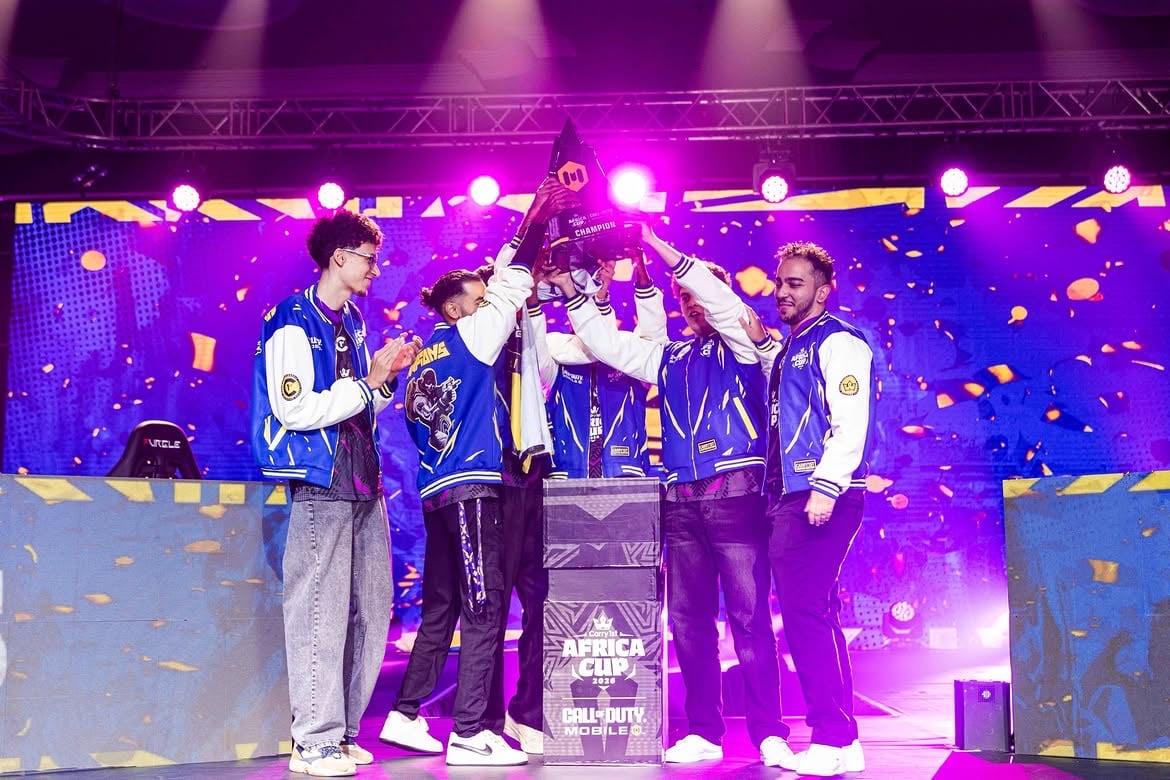
Call of Duty: Mobile. The Carry1st Africa Cup is now the official African qualifier for the game's world championship. Esports Africa News traced its growth from six countries and US$15,000 in 2024 to more than 150 teams from 38 countries and US$30,000 this year. The finals were played in person in Abuja on 5 and 6 September, and Nexal Gaming reported that Paradox Gaming's North African roster won, earning a place at a world championship with a US$500,000 prize pool.
Free Fire. Garena, the game's publisher, split sub-Saharan Africa away from the Middle East this year and gave it its own league, the Free Fire World Series Africa, with a direct place at the Esports World Cup for the champion. South Africa's ParadoX Gaming won the first season.
PUBG Mobile. A continental final in May put US$10,000 and a place at a global event in Indonesia in front of 16 teams from Nigeria, Kenya, South Africa and elsewhere.
Football games. In Kigali in September, the SportsBiz Africa Esports Cup brought 40 players from 11 countries together for EA Sports FC 26 and eFootball Mobile, up from eight players at its first edition, with more than 50,000 people following online.
National teams. The new Esports Nations Cup ran African qualifiers in July, split into two regions, and Zimbabwe was among the countries listed in the Southern and East Africa PUBG Mobile bracket.
In South Africa, the African Gaming Championship in Cape Town in July offered at least R150,000 across seven games, and its organiser says more than 300 schools are registered on its school league platform, the largest such base on the continent.
Then came the reality check
Getting to the world stage and competing on it are different things. At the Esports World Cup in Paris in July, the official results show ParadoX Gaming finishing joint 23rd out of 24 teams in Free Fire, earning US$3,000. The champions, LYON, earned US$300,000.
That is not a criticism of the team, which had to win a continent to be there. It is a measure of the gap between a league in its first season and regions that have been at this for years. Nexal Gaming pointed out what that looks like in slot allocations for November's Free Fire global finals in Bangkok: Southeast Asia sends eight teams and Africa sends one.
Prize money tells the same story. The Free Fire World Series Africa's autumn season paid US$10,000 in total, with US$3,500 for the winners.
What players say is wrong
Servers. At the Kigali tournament, Madagascar's Sedra Nirina, a finalist in eFootball Mobile, said the shortage of game servers in Africa puts local players at a disadvantage, and called on publishers including FIFA and Konami to host more on the continent. When your opponent's inputs reach the server faster than yours, skill only gets you so far.
Infrastructure in general. The African Video Game Report 2026, produced by SpielFabrique, names low internet penetration, unreliable electricity and fragmented payment systems as the main constraints on the whole industry, and notes that esports talent development is concentrated in a handful of big cities.
Structure. In September Esports Africa News asked what African gamers actually want, and argued that the answer is probably not another one-off community tournament with a small prize. Its case was for pathways: community competition, then national, then regional, then professional leagues, then international qualification.
Ownership. The same outlet has pointed out that most African tournaments still run on foreign platforms for registration, brackets and matchmaking, which means the data and some of the revenue leave the continent. Local platforms are growing in South Africa, Ghana and Nigeria, but they are not yet connected to each other.
Kenya Esports Federation president Ronny Lusigi, who organised the Kigali event, has set out the goal plainly. He wants African tournaments to become official qualification routes for world championships, and he accepts that this takes reliable connectivity, proper venues and professional organisers, not just good players.
What it means from where we sit
For a player in Harare or Bulawayo, the important change is that the ladder now exists. Zimbabwe is grouped with Southern and East Africa for qualifiers such as the Esports Nations Cup, the early rounds are played online, and the top of that ladder is a real world championship. Three years ago none of that was true.
The realistic expectations are also clearer. The money is small, the strongest results so far have come from South Africa, Nigeria and North Africa, and the infrastructure problems that hold back the whole continent, servers, power and data, are felt here as much as anywhere.
Two things would shift the picture faster than anything else. One is publishers putting servers closer to their African players. The other is telecoms companies treating gaming as a market, as MTN has started to do in Ghana with a gaming conference, an academy and a university partnership. Africa already has the players. What it lacks is everything around them.
Sources
- Africa's games market set to outpace global growth in 2026, Carry1st and Newzoo
- Africa's Games Market Set to Pass $2 Billion as Player Base Surges Beyond 400 Million, Games Industry Africa
- The African Games and Esport Economy: Size, Growth Trends, and Untapped Value, Esports Africa News
- Africa's Road to the World Starts in Abuja, Esports Africa News
- Paradox Gaming Crowned Undisputed Champions of the Carry1st Africa Cup 2026 Finals in Abuja, Nexal Gaming
- Carry1st Africa Cup 2026 launches as official CDM World Championship Qualifier with $30K prize pool, ITEdgeNews
- EAN Spotlight: South Africa, Esports Africa News
- Free Fire at the Esports World Cup 2026, Esports World Cup
- FFWS Africa 2026: The Final 12 Are Locked In as the Race for Bangkok Heats Up, Nexal Gaming
- Free Fire World Series Africa 2026 Fall is underway with a World Finals slot at stake, GamingonPhone
- Road to Indonesia: PMGO Africa Finals Kick Off with $10,000 at Stake, Esports Africa News
- Africa esports boom: Kigali tournament reveals the continent's growing gaming economy, Walaw
- PUBG Mobile at Esports Nations Cup 2026: Southern and East Africa Qualifier, Liquipedia
- The African Gaming Championship returns to GrandWest, ACGL
- African Video Game Report 2026, SpielFabrique via Game Industry Library
- What Do African Gamers Actually Want?, Esports Africa News
- African Esports Is Building Its Own Infrastructure. The Next Challenge Is Connecting It, Esports Africa News
- MTN Gaming Conference 2026 Review, GasBros Gaming Network
Researched and drafted with the help of AI tools, then fact-checked and edited by our team. How we work.