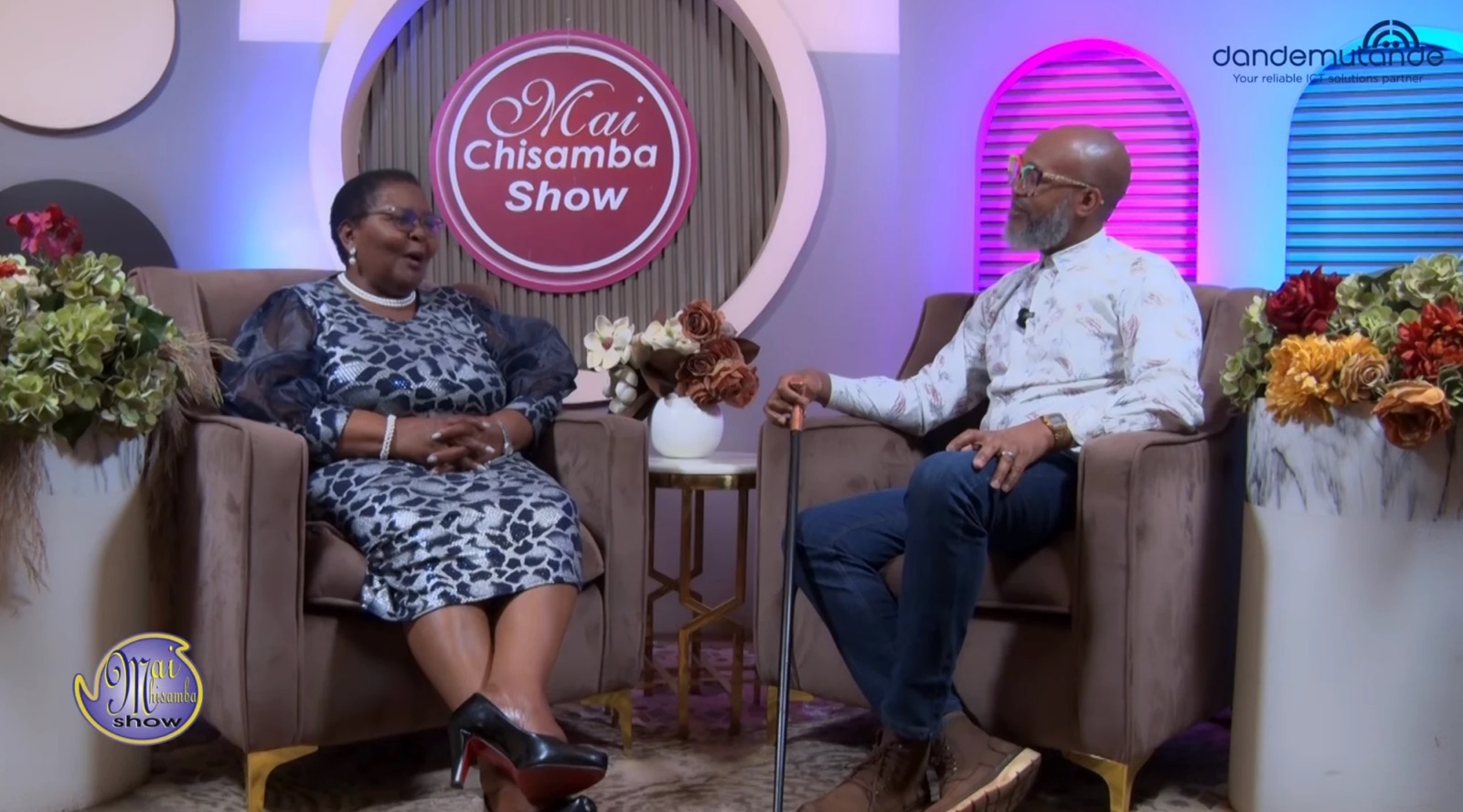
If you missed this one, go back for it. On 16 October the Mai Chisamba Show put up a 35 minute sit-down with Carl Joshua Ncube, the comedian, chef and rural tourism builder, covering AI, rural innovation and gastronomy.[1] He did the whole thing in his mother tongue, and by his own account that was the hard part.
Sharing the interview on Facebook, he called it the most challenging time yet for his "Shona bundles". He gave the credit to his host, calling her "an absolute pro" at helping guests feel at ease enough to speak in their mother tongue.[2]
Old acquaintances
Mai Chisamba opens by going back to his comedy days. She remembers him from then, and she is glad to see how far Zimbabwean comedy has come, with far more acts around now. He knew her before that. As a trainee at ZBC, one of the programmes he learned to edit was the Mai Chisamba Show.[1]
Mhizha yezvakawanda
The show's own title for the episode calls him mhizha yezvakawanda, roughly a craftsman of many trades, and his story explains how he got that way.[1]
The laughs run in the family. His grandmother started it in her shebeen, where it was all jokes, then his father carried it on, then him. The cooking comes from his mother, who lectured in home economics, and that is where he learned to cook. Even language was a balancing act at home. His father spoke Ndebele, his mother spoke Shona, and he spoke English, the middle ground between them.[1]
Long before stand-up, he was a designer and animator. Then he became one of the people who rebuilt Zimbabwe's comedy scene from the Book Café open mic up. The cooking went further too. In July 2024, when Victoria Falls hosted the first UN Tourism regional forum on gastronomy tourism for Africa, he was one of four chefs from around the continent named UN Tourism Ambassadors for Responsible Tourism, for promoting national cuisines and sustainable cooking.[3]
A rural home of his own
He never had a rural home of his own. So when he got to Victoria Falls, he started Rural BnB with his own homestead. Living that way changed his food, which became healthier, and now he helps rural villages market themselves to tourists who want to experience rural Zimbabwe.[1]
Rural BnB runs on the line "the future is rural". It is built to help people start village tourism businesses, and publishes business plans for stays such as a rammed-earth culinary studio.[4] We picked him for our list of 10 people showing the world a different side of Zimbabwe for exactly this, an argument that the countryside is the destination, not the drive past it.
From thatch to Great Zimbabwe
Mai Chisamba is a fan of the house designs he has been posting on social media, and asks whether people are taking to them. The idea goes back to visits to the rural home with his father, when he kept wondering why all the houses looked the same. So he came at it from the other side, taking the sustainable design of the thatched hut and working it into modern homes.[1]
He puts it bluntly. We built Great Zimbabwe, and now we build boxes. What he wants is to inspire every part of Zimbabwe, through food, travel, design and the rest.[1]
Leave the axe at the gate
Then the talk turns to AI. He describes how it has helped him through his disability, and he now teaches people how to use it in today's world. Right now, he says, people call AI bad without even trying to use it for the good it can do, or securing it with regulation.[1] Rural BnB itself says it uses AI alongside business strategy, branding and networks to get village businesses off the ground.[4]
Mai Chisamba pushes back. What about people who use AI to bully, or to tell lies? His answer is that, like any tool, it has to come with rules, and that culture already shows how. We use axes to chop wood, he says, but nobody arrives at someone's home carrying one. You leave the axe at the gate. In the same way, our culture will decide how people use AI.[1]
The rules point goes beyond AI. Everything we give our children should come with rules, he says, but that is not happening, so children end up in bad places on the internet, hang around the wrong crowds and fall into drugs. His answer is to rebuild communities, which he believes would go a long way on the drug problem. One way to start is to celebrate local heroes on Heroes Day, the people who made a difference where we live, not only the heroes at Heroes Acre.[1]
Know where we came from
That leads him to culture itself. He encourages people to learn more about it, especially what came before colonisation. In his view, even the word Shona is not really our identity, but a name the colonisers gave to a collection of dialects. Sadza made from maize was not ours either, he says. We had other forms of it and other foods, and we need to learn about them and teach them. After that, we should learn from other countries too, to find the similarities, make room for innovation and still know where we came from.[1]
He also makes the case for the countryside as a classroom. Rural children know a lot more than children in town, he says. They may not have the certificates, but they know what to do when a goat is bitten by a snake or a chicken falls sick. A lot of learning happens in that environment.[1]
Mai Chisamba commends him for his work, and for making rural Zimbabwe beautiful, and closes by encouraging everyone to come and visit Zimbabwe.[1]
Why it is worth your 35 minutes
Keeping up with the rest of the world on new technology does not mean forgetting who we are or where we came from. If anything, this conversation makes the case that a strong identity is what lets us shape that technology, and build tools that are actually useful for our nation, instead of only taking what arrives. Thatch in a modern house, an axe left at the gate, rules for AI set by our own culture, it is all the same idea.
The full interview is on the Mai Chisamba Show YouTube channel.[1] Give it a watch, and send it to someone kumusha.
Sources
Researched and drafted with the help of AI tools, then fact-checked and edited by our team. How we work.