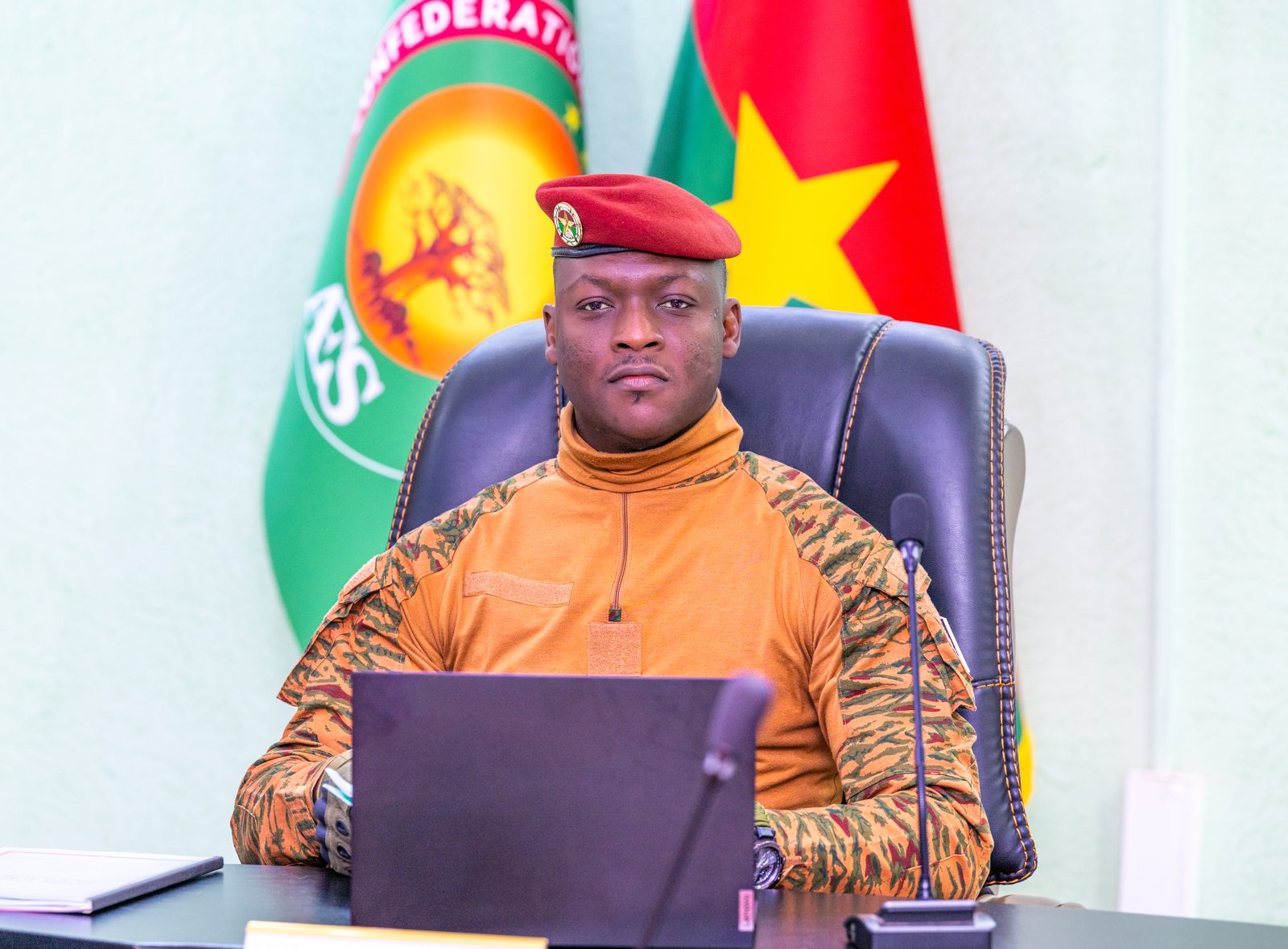
On 28 September, Captain Ibrahim Traoré cut the ribbon on Raffinor-BF in Ouagadougou, Burkina Faso's first gold refinery. It was the same week he marked four years in power, the length of time Thomas Sankara ruled, and the refinery is the clearest physical result yet of his promise to make the country stand on its own. At the Russia-Africa summit in St Petersburg in July 2023, he criticised African leaders who, in his words, "roam the world begging", according to a transcript summarised by African Media Malta. So how is Burkina Faso doing four years on? Some things are working, some are still being built, and some are getting worse.
What's working
The economy has held up better than many expected. In June 2026 the IMF reported growth of 5.3 percent in 2025, helped by high gold prices, and said "commendable budget discipline" cut the fiscal deficit from 5.8 percent of GDP in 2024 to 1.8 percent. Revenue is still beating forecasts: a July supplementary budget raised 2026 spending by 7.58 percent while holding the deficit target at 2.6 percent of GDP, Ecofin Agency reported.
The state also owns more of its own gold. By mid-2025 the state miner SOPAMIB had taken over five gold assets, including the Boungou and Wahgnion mines, Mining Technology reported. The new refinery can process 164 tonnes of gold a year and cost more than CFA11 billion (about US$19 million), paid for by the national precious metals company SONASP and local private investors with no foreign partner, AP reported. Gold from Burkina Faso, Traoré said at the opening, must now be processed, controlled and certified at home. The Institute for Security Studies (ISS) also points to a halt on exports of unrefined gold to Europe and new investment in agriculture and local cotton processing.
What's still being built
The refinery's capacity is well ahead of what the country produces, a little over 94 tonnes in 2025, so its value depends on how much gold, including from artisanal miners, comes through official channels instead of being smuggled out. ISS, broadly sympathetic to the agenda, warns that the new state-owned ventures must avoid the inefficiency, corruption and mismanagement that have sunk many others across Africa.
Self-reliance is also still partly financed from outside. A popular claim online is that Traoré has turned down IMF and World Bank money. In September 2023 the IMF board approved a 48-month Extended Credit Facility for Burkina Faso worth about US$302 million, and in June 2026 it completed the fifth review, increased the amount available and released a further disbursement, taking the total paid out to SDR 180.6 million. The Fund raised Burkina Faso's access to the loan by half because of a triple shock, one part of which was a drop in foreign humanitarian aid, and it cut its 2026 growth forecast to 3.6 percent. Burkina Faso still borrows abroad. What has changed is who it borrows from and on what terms, with gold carrying more of the load.
The break with France is the other half of that rebuild. It was France that ended the aid. On 6 August 2023 the French foreign ministry suspended development aid and budget support, France 24 reported, after Burkina Faso and Mali said they would treat any military intervention to reverse Niger's coup as a declaration of war. Traoré had already expelled French troops, and on 26 June 2026 Ouagadougou broke off diplomatic relations, accusing Paris of neo-colonial ambitions, while France called the decision hostile and unfounded, Al Jazeera reported. Supporters read it as proof that French help always came with political strings. Critics point out that it removed a funding stream from one of the world's poorest countries in the middle of a war.
What's falling apart
Security is the biggest failure. Roughly 40 percent of the country is outside effective government control and more than two million people are displaced, ISS African Futures reports. Human Rights Watch's World Report 2026 counts about 40 localities under siege by armed groups as of the end of 2024, affecting up to two million people cut off from food, fuel and medical care. In April 2025 fighters from JNIM, the al-Qaeda-linked group, killed at least 100 civilian men across four villages in Boucle du Mouhoun, and on 11 May 2025 hundreds of them overran a military base in Djibo, killing dozens of soldiers and at least 26 civilians. The state's own forces are part of the toll: HRW says soldiers and allied volunteer militias killed at least 130 ethnic Fulani civilians around Solenzo in March 2025.
Political life has been shut down. A decree on 29 January 2026 dissolved every political party and handed their assets to the state, a move Human Rights Watch described as the junta pulling the plug on political life. Journalists and opposition figures have been arrested or disappeared, and in April Traoré told citizens to forget about democracy for now, Al Jazeera reports.
Are Burkinabè happy?
Traoré is popular, at home and far beyond Burkina Faso's borders. Al Jazeera quotes a Burkinabè diplomat who says he is the first leader in years who doesn't look like he's reading from a Western script. The most recent independent polling points the same way. In Afrobarometer's survey from late 2022, just after Traoré took power, 66 percent of Burkinabè said they would accept military rule, up from 24 percent in 2012, ISS African Futures notes. The same survey found 77 percent had felt unsafe walking in their own neighbourhood in the previous year.
Measuring the mood has become harder since then. With parties dissolved and the press under pressure, people have few safe ways to say they disagree, and online the picture is distorted further: fact-checkers including Full Fact have flagged viral videos of Traoré speeches that are likely AI deepfakes. Security analyst Kabir Adamu, quoted by Al Jazeera, calls the situation "a genuine decoupling of legitimacy from performance": his support is real, but it isn't tied to results on the ground.
What it means for Zimbabwe
For Zimbabweans, much of this will sound familiar. Harare has spent years arguing that a country is built by its own people, has leaned on gold to back its currency, and has a long, complicated relationship with Western donors and the IMF. Burkina Faso is now running a live experiment in how far a landlocked, gold-producing African country can push self-reliance, and it is doing it under military rule and in the middle of an insurgency.
The early numbers are mixed rather than miraculous. Gold prices and spending discipline have helped, a home-grown refinery is now running, IMF money is still flowing, and the humanitarian situation remains dire.
Sources
- Ibrahim Traore: Why Burkina Faso's popular leader faces a reality test, Al Jazeera
- France suspends development and budget aid to Burkina Faso, France 24
- Burkina Faso cuts diplomatic ties with former colonial ruler France, Al Jazeera
- Burkina Faso opens its first gold refinery in a push for economic sovereignty, AP via WRAL
- Burkina Faso nationalises gold mining assets, shifting control to state-owned miner, Mining Technology
- Burkina Faso approves supplementary budget bill for 2026, Ecofin Agency
- Traoré marks four years in power, following Sankara's legacy, Africanews
- IMF Executive Board approves US$302 million arrangement under the ECF for Burkina Faso, IMF
- IMF concludes 2026 Article IV consultation and fifth ECF review with Burkina Faso, IMF
- In Burkina Faso, Traoré's legacy could extend beyond popularity and promises, ISS Africa
- Russia-Africa Summit 2023: Burkinabé Ibrahim Traoré's speech creating a buzz, African Media Malta
- Burkina Faso's Junta Pulls the Plug on Political Life, Human Rights Watch
- Burkina Faso president urges stronger commitment to sovereignty on independence anniversary, Ghana Eye Report
- Footage showing Burkina Faso leader is likely deepfake, Full Fact
- Can Ibrahim Traoré turn the fortunes of Burkina Faso around?, ISS African Futures
- World Report 2026: Burkina Faso, Human Rights Watch
- Burkinabè trust the police despite concerns about corruption, misconduct, and insecurity, Afrobarometer
Researched and drafted with the help of AI tools, then fact-checked and edited by our team. How we work.